
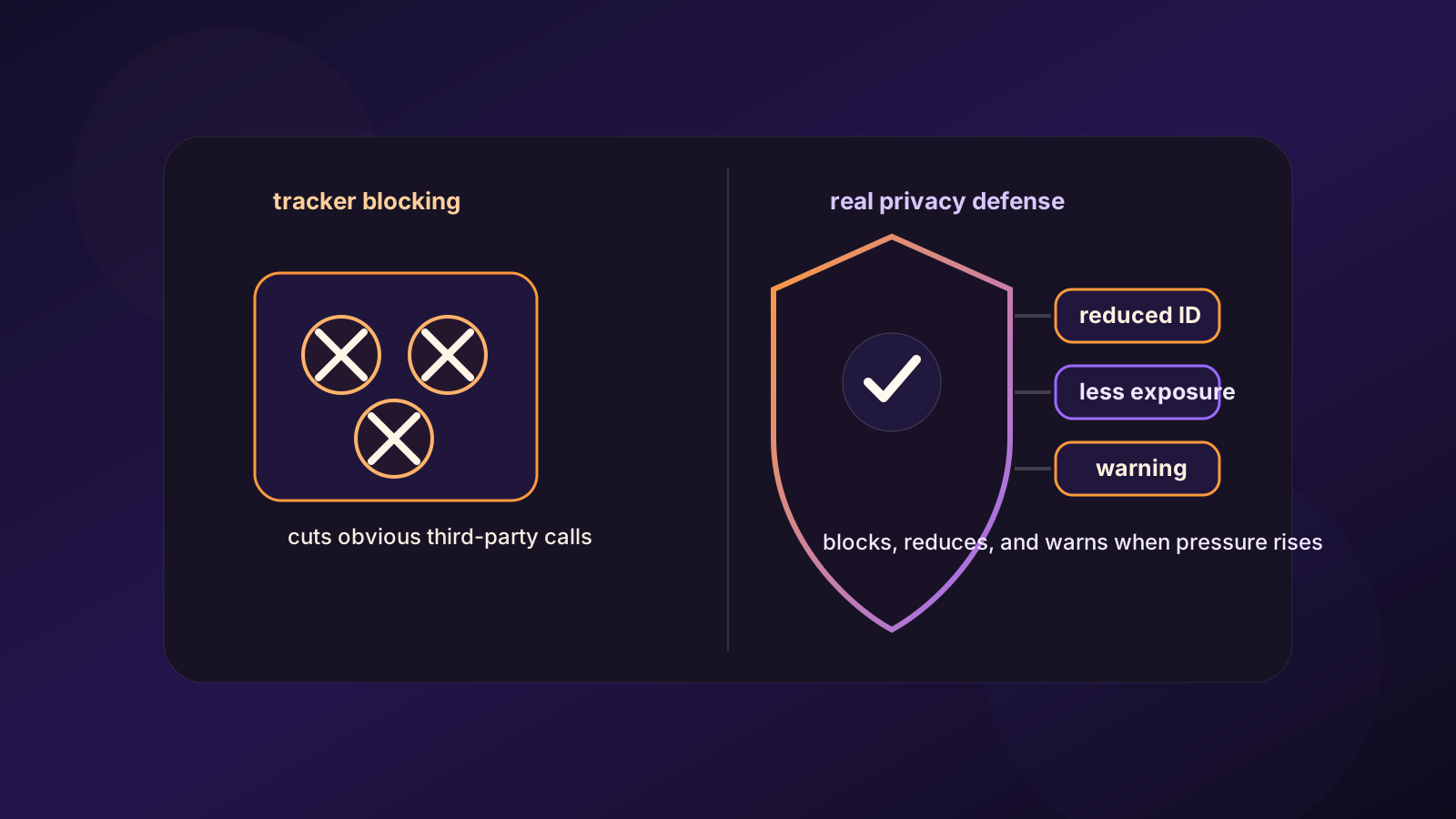
Tracker blocking is a good start because it interrupts something real. Popular websites are saturated with third-party tracking infrastructure, and reducing that traffic can immediately lower unnecessary exposure. But if a privacy product stops its story there, it risks confusing one defensive layer with the whole problem.
Fingerprinting is the clearest reason. EFF's Panopticlick research found that browsers were often highly unique even without relying on a simple cookie story. The exact attributes evolve, but the principle remains: a shopper can block some scripts and still remain easier to recognize than they think. That is why real privacy defense has to care about repeatable identity signals, not only third-party domains on a blocklist.
Data circulation is the second reason. The ICCL's work on real-time bidding argued that information about the average person gets broadcast at industrial scale inside adtech systems. Once a session's context is distributed widely enough, the privacy question is no longer only whether one script loaded. It becomes whether the surrounding ecosystem can still infer, join, and act on the shopper's behavior even after partial blocking.
The FTC's surveillance-pricing inquiry pushes the argument into consumer experience. If firms are using browsing, location, shopping history, and other personal data to influence offers or treatment, then protection has to cover more than network hygiene. It has to help users understand when collection, continuity, and pressure are combining into a decision environment that is no longer neutral.
That is where the phrase real privacy defense becomes useful. It means blocking what can be blocked, reducing what makes a person easy to profile, and warning when the page starts acting like an exploitation surface instead of a plain storefront. It treats privacy as an autonomy problem, not just a request-count problem.
In 2026, tracker blocking still matters. It is just not the whole answer. Real privacy defense is broader because the web's leverage is broader. The product people actually need is the one that helps them see and resist the full chain: collection, recognition, circulation, and pressure.