
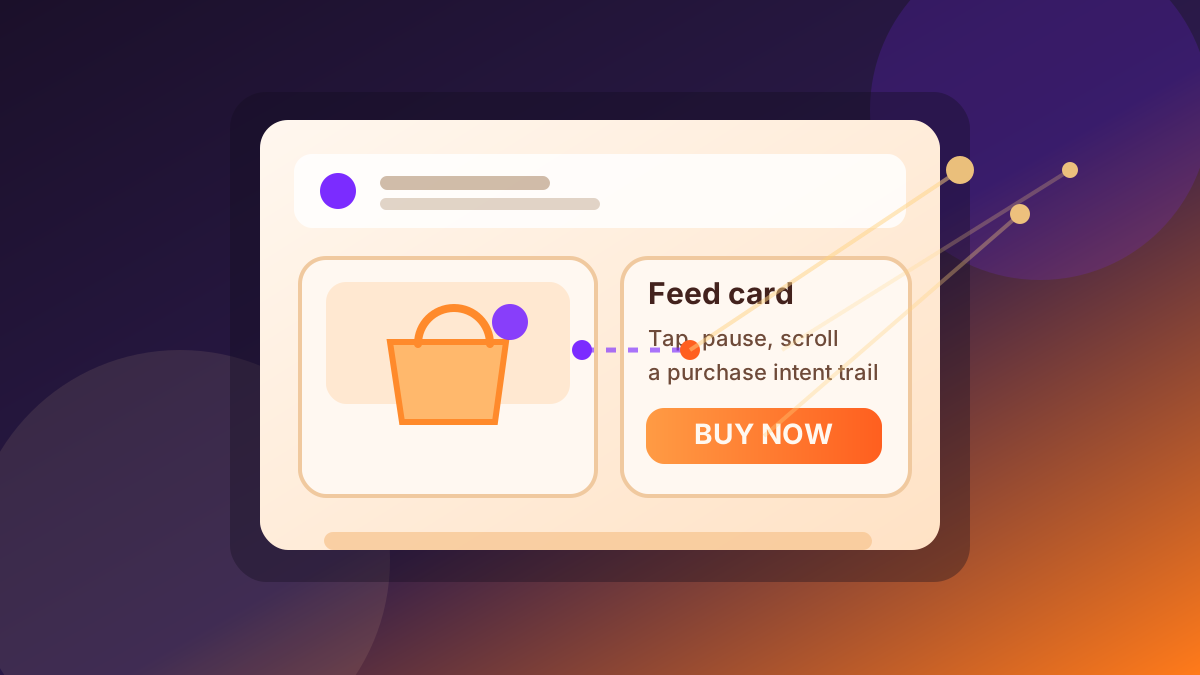
Buy now buttons on social platforms privacy risk starts with a simple feeling: the post, the product, and the purchase are all happening in the same place. A shopper does not have to leave the feed to move from attention to intent to action. That convenience is the point of social commerce, but it also means the platform can observe much more than a normal store page would see. A tap on a product tag, a pause on a video, a click on a creator recommendation, a visit to a shop tab, and a logged-in account all turn into data about what a person wants before the person ever reaches a traditional checkout.
That matters because a social platform is not just a storefront. It is also an identity system, a recommendation engine, an ad system, and often a messaging app. When those systems sit on top of a buy-now flow, the platform can connect a shopping impulse to existing social graph data, device data, engagement history, and ad targeting signals. A purchase button inside a feed can therefore become a stronger profiling surface than a normal ecommerce page. The user may think they are buying a shirt or a gadget. The platform may be learning how quickly they respond to visual prompts, which creators influence them, what time of day they shop, and whether they are willing to complete the transaction from a phone that already identifies them.
The FTC’s dark-pattern work is relevant because shoppable feeds can reduce friction in a way that feels helpful while still steering behavior. A buy-now button can flatten the distance between curiosity and purchase so much that the shopper has less room to compare, reflect, or leave. That does not make every shoppable post deceptive. It does mean the design should be treated as a pressure surface, not just a convenience feature. If the interface nudges a person into a purchase with a single tap, the platform has also created a new opportunity to harvest intent at the highest-confidence moment of the session.
The surveillance-pricing inquiry from the FTC matters for a second reason: once a platform can see a person’s shopping intent inside a social environment, it can help shape more than ads. The data can feed targeting, ranking, retargeting, and offer selection. The concern is not only that the platform knows what was clicked. It is that the platform can learn enough to sort users into value tiers, urgency tiers, or responsiveness tiers. If the social feed already knows who is likely to buy, the button is not just a purchase shortcut. It is a data capture point for future pressure.
NIST’s Privacy Framework is useful here because it treats privacy as a lifecycle problem. The question is not simply whether a platform showed a disclosure. The real questions are whether the system collected the minimum data needed, whether the user understood the linkage between social identity and commerce identity, and whether the data is later reused for unrelated targeting. Social commerce often collapses those boundaries. A profile picture, a creator follow, a shopping click, and a payment method can all end up feeding one persistent account record. The shopper loses the clean break between browsing and buying that a separate store might still provide.
Pew’s privacy research helps explain why that feels uncomfortable even when the purchase is ordinary. People already feel they have little control over what companies collect and how they use it. A buy-now button in a social app intensifies that concern because the interaction starts in a place that was supposed to be social, not transactional. The platform can measure how long a person watched, what they liked, what they skipped, what they rewatched, and how close they came to buying before the feed moved on. The result is a shopping trail wrapped around a social trail, which is exactly the kind of cross-context data mixing many users do not expect.
EFF’s Cover Your Tracks is a reminder that the browser and device layer still matters. Even when the purchase begins inside a social app, the surrounding infrastructure can reveal more than the user realizes: browser uniqueness, network metadata, app permissions, and cross-site referral data can all strengthen the profile around the transaction. If the same account is used across devices, the platform can connect the dots even when the user thinks they are just browsing casually. The shoppable feed becomes a bridge between entertainment, identity, and commerce.
Practical defense starts with reducing the number of systems that can see the same purchase. If the platform allows a separate browser or account boundary, use it. Avoid connecting every social account to the same shopping identity if you want less linkage. Be skeptical of in-feed purchase prompts that ask for permissions beyond the transaction itself. If a product is private, expensive, or emotionally loaded, consider leaving the feed and checking the seller in a more ordinary storefront where the surrounding tracking is easier to inspect. The user is not being paranoid; they are deciding where the profile should stop.
cloak’s role is to make that boundary visible. Digital bodyguard for normal people means detecting when a social buy button is doing more than selling a product: it is also turning the feed into a commerce dossier. cloak should surface the link between feed engagement and purchase intent, warn when account linkage expands the data trail, and help shoppers choose the least revealing path to the same item. The goal is not to ban convenience. It is to keep social commerce from quietly becoming social surveillance with a checkout button on top.