
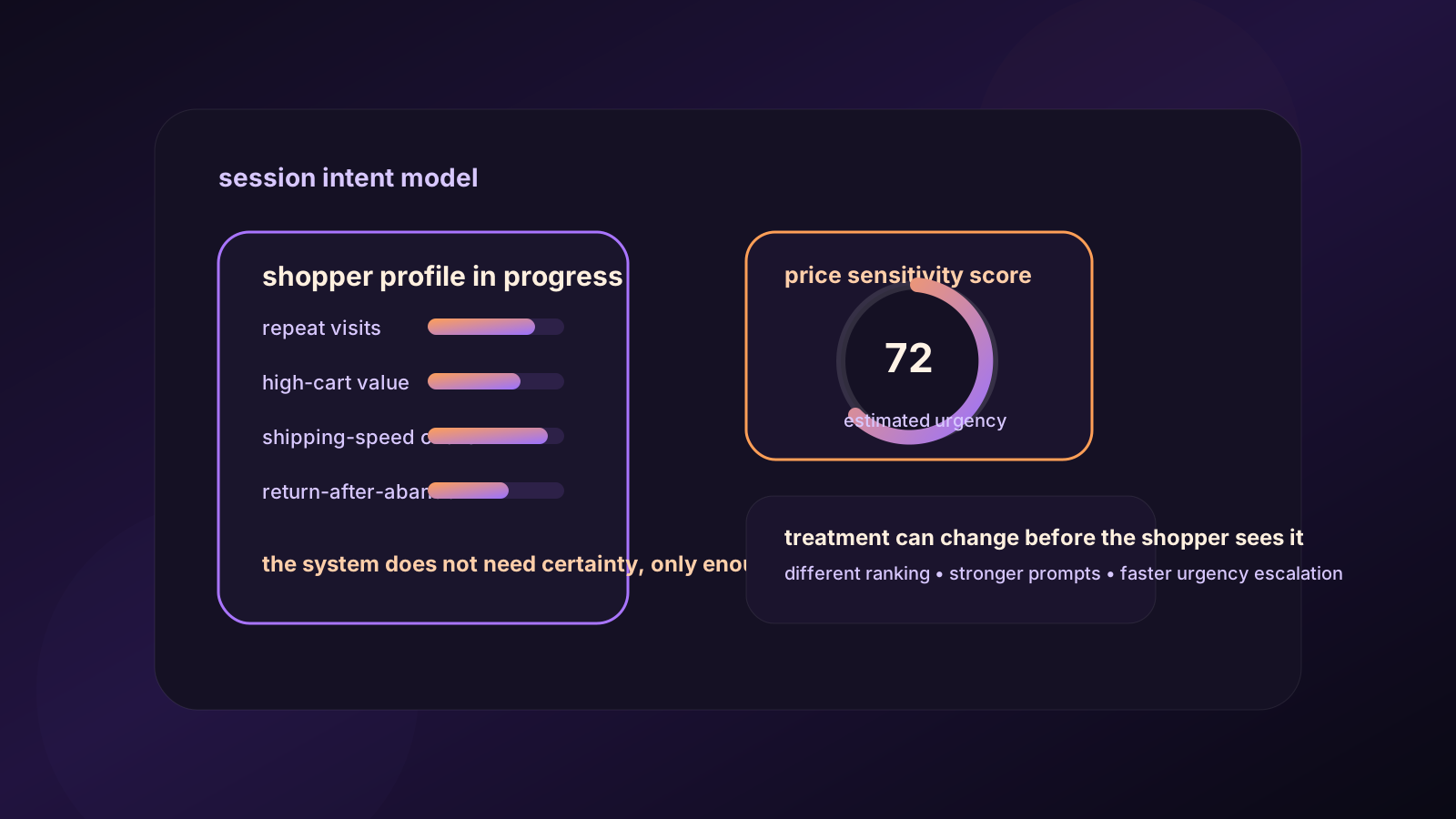
If you are asking how stores know you are desperate to buy, the plain answer is that they do not need mind reading. They only need enough signals to estimate that you are under time pressure, highly motivated, or unlikely to walk away. Repeat visits, cart rebuilds, shipping-speed clicks, late-stage hesitation, and rush behavior can all make a shopper look more urgent than they realize.
The FTC's 2024 surveillance-pricing orders make the relevant inputs unusually clear. The agency said companies may use personal data such as browsing history, location, demographics, shopping history, and other signals to influence what a person is shown or charged. That list matters because it describes exactly the kind of surface-level evidence a system can use to score urgency or willingness to pay without ever labeling it something emotionally dramatic like desperation.
Older retail stories make the inference logic easier to understand. The New York Times Magazine described how Target used shopping patterns to infer pregnancy before a family had publicly disclosed it. The Wall Street Journal reported that Orbitz learned Mac users tended to spend more and responded by showing them pricier hotels first. Those examples are not direct proof that every merchant has a desperation score. They are strong evidence that ordinary behavioral and device signals can support meaningful inferences about what kind of customer someone appears to be.
Translate that into an ecommerce session and the pattern gets uncomfortable fast. Repeat visits, cart rebuilds, late-stage hesitation, expensive-item focus, fast return after abandonment, shipping-speed clicks, and device/location context can all say something about motivation. The system does not need perfect certainty. It only needs enough confidence to sort shoppers into buckets such as likely to buy, likely to leave, sensitive to time pressure, or responsive to a stronger nudge.
That is also why public distrust is so high. Pew found that most Americans feel tracked online and that the risks of company data collection outweigh the benefits. People may not always know which model is running, but they already sense the asymmetry. When the page suddenly changes tone, offer sequence, or urgency level, it can feel less like service and more like the site is leaning on whatever weakness it detected.
So can stores tell when you are desperate to buy? Not in a cinematic mind-reading sense. But they can often infer enough about urgency, intent, and tolerance for pressure to act differently around you. That is the privacy problem cloak should help surface: not fake omniscience, but quiet behavioral sorting that changes the decision environment before the shopper notices.