
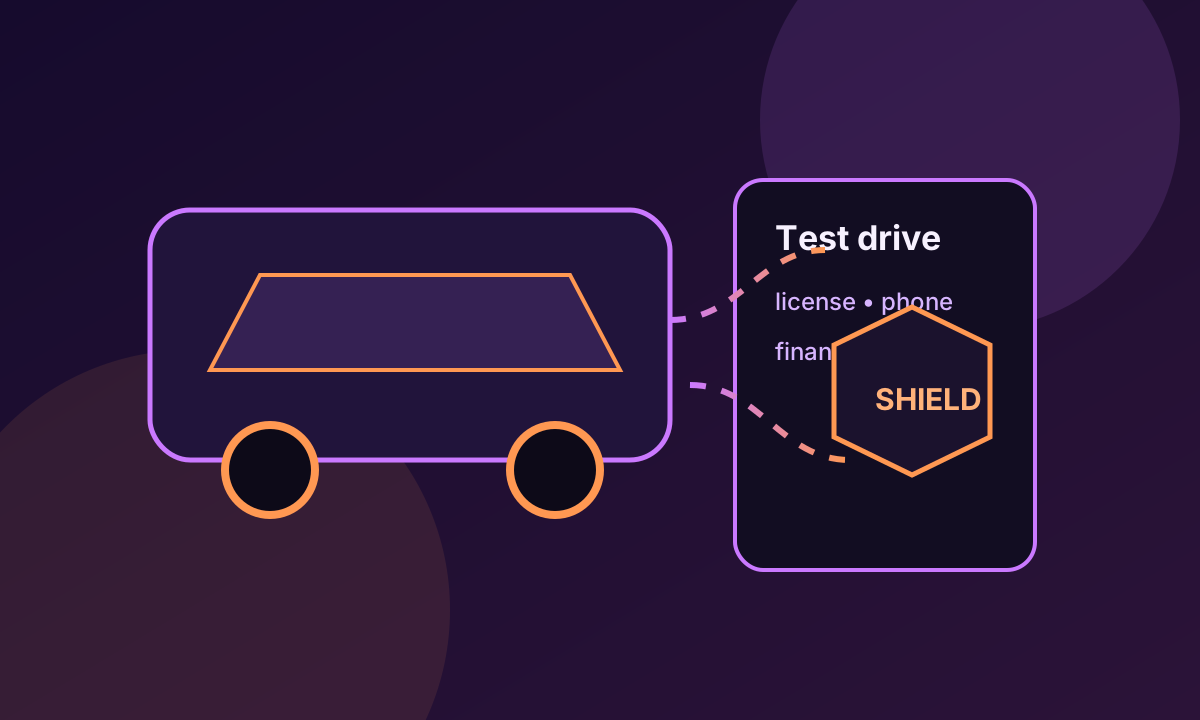
Connected car dealership privacy risk starts before the car leaves the lot. A shopper may search inventory, schedule a test drive, upload a license, prequalify for financing, estimate trade-in value, pair a phone for a demo, install an owner app, or open a service portal. Each step looks like normal car buying, but together they can reveal location habits, household routines, income pressure, credit interest, commute patterns, family size, device identifiers, and whether the shopper is anxious enough to accept a worse deal quickly.
The FTC has warned that cars increasingly operate like connected devices, collecting and transmitting information about drivers, passengers, and trips. That matters at the dealership because the privacy boundary is messy. The shopper may interact with the dealer website, manufacturer financing, a third-party inventory marketplace, a trade-in valuation tool, a credit prequalification flow, an insurance offer, a telematics app, and the vehicle itself. A consumer who thinks they are comparing models may be creating records across several companies before they ever sign a purchase agreement.
Test drives create a special exposure point. A dealer may need a license and contact details for safety and follow-up, but the flow should not quietly expand into marketing lists, ad audiences, or app enrollment. If a salesperson pairs the shopper's phone to demonstrate navigation, contacts, music, or voice features, the car may store device names, call logs, message previews, location entries, or profile settings unless the system is wiped after the drive. A privacy-safe test drive should explain what is collected, avoid unnecessary pairing, and reset the vehicle before the next person gets in.
Financing and trade-in tools raise the stakes. A soft credit check, income estimate, employer field, vehicle payoff amount, ZIP code, and desired monthly payment can expose bargaining position. If those fields are mixed with web analytics and retargeting tags, the shopper's economic vulnerability becomes usable pressure. Data minimization is the right standard here: collect what is reasonably needed for the purpose the consumer understands, and do not force full identity, phone number, or credit context just to show a basic price range.
Service portals can keep the profile alive after purchase. Oil changes, recall notices, tire replacements, crash repairs, mileage, VIN, appointment times, and preferred locations may reveal where the car is driven and how the household spends money. Owner apps may add remote unlock, GPS, charging, battery, trip history, or driving-behavior features. The NIST Privacy Framework is useful because it pushes the full lifecycle question: what is collected, who uses it, how long it is retained, who receives it, and how the driver can delete or disconnect it later.
Practical defenses are simple but easy to forget in the dealership rush. Do not pair a personal phone during a test drive unless necessary. If pairing is needed, delete the profile before leaving. Use a separate email for shopping. Avoid uploading a license or applying for financing until the seller relationship is clear. Ask whether the site is the dealer, manufacturer, lender, marketplace, or lead broker. After buying or selling a car, factory-reset infotainment systems, remove garage-door codes, disconnect apps, and revoke account access for vehicles no longer owned.
cloak should treat connected car shopping as a high-sensitivity identity and location flow, not just an expensive retail purchase. It can flag when a dealer page loads trackers on finance steps, when a trade-in form asks for phone and payoff details before giving a range, when an owner app pushes permissions before explaining use, or when a test-drive checklist asks for more identity than the appointment requires. The goal is not to make car buying impossible. It is to stop location, credit, device, and household signals from becoming silent leverage during one of the largest purchases a normal person makes.
The distinct risk cluster is the combination of price negotiation and movement history. A shopper comparing shoes reveals preference. A connected-car shopper can reveal where they live, what they can finance, how far they commute, which phone they carry, and which lender or insurer might profit from that context. That is why the safest dealership flow should separate browsing from financing, test driving from app enrollment, and service scheduling from unnecessary marketing identity.