
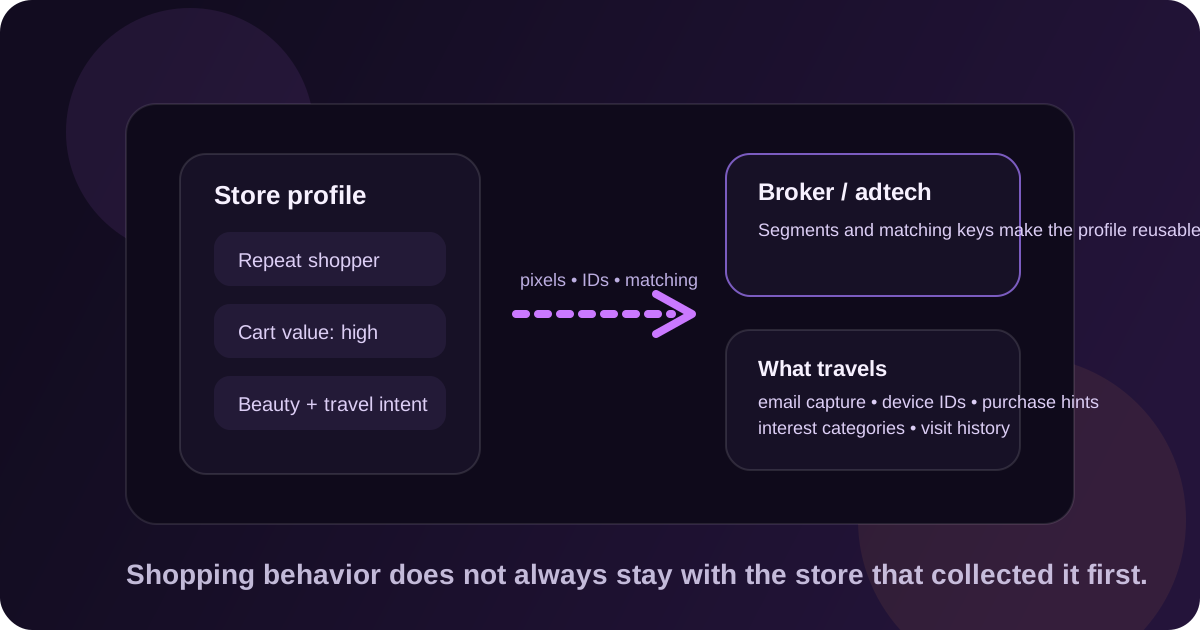
People tend to imagine shopping privacy as a one-store problem: a merchant sees the cart, sends the receipt, and keeps the relationship inside its own walls. In practice, the more important question is what leaves those walls. Shopping behavior can become reusable profile material once the page starts handing signals to outside systems built for ad targeting, analytics, identity matching, or resale.
The Sephora settlement is one of the clearest public examples. California said Sephora's use of third-party trackers on its site and app amounted to selling personal information and that the company failed to properly honor privacy-control signals. That matters because it shows how ordinary commerce activity can be transformed into a downstream data-sharing issue without the shopper ever seeing a dramatic handoff screen.
The FTC's report A Look Behind the Screens helps explain why this kind of travel is so hard for users to reason about. The agency found major platforms and streaming services collected more data than consumers expected, combined information across services, retained it extensively, and offered weak limits on downstream use. Shopping behavior fits naturally into that logic. Once a browsing session produces an email, identifier, category interest, or conversion event, that information becomes easier to join with other records than most people realize.
Consumer Reports' overview of the data broker industry adds the market context. If there is a large commercial industry devoted to collecting, packaging, and selling personal information, then purchase behavior is not valuable only to the store that first observed it. It can become part of segmentation systems that care about income bands, household patterns, likely interests, and willingness to buy.
That is why the privacy cost of a shopping profile is larger than one targeted ad. The profile can outlive the original cart, outgrow the original merchant, and become useful in contexts the shopper never explicitly agreed to. cloak starts at the page where the signals are produced. If the product can block some collection, reduce profile continuity, and surface the moments when a routine checkout becomes a broader data event, it gives the shopper a real chance to keep ordinary buying behavior from traveling so far.