
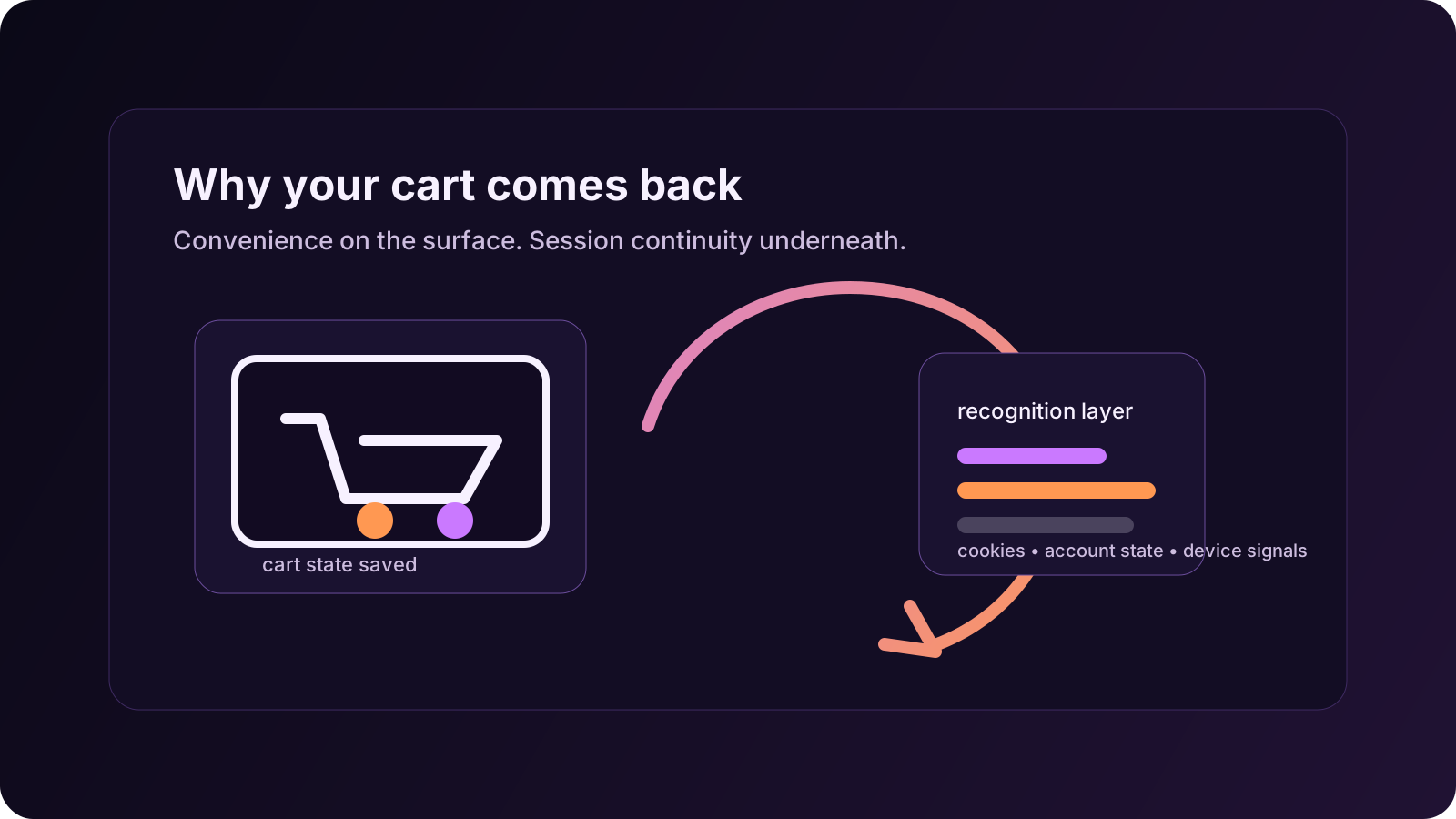
If your cart stays after you leave a website, the site did not just get lucky. A saved basket usually means the store preserved enough continuity across your return visit to recognize the session again. Cookies can do some of that work, but so can account state, local storage, analytics infrastructure, email links, and other browser-level clues. The convenience is real. So is the tracking lesson behind it.
Princeton's web-measurement work helps explain why this continuity is so common. The modern shopping stack often includes far more than the merchant's own code. Analytics, tag managers, marketing vendors, and personalization tools all make it easier to preserve context across visits. A cart that survives your exit does not prove anything sinister by itself, but it does show how ordinary ecommerce is built around recognition, recall, and follow-up rather than true forgetfulness.
EFF's browser-uniqueness research adds the second layer people usually miss. Even when shoppers clear cookies, switch modes, or try a quick privacy ritual, recognition can remain easier than expected when the browser still presents a distinctive fingerprint. That is one reason a returning cart can feel so creepy. The user thinks they left. The site still has enough clues to treat them like a continuing story.
The FTC's surveillance-pricing inquiry is why this should be treated as more than a convenience feature. If browsing history, shopping history, and related signals can influence what people are shown or charged, then remembered cart state becomes commercially important context. The same basket that helps you resume checkout can also tell a system that you hesitated, returned, price-compared, or stayed vulnerable to one more nudge.
Baymard's long-running cart-abandonment research is useful here because it shows how central incomplete carts are to ecommerce operations. Merchants treat abandonment as a major recoverable opportunity, which is one reason so much infrastructure exists to preserve basket state, trigger reminders, and study where people dropped off. The cart is not only a user aid. It is an operational asset and, sometimes, a pressure surface.
That does not mean remembered carts are inherently bad. It means the feature is a good window into the broader system. Convenience and continuity are the same mechanism seen from different angles. cloak's job is to make that continuity more legible, especially when it stops serving the shopper and starts serving pressure, scoring, or follow-up machinery around them.
If you are already doing little self-defense rituals like clearing cookies, opening a private tab, or switching devices, the important takeaway is not that you failed. It is that websites often rely on a stack of recognition clues rather than one obvious marker. cloak's privacy-defense model is built around that harder truth: cut hidden collection, reduce repeatable signals, and warn when a buying flow still looks unusually trackable or pressure-heavy.