
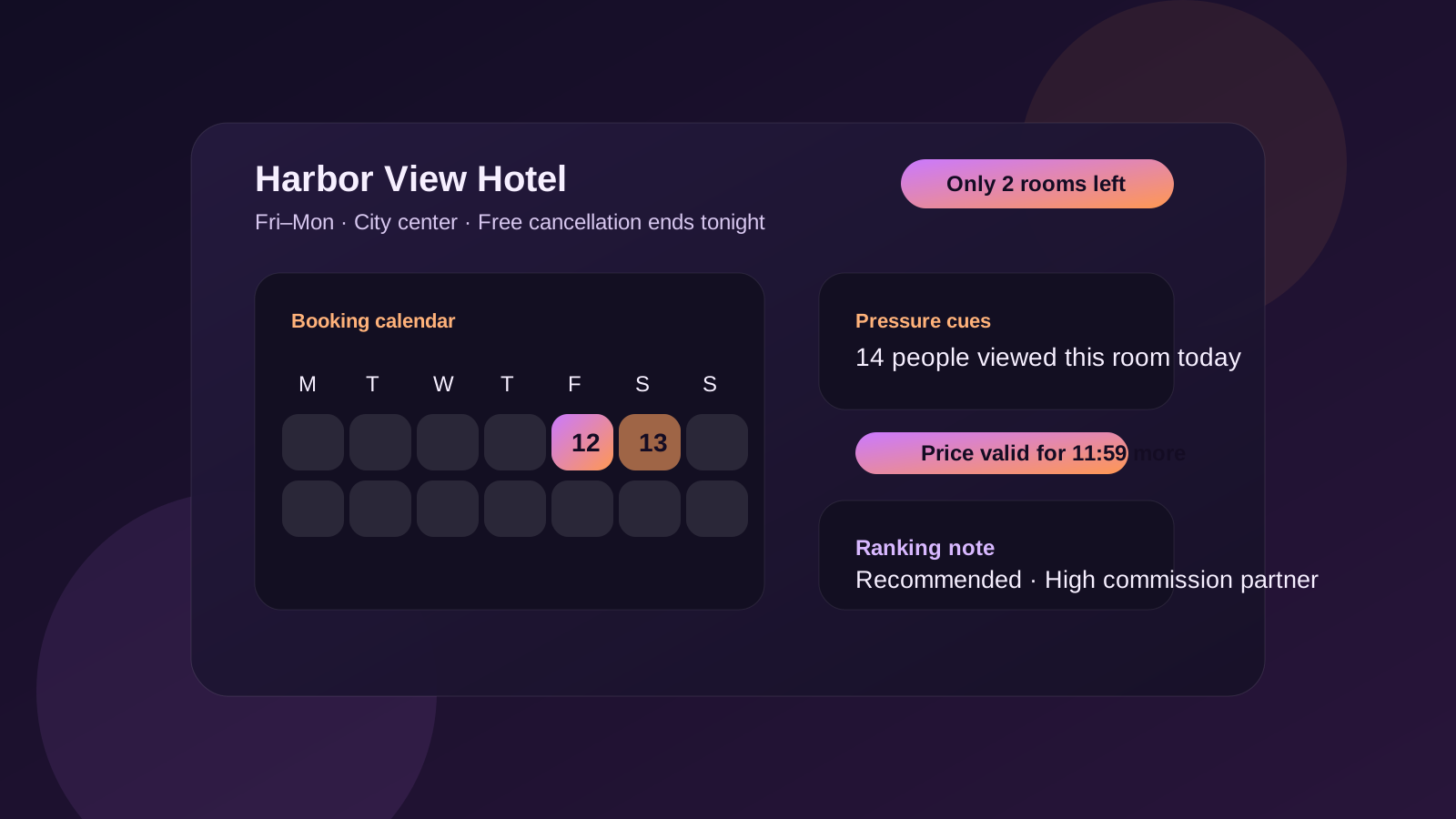
If hotel prices look higher after you search twice, the first honest answer is that this does not automatically prove the site singled you out. Travel prices move for ordinary reasons like inventory changes, promotions ending, room availability shifting, or another booking happening while you were comparing options. But repeat searches create exactly the kind of suspicion that makes hotel booking feel hard to trust.
That distrust is not irrational. The UK Competition and Markets Authority investigated hotel booking sites and called out pressure-selling claims about how many people were viewing a room, how many rooms were left, or how long a price would last. Those messages matter because a second search is rarely just a neutral refresh. It often happens after the shopper has hesitated, compared dates, or returned looking more urgent than before.
Travel pages can also change what they emphasize, not just what they charge. The same CMA case said hotel rankings can be influenced by factors such as commission paid by a hotel, and the Wall Street Journal reported that Orbitz once showed Mac users pricier hotels first because they tended to spend more. That does not prove every hotel price jump is personalized pricing. It does show that travel interfaces can respond differently when the platform thinks it has learned something useful about the customer.
The FTC's surveillance-pricing inquiry is the cleanest modern proof boundary. The agency said companies can use location, browsing history, shopping history, demographics, and other personal data to shape what people are shown or charged. Hotel booking is a perfect environment for that suspicion because repeated searches, narrowed filters, date checks, and return visits all broadcast stronger intent.
A second search also does not guarantee a clean slate. EFF's Cover Your Tracks shows how browsers still expose repeatable clues, and travel sites can combine those clues with referral tags, account state, stored searches, and session behavior. Switching devices or clearing cookies may change some inputs, but it does not magically erase the entire context around a recognizable trip-planning session.
That is where cloak's framing matters. The honest claim is not that cloak can prove every hotel price increase is surveillance pricing. The honest claim is that cloak is built to cut hidden collection, reduce repeatable session clues, and warn when a high-intent booking moment starts looking more profile-driven and more pressurized than it should.