
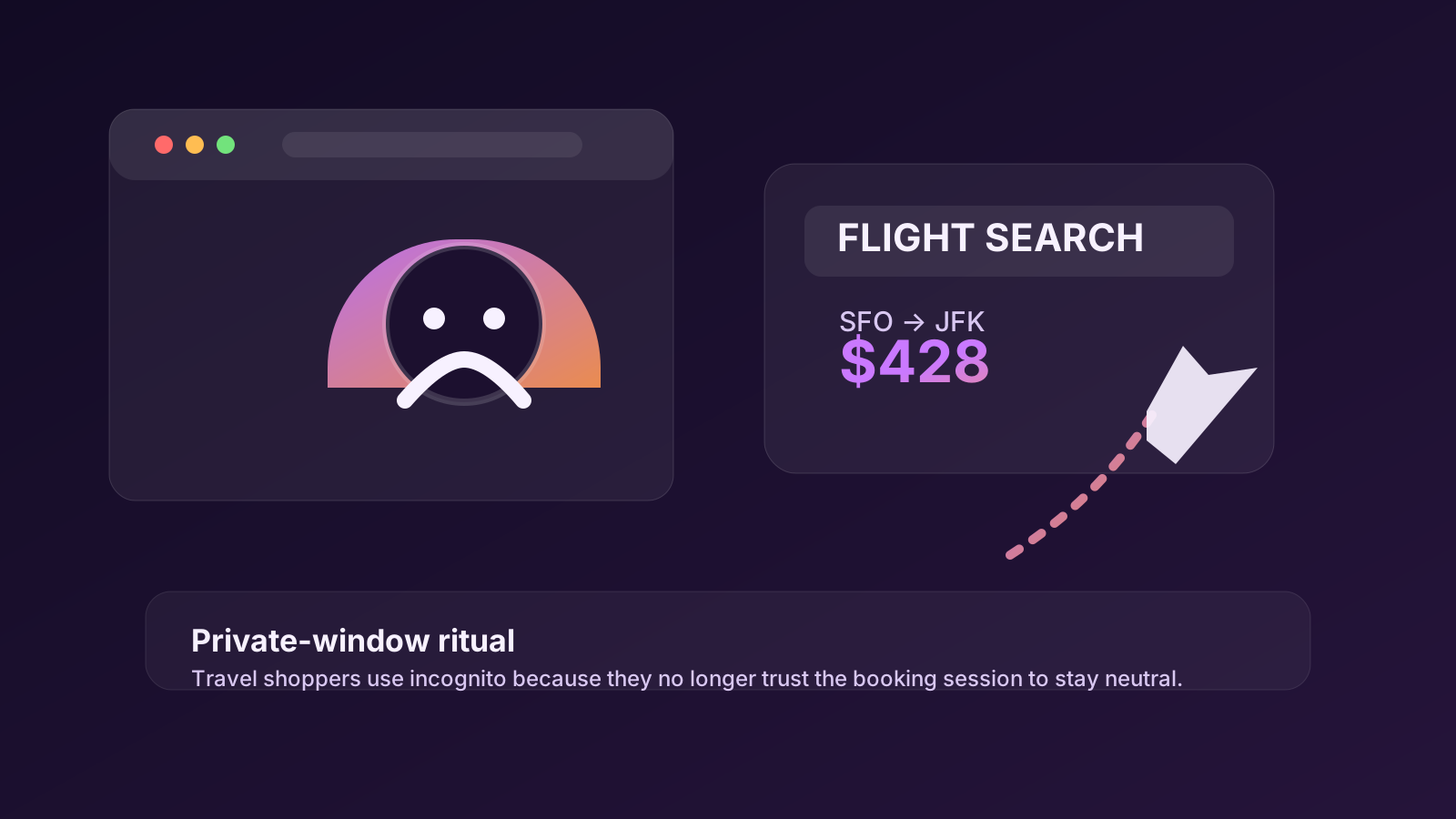
If the same flight suddenly looks more expensive on another device, the first honest answer is that this does not automatically prove personalized airfare. Flight prices can move for ordinary reasons like inventory changes, fare-class availability, taxes, or timing. But the device switch still matters because travelers usually make it only after the booking flow already feels hard to trust.
That distrust is visible in user behavior. NerdWallet and Thrifty Traveler both describe how people keep reopening flight searches in private windows, clearing cookies, or switching devices when a route starts acting strangely. Even when the mechanism behind one fare jump is hard to prove cleanly, the ritual itself is evidence that shoppers feel the session may be working against them.
Another device also does not guarantee a clean slate. EFF's Cover Your Tracks shows how browsers can still expose repeatable clues, and a device change alone does not erase referral context, account state, route history, or the broader pattern of a high-intent booking session. In practice, the user is often changing hardware while the surrounding travel context stays surprisingly continuous.
The old Orbitz case is still useful as a safe proof boundary here. The Wall Street Journal reported that Orbitz showed Mac users pricier hotels first after finding they tended to spend more. That was a hotel-ranking example, not proof that airlines secretly assign each person a custom fare. But it is still a clear demonstration that device signals can influence what travel shoppers see before they buy.
The FTC's 2024 surveillance-pricing inquiry explains why this suspicion no longer sounds like internet folklore. Regulators are explicitly examining how companies can use browsing behavior, location, demographics, and shopping history to shape offers or prices. The honest travel claim is still narrow: a changed fare on another device is not automatic proof of personal targeting, but it can sit inside a larger environment where recognition, ranking, and pressure are real consumer-protection concerns.
That is why cloak should meet this query with proof instead of mythology. The goal is not to promise the cheapest fare or decode every airline pricing rule. The goal is to block hidden collection where possible, reduce fingerprint-quality signals, and warn when a travel checkout starts looking more profile-driven than it should. If a shopper already feels forced to switch devices just to compare one trip, the real product need is a visible defense layer, not another rumor about incognito mode.