
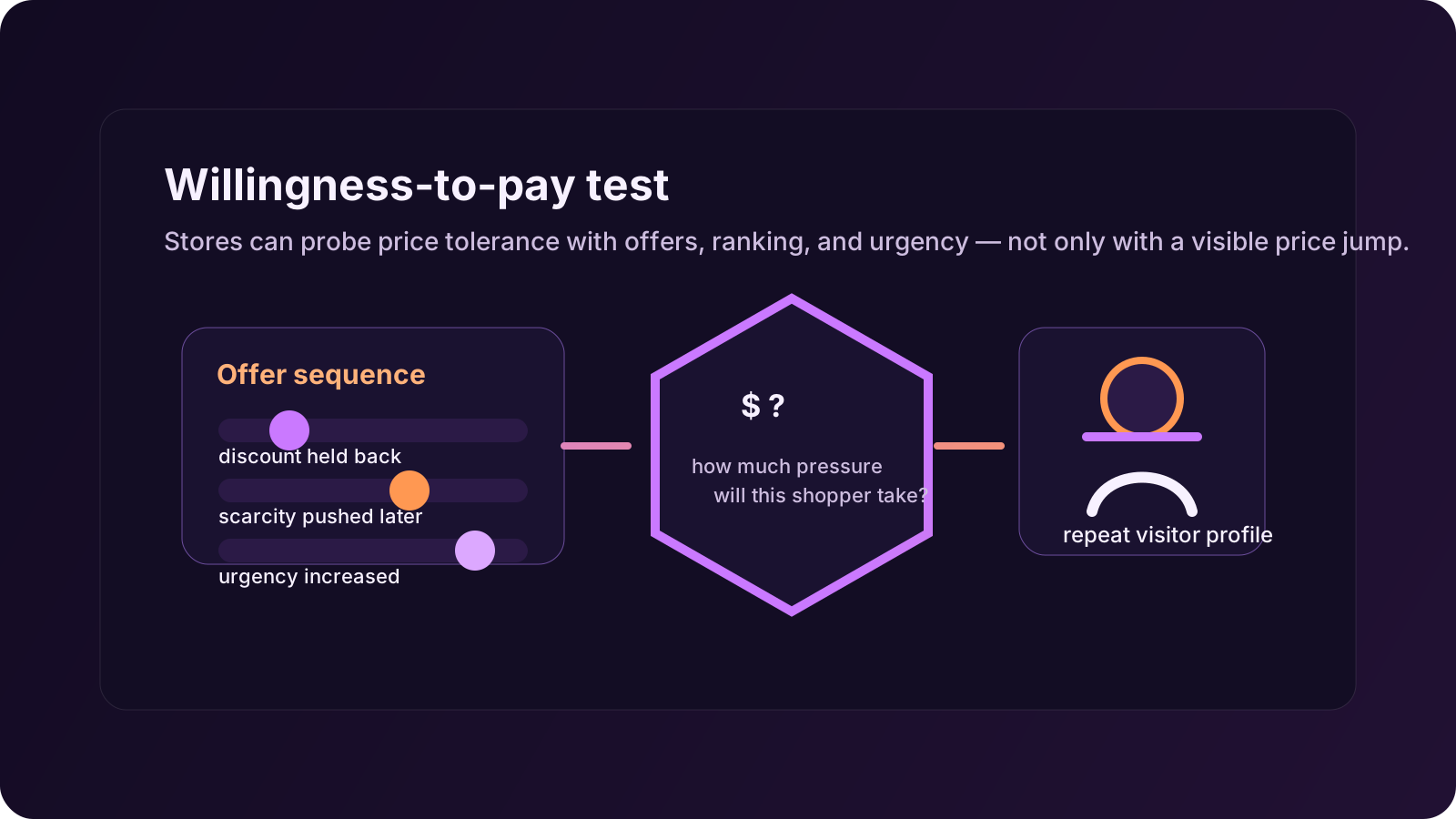
When people hear willingness-to-pay testing, they often imagine a blunt algorithm that simply posts one price for one shopper and a cheaper one for another. That can happen, but it is not the only form the test can take. A store can probe the same question more quietly by changing rankings, tightening urgency, withholding discounts until a repeat visit, or deciding which offer stack a shopper sees first. The sticker price is only one lever inside a much larger decision environment.
The FTC's 2024 surveillance-pricing inquiry is the clearest public signal that regulators take this seriously. The agency said companies may use browsing behavior, purchase history, location, demographics, and other personal data to influence what people are shown or charged. That language matters because it widens the frame beyond a single visible number. What someone is shown first, what discount appears, and when the pressure intensifies can all function as tests of willingness to pay, even when the site never admits that is what it is doing.
The UK Competition and Markets Authority's online hotel-booking case helps make the pattern concrete. The case addressed pressure-selling tactics and misleading scarcity or popularity claims in a travel context. Those tactics are not identical to dynamic pricing, but they answer a closely related commercial question: how much urgency can the shopper tolerate before they stop comparing and commit. In practice, merchants do not need perfect personal dossiers to run that experiment. They only need enough confidence that this session is close enough to push.
Princeton's web-measurement work explains why these tests can scale. Tracking infrastructure is widespread across the modern web, which means repeat visits, browsing sequences, and cross-session context are easier to collect than many people realize. Once a store or its vendors can recognize that someone has returned, stalled, compared, or hovered around the same product, the session becomes a live opportunity to test whether stronger pressure changes behavior.
Pew Research Center's privacy findings help explain why shoppers already feel this asymmetry. Most Americans said the risks of data collection outweigh the benefits and that they feel little control over what companies do with their information. That distrust makes sense. Even when a user cannot prove a hidden willingness-to-pay model from the outside, they can still feel the page turning more insistent, more tailored, or less neutral on the second or third pass.
That is why willingness-to-pay testing matters as a privacy issue, not only a pricing story. The real problem is not just what the merchant knows. It is what the merchant does with that knowledge at the exact moment the shopper is trying to think clearly. cloak's role is to make those shifts legible: what the page learned, what pressure rose, and whether the session stopped behaving like a shelf and started behaving like an experiment.