
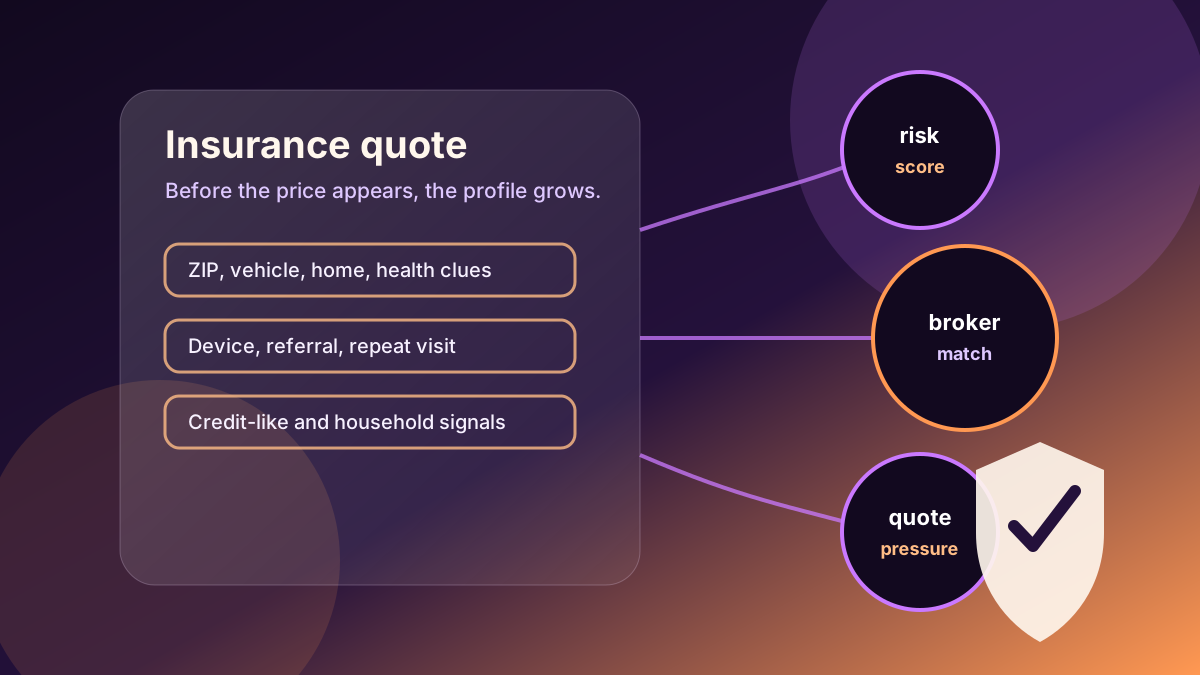
Insurance quote privacy risk is not the same as ordinary product browsing. A shoe store can learn size, style, budget, and hesitation. An insurance quote form may ask for ZIP code, home type, vehicle details, household members, driving history, employment hints, health-adjacent facts, claims history, contact details, and the exact moment someone is shopping for coverage. Before a rate appears, the person may already have described a household in terms that are useful for scoring, segmentation, follow-up calls, lead resale, and future personalization.
The important distinction is that some collection is necessary and some is not. Insurers need information to price risk and comply with law. Comparison sites need enough detail to route a quote request. But a consumer trying to compare rates should not have to assume every field, referral tag, ad pixel, and repeat visit becomes part of a broader marketing profile. The privacy problem starts when a quote flow looks like neutral shopping while also behaving like a lead-generation and identity-enrichment machine.
The FTC's big-data report is a useful frame because it warned that data-driven decisions can create inclusion and exclusion problems, especially when companies use personal information to sort people into opportunities, offers, or disadvantages. Insurance is exactly the kind of category where sorting matters. A quote result can affect money, access, and urgency. Even when a site is not making a final underwriting decision, the surrounding funnel can still rank leads, prioritize callbacks, suppress options, or decide which products to show first.
The FTC's data broker report adds the second layer: consumers often do not know which companies collect, share, or infer information about them. A quote form can become more revealing when it is joined with brokered data, public records, device identifiers, marketing segments, or prior browsing. The shopper may think they are filling out one form for one purpose. The ecosystem may see a durable signal that this household is in-market, price-sensitive, recently moved, recently bought a car, or anxious about coverage.
The CFPB's consumer-reporting resources matter because many people do not realize that the consumer-reporting universe extends beyond the three big credit bureaus. Specialty consumer reporting companies may compile information used for insurance, employment, tenant screening, banking, and other decisions. The point for a shopper is not to panic or assume every quote site is unlawful. The point is to understand that financial and insurance-adjacent shopping sits closer to regulated profiling systems than a normal cart page does.
Pew's privacy research explains why this feels unfair to ordinary people. Many Americans say they have little control over what companies collect, and quote flows make that loss of control concrete. The consumer may need a price, but the site may ask for enough detail to make them identifiable and marketable long after the comparison is over. The imbalance is worse when the user cannot tell which fields are required for the quote, which are optional, which trigger a lead sale, and which simply improve targeting.
A practical defense checklist is to compare official insurer pages as well as lead-generation sites, avoid giving a primary phone number until necessary, use an email alias for rate shopping, pause before consenting to marketing calls, read whether the site is a broker, marketplace, or insurer, and avoid repeating the same sensitive quote search across many ad-driven forms while logged in. cloak's job in this category is not to promise lower premiums. It is to reduce unnecessary tracking, make repeat-session recognition harder, and warn when a quote flow starts extracting more household leverage than the shopper expected.