
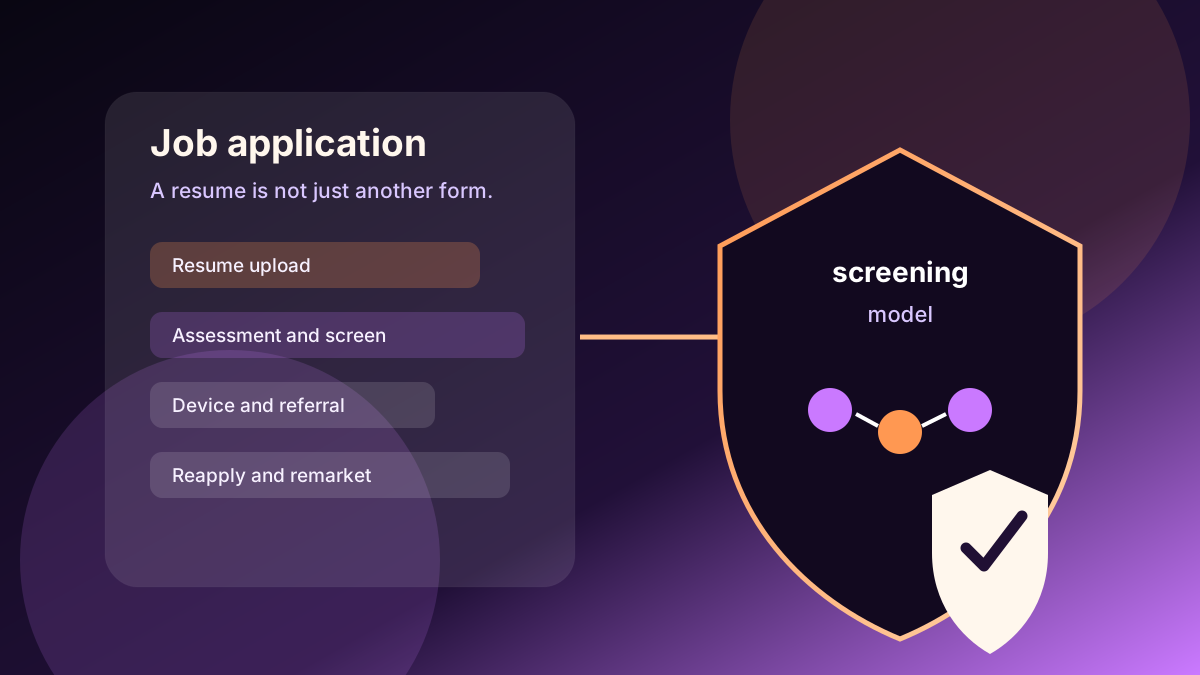
Job application tracking privacy risk deserves its own threat model because applying for work is not casual browsing. A candidate may upload a resume, share address and phone number, list schools and dates, disclose work gaps, answer screening questions, complete assessments, identify disability accommodation needs, reveal salary expectations, and return repeatedly while anxious about income. That is a dense bundle of identity, economic pressure, and life history. If the site also loads trackers, attribution tags, assessment vendors, or account identifiers, the application can become a profile instead of a one-time submission.
Some hiring data collection is legitimate. Employers need to evaluate qualifications, route candidates, prevent fraud, comply with employment law, and communicate about interviews. The problem is opacity. Applicants often cannot see whether a career site is run by the employer, an applicant tracking system, an assessment vendor, a recruiting marketplace, or a retargeting stack wrapped around the form. They also may not know whether clicking a job ad, starting but not finishing an application, or reapplying later changes how the system interprets them.
The EEOC's AI and Algorithmic Fairness Initiative is a reminder that hiring technology is not just a convenience layer. Screening tools, assessments, ranking systems, and automated selection procedures can affect civil rights obligations. The EEOC's technical assistance on adverse impact explains that algorithmic decision-making tools used in employment selection can still raise Title VII issues if they disproportionately screen out protected groups and are not job-related and consistent with business necessity. That makes applicant data qualitatively different from ordinary marketing data.
The FTC's AI guidance adds a consumer-protection angle: companies should not exaggerate what automated systems can do or hide important limitations. In a hiring flow, a tool that promises neutral screening may still depend on proxies, vendor data, behavioral scoring, or historical patterns. A candidate cannot meaningfully contest a system they cannot see. If a resume parser, chatbot, assessment, or recommendation model changes the path to an interview, the applicant deserves clarity about what is being measured and why.
Tracking can also happen before any algorithmic decision. Referral tags can show which ad or recruiter brought someone in. Device and browser signals can connect a candidate's visits over time. Email pixels can show whether the candidate opened a scheduling message. Assessment platforms can record timing, keystrokes, retries, and completion behavior. None of those signals automatically means discrimination or misuse. But together they make the hiring funnel more observable than most applicants expect, especially for people applying from shared devices, public Wi-Fi, school computers, or unstable housing situations.
Pew's privacy work helps explain the trust problem. People already feel they lack control over company data collection, and job applications amplify that imbalance because refusal has a cost. A shopper can abandon a cart. A job seeker may feel unable to withhold information if rent, health insurance, immigration status, or family support depends on getting work. That pressure makes transparency and minimization more important, not less.
A practical applicant checklist is to use a dedicated job-search email alias, avoid applying while logged into unrelated social or shopping accounts, save copies of submitted answers, check whether the employer offers a direct career page, be cautious with unnecessary browser extensions during applications, and separate sensitive applications from casual browsing where possible. cloak's anti-exploitation framing fits here because the goal is not to hide qualifications. It is to reduce unnecessary tracking around a high-stakes decision and warn when a career page starts acting like a behavioral funnel instead of a fair application channel.