
If you are wondering whether loyalty members can see different prices than non-members online, the careful answer is yes: stores can use member pricing, account-linked discounts, rewards thresholds, and targeted offers to make one shopper's version of the deal look better or different than another shopper's version. The difference may show up as a lower price, an extra coupon, a members-only offer, or a more favorable checkout incentive rather than one obvious sticker-price swap on the page.
The famous Target case is still instructive here. As the New York Times Magazine reported, Target analytics inferred pregnancy from shopping behavior strongly enough to trigger coupon mailers before the family had disclosed the news publicly. The lesson is not that every loyalty program predicts intimate facts at that level. The lesson is that ordinary retail behavior can become surprisingly revealing once it is observed consistently and tied back to one identity over time.
The FTC's surveillance-pricing inquiry gives that continuity a modern policy frame. The agency said it was examining companies that use purchase history, browsing behavior, demographics, and location to shape prices or offers. Loyalty programs make those histories cleaner. A shopper who keeps coming back under one account is easier to segment than a shopper who appears only as a series of disconnected sessions.
The FTC's report A Look Behind the Screens broadens the warning beyond one store. It describes large firms collecting more data than people expect, combining it across services, keeping it for long periods, and limiting user control over downstream use. A loyalty account fits neatly into that model. It is a first-party identifier that makes future joining, retention, and behavioral interpretation easier, even when the visible pitch is just points and convenience.
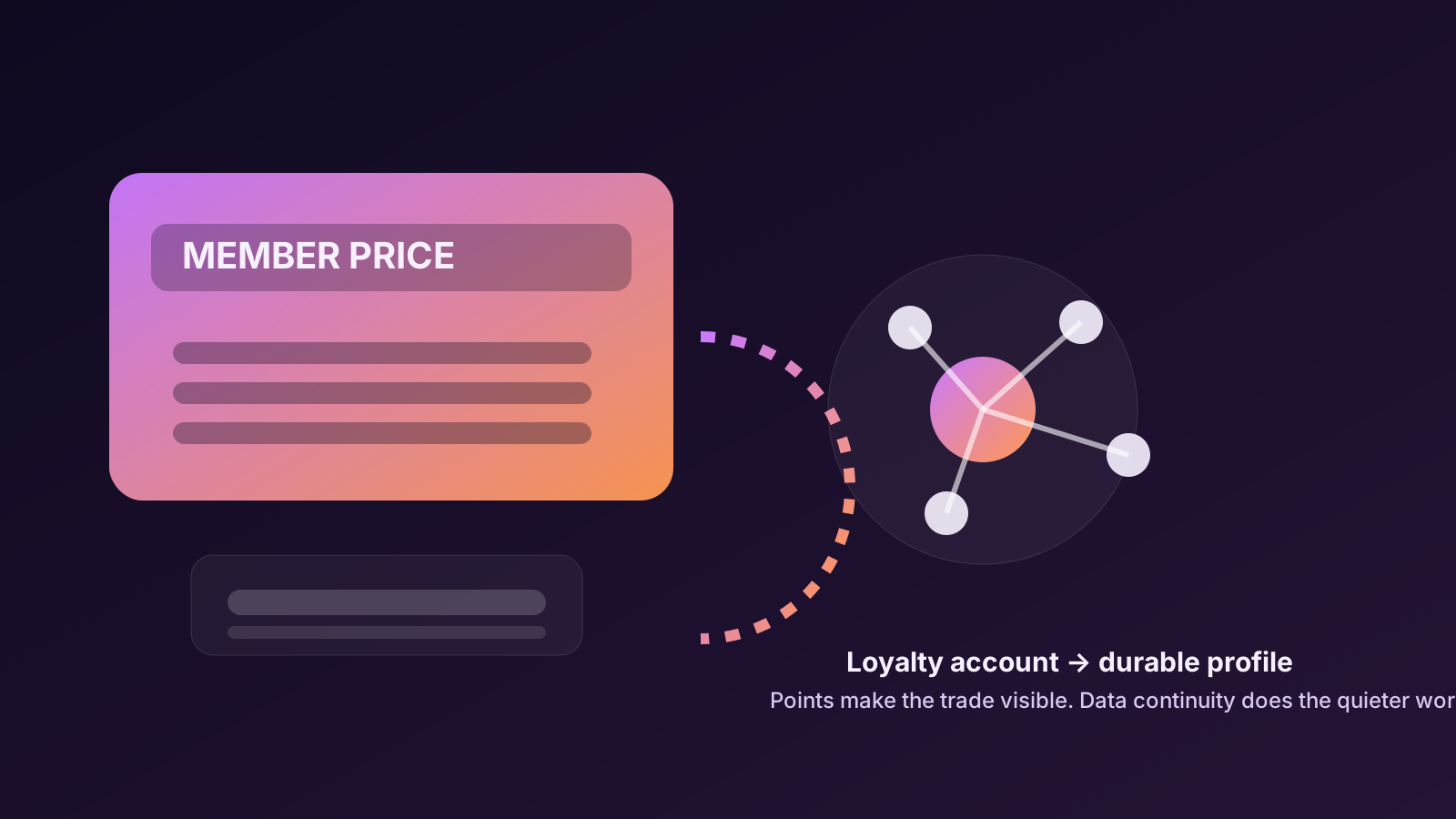
That is why loyalty programs can quietly strengthen profiling. The discount is visible; the data continuity is not. cloak's job is not to tell shoppers never to use rewards. It is to make the trade legible. If a browser privacy layer can show when a checkout is converting one purchase into a richer long-term profile, the shopper gets a real chance to decide whether the perk is worth the exposure.