
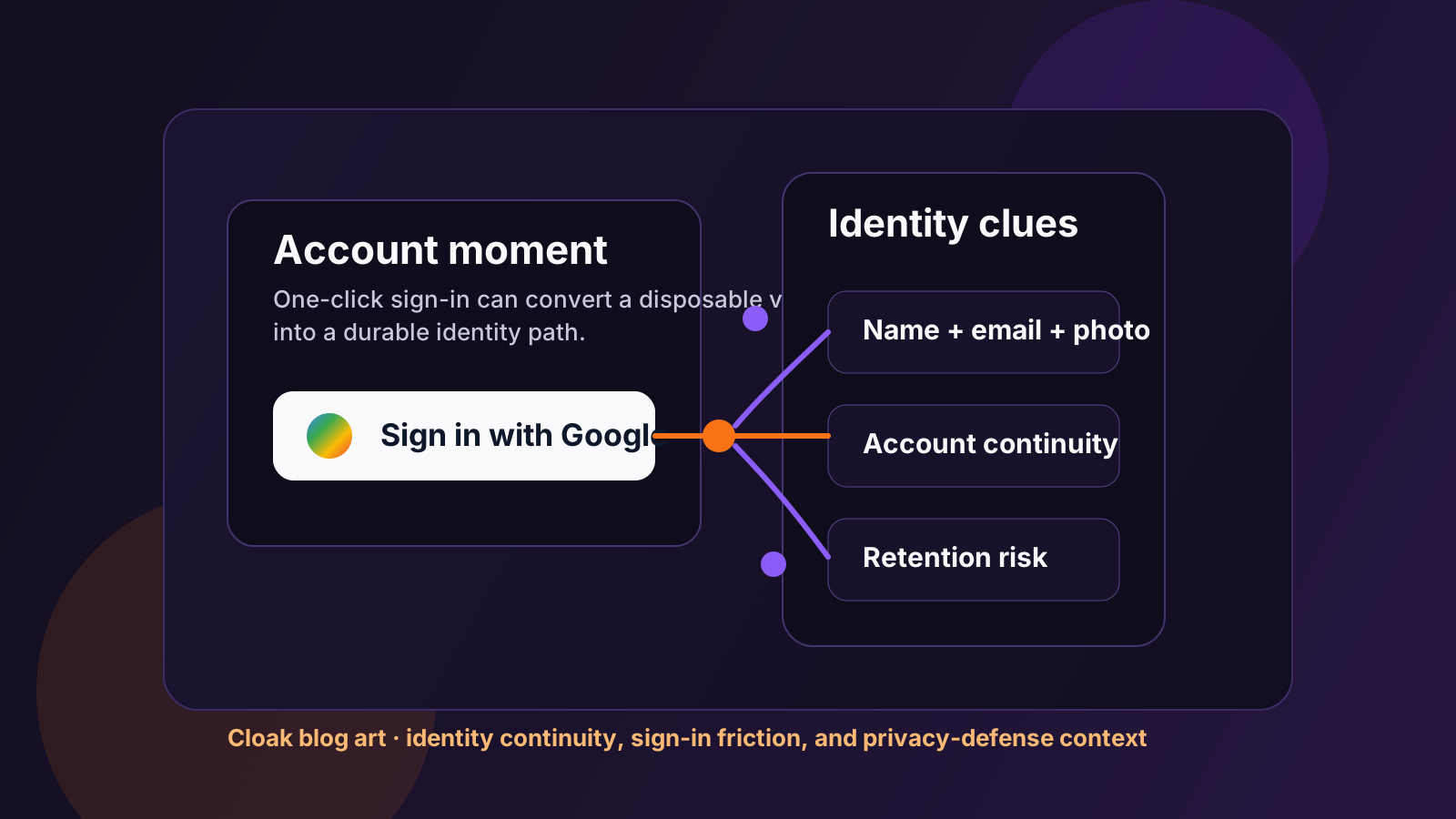
If you searched `is Sign in with Google safe` or `is Sign in with Google safe for privacy`, the short answer is: safer than reusing weak passwords, but not private by default. Google says Sign in with Google does not share your Google Account password. The real privacy question is what identity continuity the button creates once a merchant can tie your visit to a real Google-linked account instead of a more disposable browser session.
Google's own help page says that when you use Sign in with Google, the third party gets basic profile information such as your name, email address, and profile picture after you give permission. Google also says the third party may request further access to some Google Account data. That matters because even the basic package is enough to make an account feel less anonymous and more durable across future visits.
Google is also explicit about the retention boundary people often miss. If you remove access later, the third-party app or service may keep information you already provided when you signed in with your Google Account, and you may need to ask that company to delete it. So the privacy risk is not only the moment of login. It is the fact that one convenient sign-in can leave behind identity data the site can keep using under its own policies.
Google's API Services User Data Policy shows what a good-faith implementation is supposed to look like. Developers are supposed to ask only for the data they need, explain clearly who is requesting it, and disclose how the app accesses, uses, stores, or shares Google user data. That is helpful, but it also tells you what to inspect before you click: what exact permissions are being requested, whether the privacy notice is specific, and whether the site is asking for more than basic sign-in really requires.
NIST treats federation as a privacy design problem, not just a convenience feature. Its federation privacy guidance says the same identity provider used across multiple relying parties can create tracking and profiling risk, and that relying parties should request only the minimal information they need. In plain English, single sign-on can reduce password fatigue while still making it easier for identity events to become linkable across services if the implementation is not restrained.
That matters even more in shopping or account-creation flows. A user may clear cookies, switch tabs, or try to stay low-profile, then erase half of that effort by attaching the session to a durable Google-linked identity at the exact moment the merchant wants checkout continuity, cart recovery, loyalty stitching, or future remarketing. The problem is not that every Sign in with Google button is malicious. It is that one-click convenience often collapses a more disposable session into a much clearer identity path.
The honest takeaway is simple. Sign in with Google can be reasonable when you trust the service and understand the scope. But if your goal is to stay less readable, less stitchable, or less marketable, the privacy risk is real: more stable identity continuity, more retained account data, and fewer barriers between one anxious shopping session and a longer profile history.
That is why cloak's current account-and-consent lane matters. The useful defense is not a fake promise of invisibility. It is reducing cheap continuity signals where possible, naming identity-heavy moments clearly, and showing when a session still looks too easy to reconnect.