
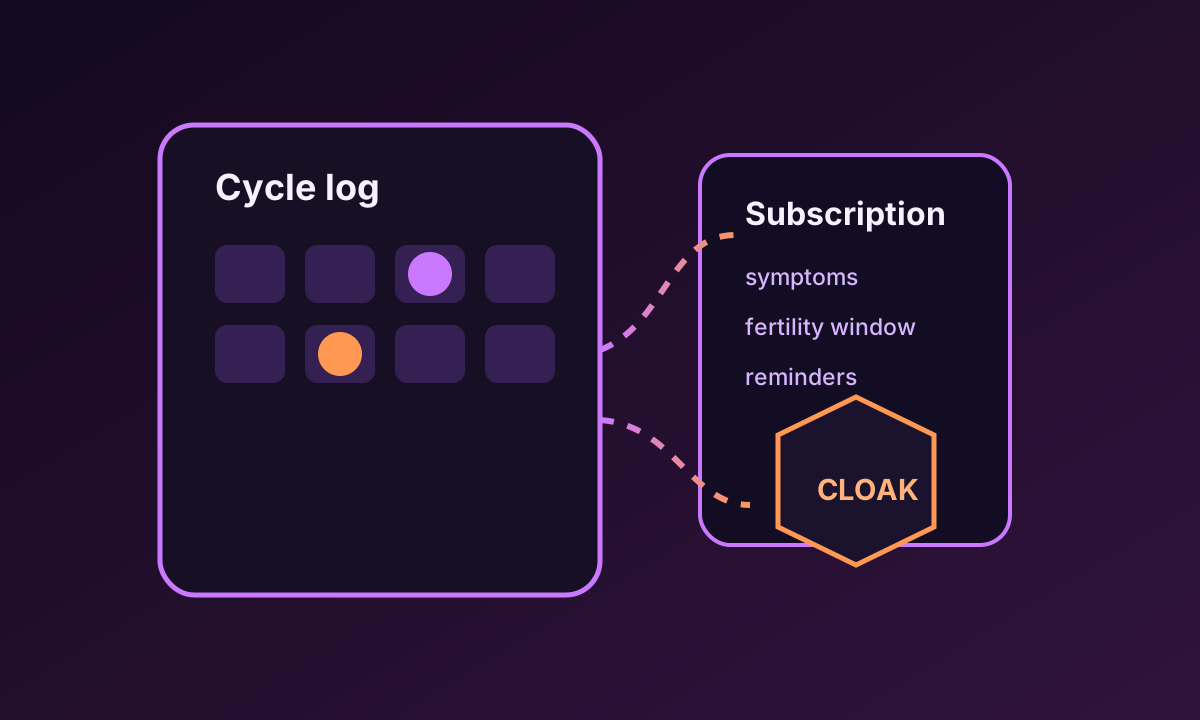
Period tracking app subscription privacy risk starts with a deeply personal question: what is happening in my body, and what might happen next? A user may log cycle dates, symptoms, sexual activity, pregnancy intent, contraception, mood, pain, medication, test results, appointments, reminders, and fertility windows. The app may also collect email, phone, device IDs, location region, payment data, referral tags, and app-store account signals. That combination can describe health, relationships, family planning, and vulnerability before the user has a clear view of who can use the data.
The FTC has brought multiple actions that make this category hard to treat as ordinary wellness software. In the Premom case, the agency said an ovulation-tracking app shared sensitive health information with third parties for advertising and analytics and required stronger privacy restrictions. In the Flo Health case, the FTC alleged the developer shared health data with outside companies after promising to keep it private. Those cases are not abstract. They show that reproductive and cycle data can become part of advertising infrastructure unless products are designed and governed carefully.
Subscription design can increase the exposure. A paywall may ask users to create an account, answer onboarding questions, enable reminders, connect wearables, import calendars, or accept a free trial before revealing what data is optional. A fertility mode can invite more detail than a basic period log. A pregnancy mode can ask due dates, symptoms, and product interests. A partner feature may encourage sharing. Each feature can be useful, but each also expands who knows what, how long records persist, and whether the information is tied to marketing, recommendations, or retention campaigns.
The FTC Health Breach Notification Rule is an important reminder that health-app privacy does not depend only on whether the app looks like a doctor's office. Consumer health apps can create sensitive records outside traditional clinical systems, and users should not assume medical-grade confidentiality just because a product uses health language. The practical question is specific: what does this app collect, what does it share, does it use data for ads, can users delete data, and are sensitive logs separated from analytics and growth tooling?
Data minimization is especially important for reproductive data. The CPPA advisory's principle is simple: collection and use should be reasonably necessary and proportionate to the disclosed purpose. A cycle calendar may need dates the user chooses to enter. It does not automatically need precise location, contacts, ad IDs, social login, detailed sexual history, or always-on reminders. If advanced features require more data, the app should explain the purpose before collection and make paid subscription access possible without turning intimate notes into a broader identity graph.
Consumers can reduce risk by separating app identity from everyday shopping identity, avoiding social login, declining unnecessary location and notification permissions, exporting or deleting old logs when leaving a service, reviewing ad-personalization settings, and reading data-sharing language before entering sensitive history. Shared phones, family tablets, app-store purchase histories, push notifications, and email receipts can expose information to partners, parents, roommates, or employers even when the app itself is locked. Privacy defense has to include those mundane surfaces too.
cloak should treat period tracking subscriptions as high-sensitivity health and family-planning flows. It can flag trackers on onboarding and paywall screens, warn when symptom quizzes run before privacy controls, identify social-login or ad-personalization pressure, and remind users to check deletion, export, and notification settings. The goal is not to scare people away from useful health tools. It is to keep intimate reproductive signals from becoming exploitable profiles. A private cycle log should serve the person who enters it, not advertisers, brokers, or pressure systems built around moments of uncertainty.
The practical harm is broader than one embarrassing ad. Cycle and fertility data can interact with relationship status, insurance shopping, pharmacy purchases, travel, school or work schedules, and family plans. Even a reminder notification or renewal receipt can disclose something in the wrong household. That is why the safest flow gives users value with minimal identity, explains sensitive sharing before onboarding, and makes deletion a first-class control rather than a buried support request.