
Restaurant reservation app privacy risk looks small because booking a table feels ordinary. You choose a time, party size, neighborhood, cuisine, and maybe a birthday or anniversary note. The app may ask for location permission, phone number, email, payment card for a deposit or cancellation fee, dietary restrictions, accessibility notes, favorite restaurants, loyalty login, and push-notification permission. Put together, those fields can reveal where you plan to be, who might be with you, what kind of night it is, what you can spend, and what personal constraints the restaurant should know before you arrive.
The most sensitive part is timing plus place. A reservation is not just a location ping; it is a planned future location. A waitlist entry says you are nearby now. A deposit says you are likely committed. A saved favorite says which places and neighborhoods matter to you over time. A repeated search pattern can separate work lunches from dates, family dinners, medical-district appointments, travel nights, or high-end spending moments. That can be valuable to restaurants, advertisers, marketplaces, and data partners because dining intent is both local and immediate.
The FTC's actions involving precise location data show why location-linked services deserve caution. The agency has treated the sale or misuse of sensitive location trails as a serious consumer harm because movement patterns can expose where people live, work, worship, seek care, or spend private time. Restaurant apps are not the same as standalone location brokers, but they sit close to the same risk: a dining profile can become more revealing when it is combined with device identifiers, map searches, payment events, and cross-app advertising signals.
Mobile privacy disclosures matter because many reservation flows happen on phones. The FTC's mobile privacy work stresses transparency at the point where data is collected, not after the user has already tapped through a long policy. A reservation app should make clear whether location is needed only to find nearby tables or also to personalize offers, measure visits, or support ads. It should explain whether dietary notes stay with the restaurant, the platform, or both. It should not turn a simple booking into broad tracking by hiding the real uses behind generic 'improve our services' language.
Dark patterns can appear in dining too. A page can make users feel that only one slot is left, that a card hold is mandatory before explaining cancellation terms, that notifications are required for waitlist movement, or that account creation is necessary when a guest checkout would work. The FTC's dark-pattern report is useful here because the pressure does not need to be dramatic. A subtle countdown, unclear fee, or preselected marketing permission can be enough to make a user trade more data for convenience than the booking actually requires.
A restaurant or platform can reduce harm by applying the NIST Privacy Framework mindset: identify what data is collected, govern how it is used, control unnecessary sharing, communicate plainly, and protect what remains. For reservations, that means limiting retention of old dining notes, separating operational allergy or accessibility notes from marketing profiles, avoiding public exposure of names and phone numbers on waitlists, and giving users simple ways to delete old reservations or remove saved payment cards.
A practical defense for diners is to treat the reservation like a small privacy transaction. Use the least data that will still secure the table. Decline location permission if searching by neighborhood works. Put only necessary dietary or accessibility information in notes, not a broad personal story. Read deposit and cancellation terms before saving a card. Avoid signing in with a broad identity provider if email booking is enough. Turn off post-meal tracking notifications and marketing emails when the meal is over.
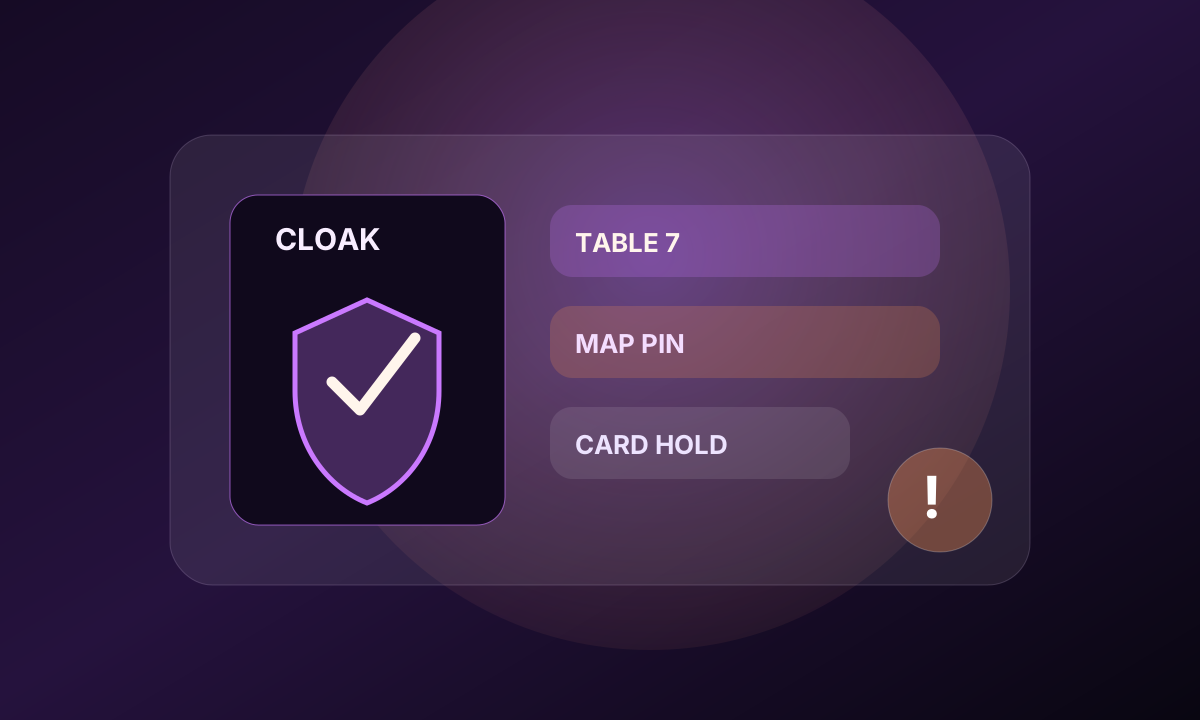
cloak's role is to make these small tradeoffs visible before they accumulate. Booking dinner should not require exposing a durable map of relationships, movements, tastes, and spending power. Active defense can flag location permission, card holds, note fields, and account-linking moments as separate choices instead of one blur of convenience. Shopping is the wedge, but the same anti-exploitation principle applies to the local services people use every week.