
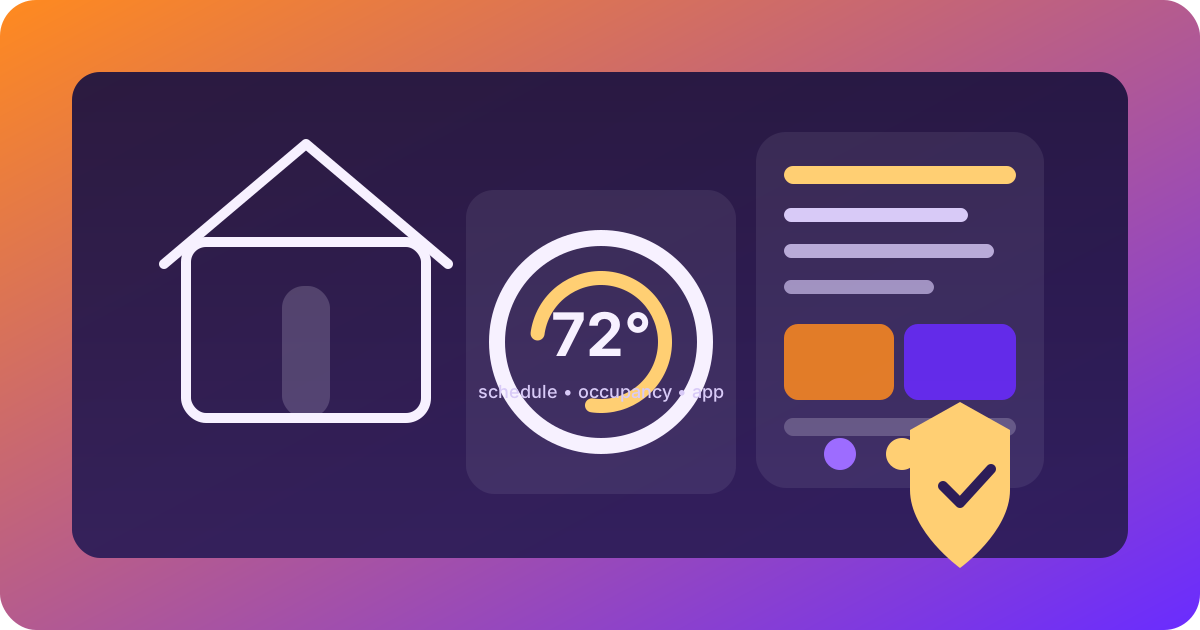
A smart thermostat looks harmless because the promise is comfort: keep the room warm before the family wakes up, cool the house before the evening, and save energy when nobody is home. But the same features that make the device useful also make it unusually revealing. A thermostat app can learn the daily rhythm of a home, when people wake up, when they leave, when they return, which rooms are used most, and whether the house is empty at a given time. That is not just temperature data. It is a routine map.
Geofencing and scheduling make the privacy story sharper. If the system knows when a phone leaves a perimeter, it can infer travel, commuting, school pickup, vacations, and weekend absences. If multiple people share the home, the device may also capture disagreements about comfort, different sleep schedules, and which resident tends to adjust the settings. The log that looks like an HVAC convenience feature can quietly become a household behavior record, especially when the account is linked to a phone number, email address, or smart-home platform.
The FTC's guidance on protecting personal information is useful because thermostat vendors often collect more than the heating function strictly requires. Device identifiers, network data, app analytics, support tickets, installation notes, and account recovery details can all ride along with normal use. The basic privacy question is simple: which pieces are necessary to keep the house comfortable, and which pieces are being kept because they are useful for marketing, product analysis, or cross-service profiling? Consumers rarely see that distinction unless the company explains it clearly.
NIST's Privacy Framework gives the better design standard. A thermostat service should identify the data flow, limit access to sensitive routines, minimize retention, and make the purpose of each field obvious. For example, a schedule is needed to automate comfort, but that does not automatically justify indefinite storage of every manual adjustment, every failed login, or every data point needed only to power a recommendation engine. The more a device knows about occupancy, the more important it is to separate operation from profiling.
There is also a vendor-chain problem. The thermostat may look like one product, but the data can travel through installers, app developers, cloud providers, support desks, analytics tools, and smart-home integrations. Each extra layer adds another place where routines can be inferred or copied. A tenant might never realize that a simple service call, pairing flow, or firmware update also exposed home behavior to a broader platform. The more fragmented the stack, the harder it is to explain who saw what and why.
The risk is higher in shared or vulnerable households. A renter may not control the whole system. A family may have kids, caregivers, shift workers, or older adults with different temperature needs. A smart thermostat can reveal when a child is alone after school, when a caregiver arrives, when a home office is active, or when no one is present during the day. Those are ordinary life patterns, but when they become account data they can be reused, sold, or exposed in ways the occupants never intended.
Pew's privacy research helps explain why this feels off even when it is legal. Many people already say the risks of company data collection outweigh the benefits, and thermostat data is especially hard to mentally separate from the home itself. The device is not inside a store or on a public site. It is in a private space. That raises the expectation that data should stay narrow, local, and purpose-limited, not become a general household dossier.
Consumers can reduce exposure by choosing devices that work locally when possible, reviewing app permissions, disabling geofencing if it is unnecessary, using separate accounts for installers and long-term owners, and checking whether the vendor combines thermostat data with broader smart-home or advertising systems. A comfort device should not require a household to trade away its daily rhythm in order to stay warm. cloak should treat thermostat telemetry as a privacy signal, not just a temperature reading.