
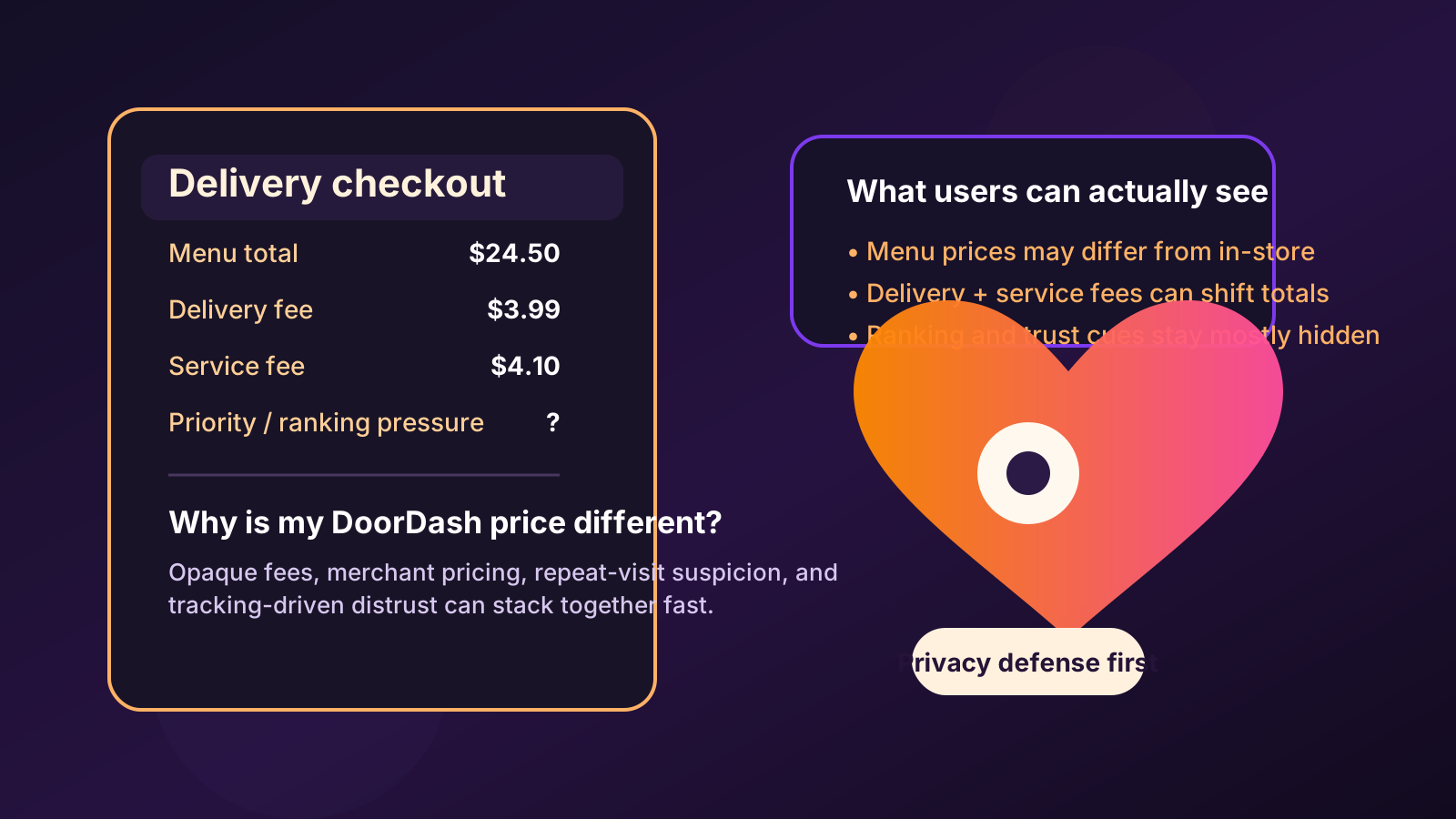
If you are asking why your DoorDash price looks different, the first honest answer is that several boring things can move the total before anyone reaches for a darker explanation. DoorDash says menu prices shown in the app may differ from the prices offered directly by the merchant, and its help materials also describe delivery fees, service fees, and small-order minimum fees that can change the final number. So not every strange total is proof that someone built a secret profile around you.
But that does not mean the user is imagining the trust problem. The shopper usually sees the output change without seeing the full stack of inputs that produced it. A restaurant can set delivery prices differently from in-store prices, the platform can layer on multiple fees, and ranking or promotion systems can shape what offer or merchant you end up seeing first. That opacity is exactly why a normal person ends up asking whether the system is just dynamic or whether it is reacting to something about them.
DoorDash’s own public material reinforces that the stack is not one simple menu number. The company says menu pricing is one factor among many in marketplace performance, alongside things like popularity, speed, and order accuracy. In other words, the delivery flow already sits inside a larger optimization system. The user does not get a clean window into that logic, so suspicion grows whenever two screens feel inconsistent.
That broader suspicion now has a real regulatory backdrop. In 2024 the FTC launched an inquiry into surveillance pricing and said companies can use personal data such as location, demographics, browsing history, shopping history, and other information to shape how people are treated. That does not prove DoorDash is individually personalizing every confusing total. It does explain why people are no longer irrational for wondering whether opaque price systems can lean on hidden data.
The privacy layer matters here too. In 2024 the California Attorney General announced a settlement with DoorDash alleging that the company had sold customer personal information to a marketing cooperative without the notice and opt-out mechanisms required by California law. That case was about privacy disclosures, not a smoking gun on personalized delivery pricing. But it is still relevant because it shows that data-sharing questions around large commerce platforms are real, not paranoid fiction.
So what can a user say with confidence? They can say delivery-app prices can differ for ordinary platform reasons, that the systems around those prices are hard to inspect, and that hidden data use in commerce is serious enough to attract both regulatory and consumer-protection scrutiny. That is the exact gap cloak is built for. The goal is not to promise that every weird price is solved. The goal is to reduce hidden collection, weaken repeatable profiling signals, and warn when a high-intent buying moment starts looking harder to trust than it should.