
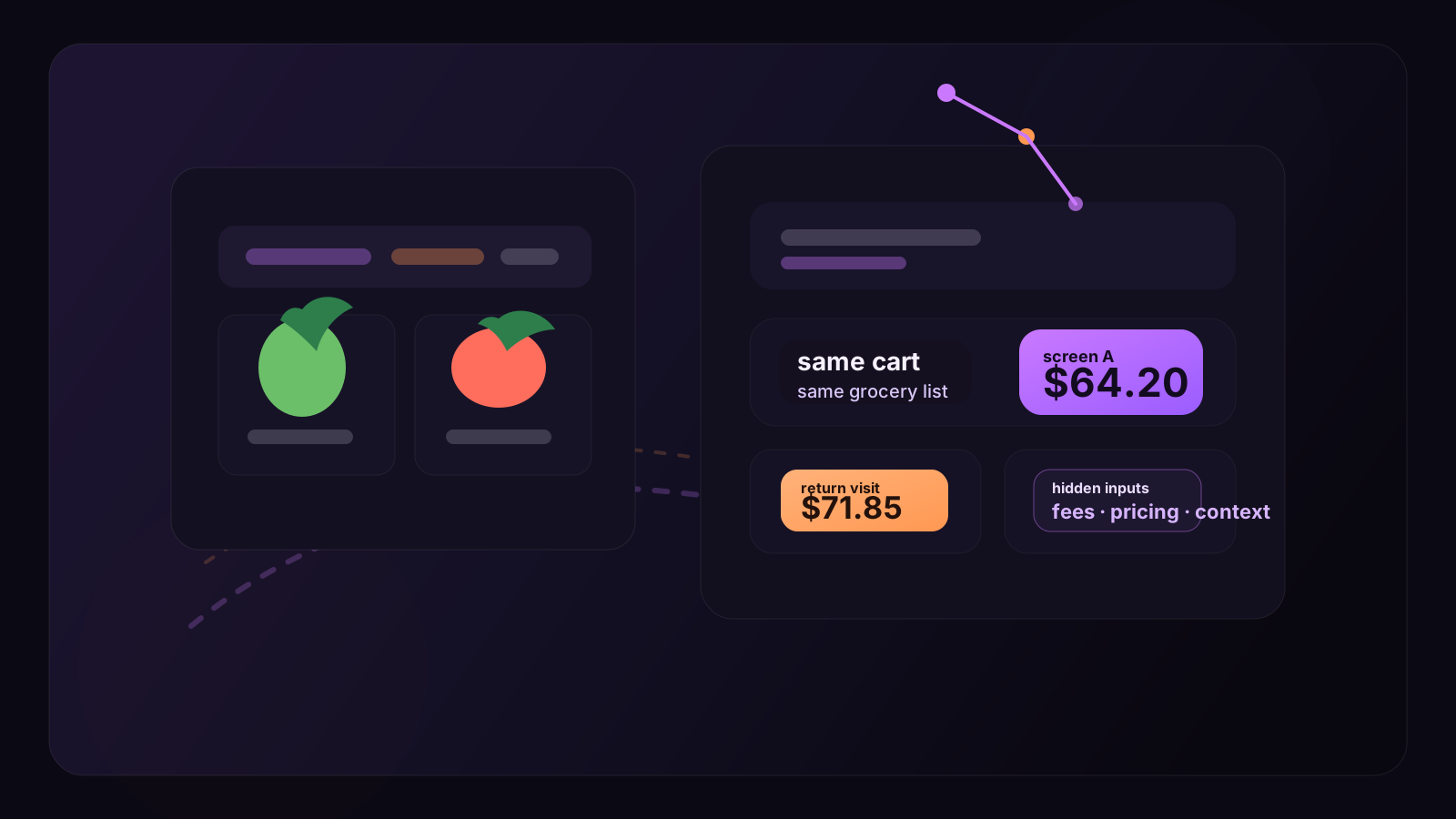
If you are asking why your Instacart price is different, the first honest answer is that several ordinary mechanisms can move the total before anyone needs a hidden-profile theory. Instacart says retailers set the item prices on the marketplace, many stores offer everyday store prices on the platform, and some retailers set prices that differ from in-store prices. That alone means two grocery totals can diverge even before delivery and service fees enter the picture.
Instacart also explains that delivery fees vary based on the retailer, delivery window, and order total, while service fees can change based on factors like location and the number and types of items in your cart. In other words, the shopper is not looking at one simple shelf price plus one flat delivery charge. The final number can reflect store policy, timing, cart composition, and platform fees all at once.
Grocery delivery adds another layer of variation because some items are not final until they are weighed. Instacart says produce, deli, meat, and seafood items can adjust after checkout when the final in-store weight differs from the estimate. That means a shopper can do everything right and still see the receipt move later for reasons that feel hard to predict from the screen alone.
None of that proves Instacart is secretly changing every total based on a personal dossier. But it does explain why the flow feels opaque. The shopper sees the output change while much of the pricing logic stays hidden behind retailer policies, fee calculations, and post-order adjustments. That is exactly the kind of environment where people start wondering whether the system is reacting not just to the basket, but also to context about the person on the other side of the screen.
That suspicion now has a real regulatory backdrop. The FTC said in its 2024 surveillance-pricing inquiry that companies may use detailed personal data such as location, demographics, browsing history, and shopping history to shape how people are treated. That does not prove Instacart is individually profiling every grocery order. It does show why users are no longer irrational for asking harder questions when a commerce flow feels both expensive and hard to inspect.
The privacy layer matters here too. Instacart’s own help center has a dedicated privacy section for accessing, deleting, and in some places opting out of certain information sharing. That is a useful reminder that grocery-delivery apps are not just checkout tools. They are data systems that can carry location, household, loyalty, and purchasing context over time. cloak’s job is not to promise that every weird grocery total is solved. It is to reduce hidden collection, weaken repeatable recognition, and warn when a high-intent buying flow starts looking harder to trust than it should.