
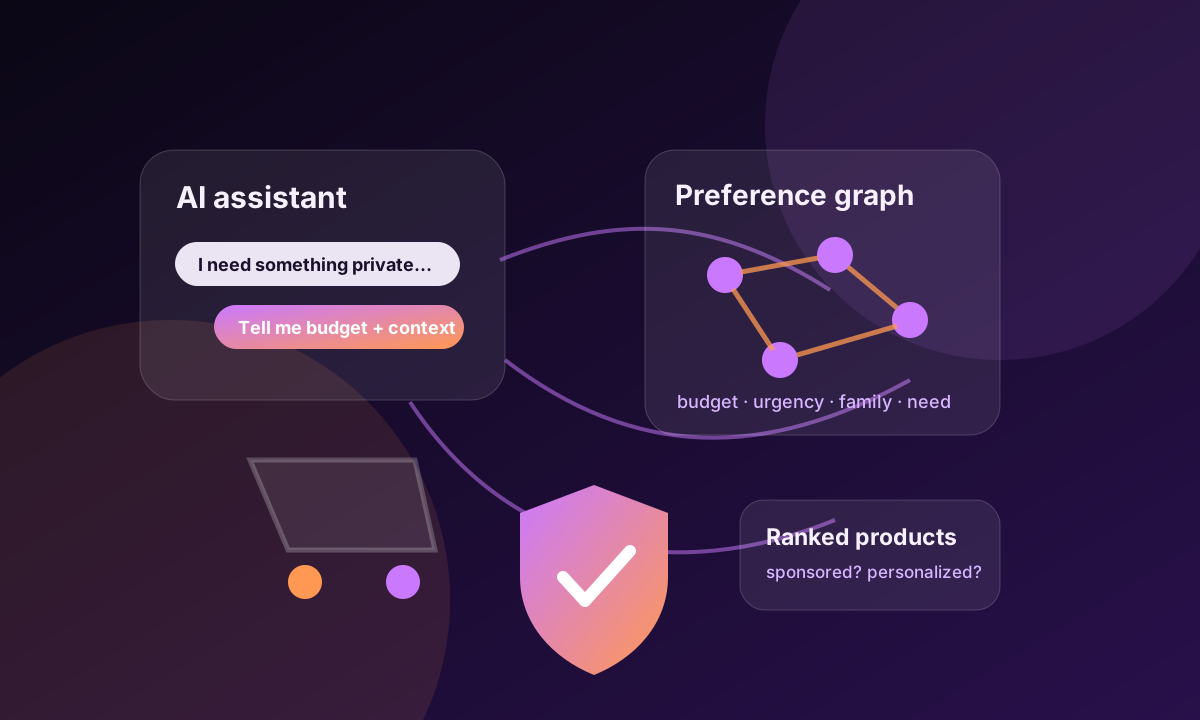
AI shopping assistant privacy risk is different from ordinary search because a chat prompt invites context. A shopper may tell a bot their budget, size, symptoms, family situation, travel dates, job needs, school constraints, taste, insecurity, or urgency in plain language. That can make recommendations better. It can also turn a shopping session into a structured confession of preferences and vulnerabilities that a normal product filter would never have captured so directly.
The core question is not whether AI shopping assistants can be useful. They can. The privacy question is what the assistant remembers, who receives the prompt, how recommendations are ranked, whether account data is joined to the conversation, and whether the conversation becomes training, targeting, or personalization data later. A query like 'best laptop under $600' is not the same as 'I lost my job, need a cheap laptop for interviews, and cannot risk a bad return policy.' The second prompt contains economic and emotional signals a retailer could treat as leverage.
NIST's AI Risk Management Framework is useful because it treats AI risk as something organizations must govern, map, measure, and manage rather than hand-wave away with novelty. In a shopping context, that means a company should know what data the assistant collects, what model or vendor processes it, what outputs can affect economic treatment, and how harms such as privacy loss, bias, over-personalization, or misleading recommendations are reduced. A friendly chat bubble does not remove the need for controls.
The FTC's guidance on AI claims matters because companies should not overpromise what an assistant does or hide the tradeoffs behind a futuristic label. If an AI shopping helper says it is finding the best product, users should know whether results are sponsored, personalized, optimized for margin, constrained by inventory, influenced by affiliate relationships, or based on account and behavioral history. A recommendation can look neutral while still reflecting commercial ranking logic the shopper cannot see.
The surveillance-pricing concern is the economic layer. The FTC has asked companies about systems that use personal data and automated decisions to influence prices or offers. An AI assistant can collect the exact signals that make a person easier to steer: urgency, willingness to compromise, budget ceiling, loyalty, category need, and sensitivity to shipping or financing. That does not prove a chatbot is changing prices. It does show why conversational commerce belongs in the same threat model as profiling, ranking, and pressure.
AI assistants can also collapse contexts. A shopper may ask one bot about a medical product, a birthday gift, a work trip, and a household appliance. If those conversations attach to the same account, device, loyalty ID, or email, the assistant can help build a richer profile than separate searches would. Preference memory can be convenient, but it should be optional, visible, and easy to delete. Otherwise 'remember my style' can become 'remember my household, budget, stress, and recurring needs.'
Pew's privacy research explains the trust gap. Many people already feel companies collect more than they understand or control. AI shopping makes the gap wider because the interface feels conversational, while the data architecture remains opaque. People disclose more when the system sounds helpful. Privacy defense has to account for that emotional design, not just the technical presence of a tracker pixel.
A practical checklist is to avoid sharing sensitive life details unless necessary, ask whether memory can be turned off, treat sponsored recommendations skeptically, use guest or separate browser contexts for sensitive shopping, delete conversation history when possible, and compare recommendations outside the assistant before buying. cloak's framing is anti-exploitation, not anti-AI. If a shopping assistant collects vulnerable prompts, joins them to identity, or uses them to intensify pressure, the user deserves a visible warning before help becomes profiling.