
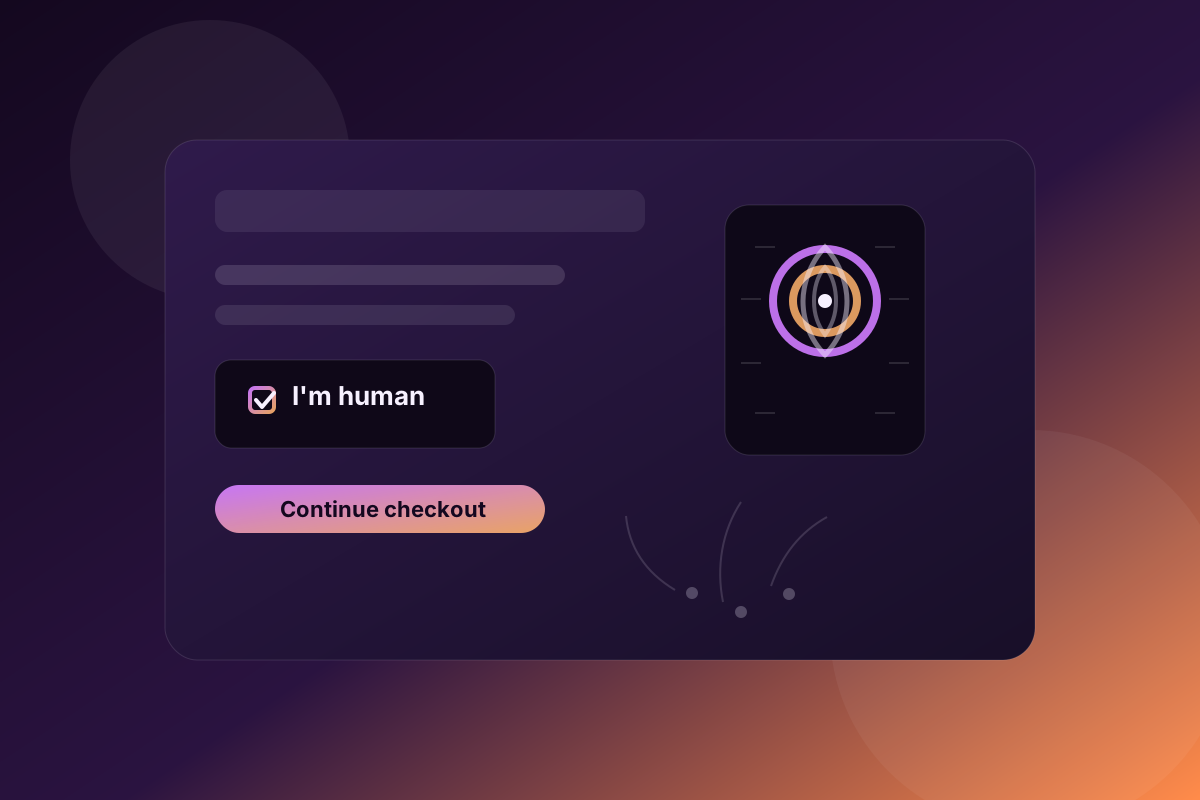
A CAPTCHA on a shopping site is not automatically a privacy problem. Sometimes it is the cheapest way for a merchant to block carding attacks, fake account creation, coupon abuse, and scripted checkout fraud. The question is whether the check is narrowly focused on abuse or whether it becomes another surveillance layer sitting between you and the purchase.
Google describes reCAPTCHA v3 as a score-based system that lets site owners judge requests without interrupting every visitor with a puzzle. Cloudflare Turnstile is also sold as a bot-management step that can help separate legitimate traffic from automated traffic. That can be useful, but it also means the site is making a trust decision from signals the user does not control.
Those signals matter because bot checks often live at the same layer as other tracking tools: the page load, the network path, the browser characteristics, and the way a person moves through the form. Even when a CAPTCHA itself is simple, the surrounding scripts may still observe timing, retries, device traits, and the way the checkout flow is being used. The shopper experiences one little box; the merchant may be analyzing a much larger pattern.
That is where browser fingerprinting comes in. EFF's Panopticlick work showed how a browser can be surprisingly unique once a site combines attributes like its configuration, plugins, and other characteristics. A modern bot-detection stack does not need to know your full identity to start building repeatable recognition. It only needs enough stable detail to decide that this browser is worth challenging again.
The privacy risk grows when the challenge appears at the end of checkout. A merchant can make the user spend time proving they are human at exactly the moment when they most want to finish the purchase. The FTC's dark-patterns work is useful here because it warns that interfaces can steer people by adding friction, hiding alternatives, or making the easy path the most invasive one. If the CAPTCHA feels like a gate to your own cart, it is worth asking whether the site is protecting itself or extracting more data than it needs.
There is also a difference between a first-party fraud check and a third-party script that follows you across pages. If the merchant runs a narrow, local abuse check, the privacy cost is smaller. If a third-party service is embedded everywhere, the check can become part of a wider tracking graph that outlives the single cart. That is especially true on stores that already use analytics, session replay, or adtech in the same session.
The practical rule is simple: complete a CAPTCHA when the site truly needs one, but notice what happens around it. If the merchant asks for extra sign-in, phone verification, or repeated retries just to keep shopping, that is a sign the abuse defense may be doubling as a pressure tool. Use a trusted browser profile, avoid unnecessary logins, and prefer merchants whose privacy policy explains why the bot check exists and what data it touches.
There is a second privacy question worth asking: does the merchant offer a low-friction alternative for people who do not want another challenge script in the checkout path? A real abuse control should still let a human finish the purchase without making them hand over a new account, a phone number, or a fresh stream of behavioral data just to prove they are not automated. The best versions of these checks are narrow, explain themselves, and disappear once the order is placed. If the site cannot explain that clearly, the check should be treated as a warning sign.
For cloak, a CAPTCHA is not just a nuisance or a security feature. It is a signal that the checkout flow may be making a trust judgment about you. The useful thing to surface is not whether the user passed the puzzle, but whether the page used that moment to collect more device and behavior data than a normal shopper would expect.