
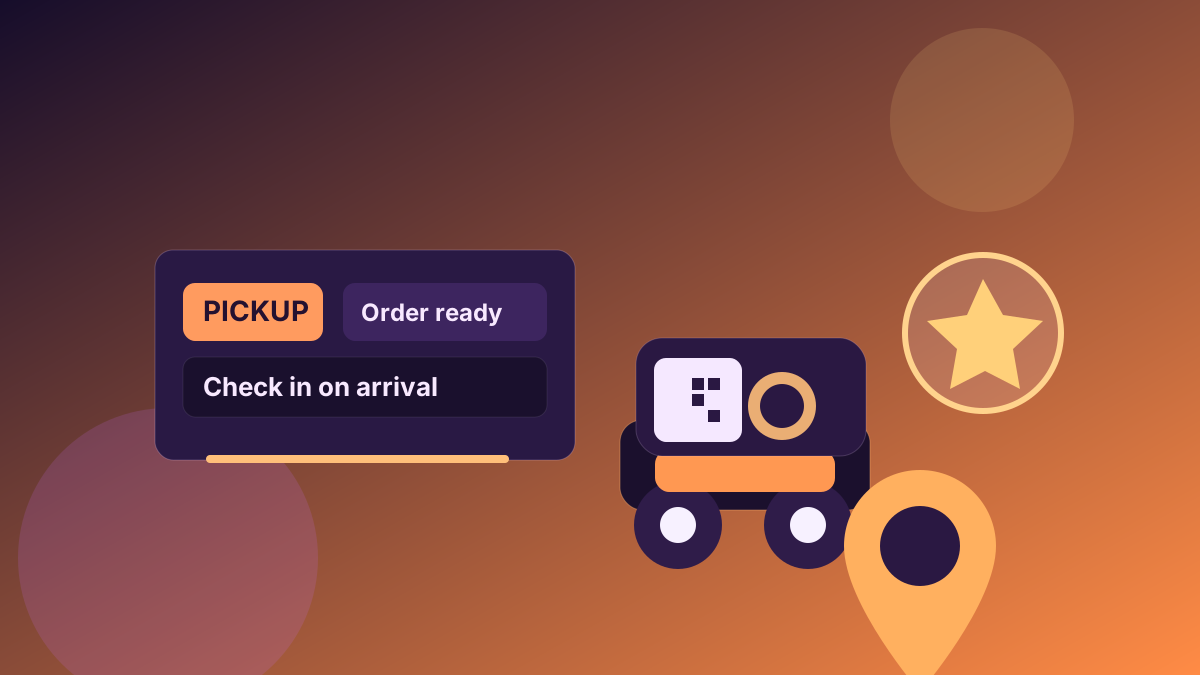
Buy online, pick up in store privacy risk starts with a promise of speed. The shopper clicks, pays, and expects to skip delivery friction. But BOPIS flows also create a new identity bridge: the order is tied to a store, a pickup window, a phone number or account login, a device that checked in, and a moment when the shopper physically arrives. That is enough context to make the same purchase history more legible than a simple cart would suggest.
The privacy problem is not that curbside pickup exists. The problem is that the pickup layer can add location and timing to a profile that already contains product interest, purchase value, and account details. If the app asks for location permission, if the site uses geofencing for arrival detection, or if the pickup page keeps a session alive long enough to connect the visit to other pages, the merchant gets a richer map of the household than the checkout page alone would suggest.
The FTC's recent location-data actions show why this matters. The agency has treated precise location as sensitive because it can reveal visits to health facilities, places of worship, schools, and other sensitive places. A retailer does not need to be a location-data broker for the lesson to apply. If a pickup flow uses precise location, background permissions, or device identifiers to automate convenience, it should be handled as sensitive data, not as ordinary analytics exhaust.
Data minimization is the safer default. The CPPA's advisory says collection, use, retention, and sharing should be reasonably necessary and proportionate to the disclosed purpose. For curbside pickup, that means the store needs the order, the pickup name, a contact method, and enough location information to meet the shopper at the right place. It does not need a permanent movement history, a cross-app ad profile, or a long-lived record of every time that household came back to the lot.
The NIST Privacy Framework reinforces the same idea in operational language: identify privacy risk, control data use, and communicate clearly with the individual. That framing fits BOPIS better than a generic consent banner. A shopper should know whether they are checking in with coarse store proximity, sharing a precise GPS fix, or letting the retailer keep that signal for future marketing. The distinction is small on screen and large in the profile it creates.
Consumers can lower the risk without abandoning pickup. Use the least-privileged location setting the app allows, prefer manual check-in codes if they exist, avoid logging into loyalty accounts unless there is a real benefit, and close pickup sessions once the handoff is complete. If a store makes precise location or a persistent app install feel mandatory just to collect an already-paid order, that is a sign the convenience may be carrying extra data collection with it.
Retailers can design a cleaner pickup flow. Ask for location only at arrival, keep the data short-lived, separate operational check-in from marketing, and make the privacy tradeoff visible before the shopper is standing in a parking lot. A curbside flow should help a buyer get the order home, not make the lot into a long-term tracking node.
The other trap is duration. A pickup session should end once the order leaves the lot, but many product teams are tempted to keep the same account and device path alive for future promotions, app nudges, or abandoned-pickup recovery. That turns a one-time convenience event into another durable recognition point. If a shopper only wanted to grab toothpaste and go, there is little reason to turn the parking-lot handoff into a standing invitation for later profiling.
cloak's active-defense role is to notice when pickup convenience starts looking like profile expansion. It should warn when a BOPIS flow requests precise location too early, when a store app keeps trackers alive after the order is ready, when loyalty sign-in changes the data surface, and when the pickup moment becomes another place where the merchant can infer household routines.