
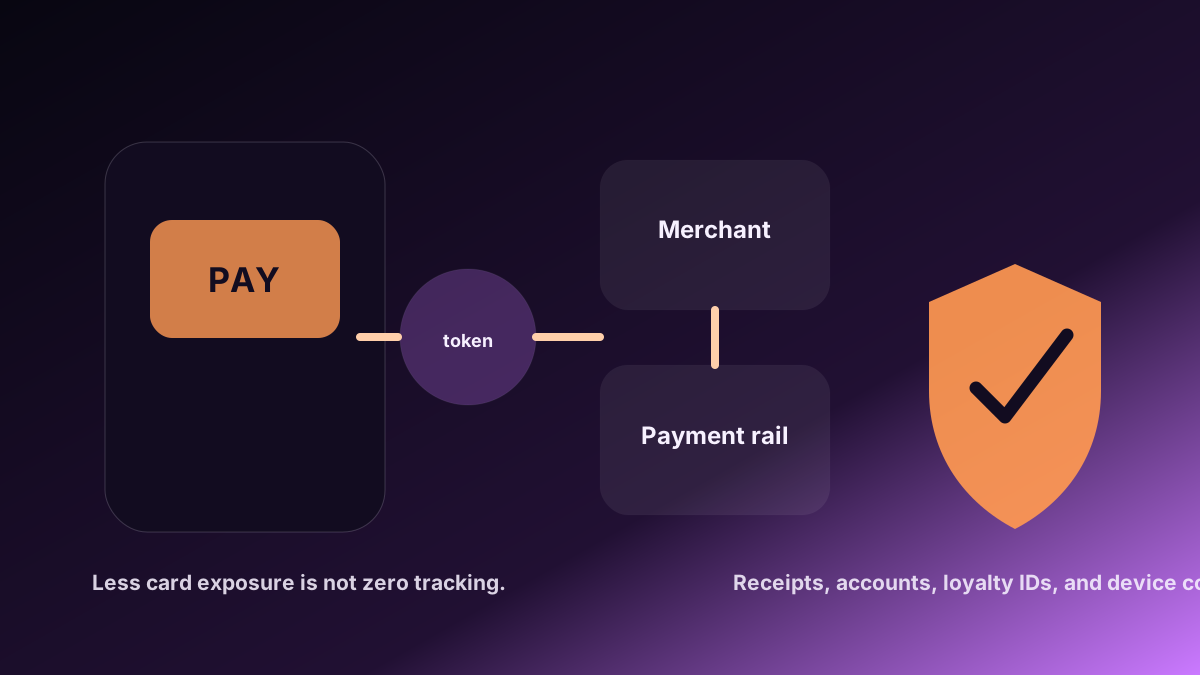
Digital wallet checkout privacy risk is easy to misunderstand because wallet payments really can improve one part of the transaction. Tokenized payments can reduce how much raw card data a merchant receives, and biometric approval can make unauthorized card use harder. That is valuable. But a safer payment credential does not automatically make the whole checkout private. The merchant can still see the cart, account, shipping address, email, phone, IP address, device context, loyalty ID, coupon path, referral tag, and post-purchase behavior.
Apple's Apple Pay privacy and security materials explain the useful part: the system is designed so the actual card number is not stored on the device or shared with merchants in the ordinary payment flow. That matters because card exposure has historically created obvious fraud risk. A shopper using a reputable wallet may be reducing one category of sensitive payment leakage compared with typing a card number into every checkout page.
The confusion starts when users treat that payment improvement as a full privacy shield. A store does not need the underlying card number to recognize a repeat shopper. It can rely on account login, browser identifiers, shipping address, email, phone, loyalty membership, cookies, fingerprinting, previous purchases, return history, saved cart state, and marketing attribution. If the shopper taps a wallet while logged into a merchant account, the checkout may still strengthen the same customer profile the user hoped to avoid.
The CFPB has treated digital payment privacy as a live policy issue. In its request for input on digital payment privacy and consumer protections, the Bureau described financial surveillance concerns and asked how existing laws should apply to emerging payment mechanisms. Its larger-participant rule for general-use digital consumer payment applications also shows that payment apps and wallets are no longer fringe conveniences; they are infrastructure that can affect fraud, data practices, and consumer protection at scale.
There is also a commercial-pressure layer. The FTC's surveillance-pricing inquiry focuses on systems that may use personal data such as location, demographics, browsing history, shopping history, and other signals to shape offers or prices. A wallet payment by itself may not reveal all of that. But checkout is where many streams converge: cart value, urgency, shipping choice, address, financing options, returns risk, and whether the shopper chose a fast wallet, a buy-now-pay-later tool, or a stored card. Payment method can become another behavioral signal.
Shop Pay, Google Pay, Apple Pay, PayPal, Venmo checkout, and other wallet-like flows also differ in what accounts they connect, which receipts they generate, whether they store shipping information, how they handle merchant offers, and what data they use for fraud prevention or personalization. The practical question is not which brand name sounds private. It is what data the wallet hides from the merchant, what data the merchant still collects directly, and what data the wallet provider, processor, or platform may process for its own purposes.
A practical checklist is to use wallet payments for card-number reduction, but keep separate expectations for profile reduction. Prefer guest checkout when possible, avoid attaching a wallet to unnecessary merchant accounts, skip loyalty enrollment for sensitive purchases, use email aliases for receipts, review wallet transaction histories, turn off promotional integrations where available, and watch for checkouts that bundle wallet convenience with account creation. If the purchase is sensitive, the shipping address, receipt trail, and account link may matter more than the payment token.
The household angle is also easy to miss. A wallet may contain several cards, shipping addresses, loyalty passes, transit cards, and app histories. One tap can feel anonymous because it is fast, but the surrounding account ecosystem may still reveal which family member bought the item, where it shipped, which device approved it, and which merchant account received the receipt. Speed should not be mistaken for separation.
cloak's role is to make that distinction visible. Payment security is not the same as anti-profiling defense. A checkout can be safer against card theft and still highly readable to merchants, platforms, analytics vendors, and pricing systems. Active privacy defense should preserve the good parts of wallet payments while warning when the rest of the checkout is still turning a purchase into a durable identity signal.