
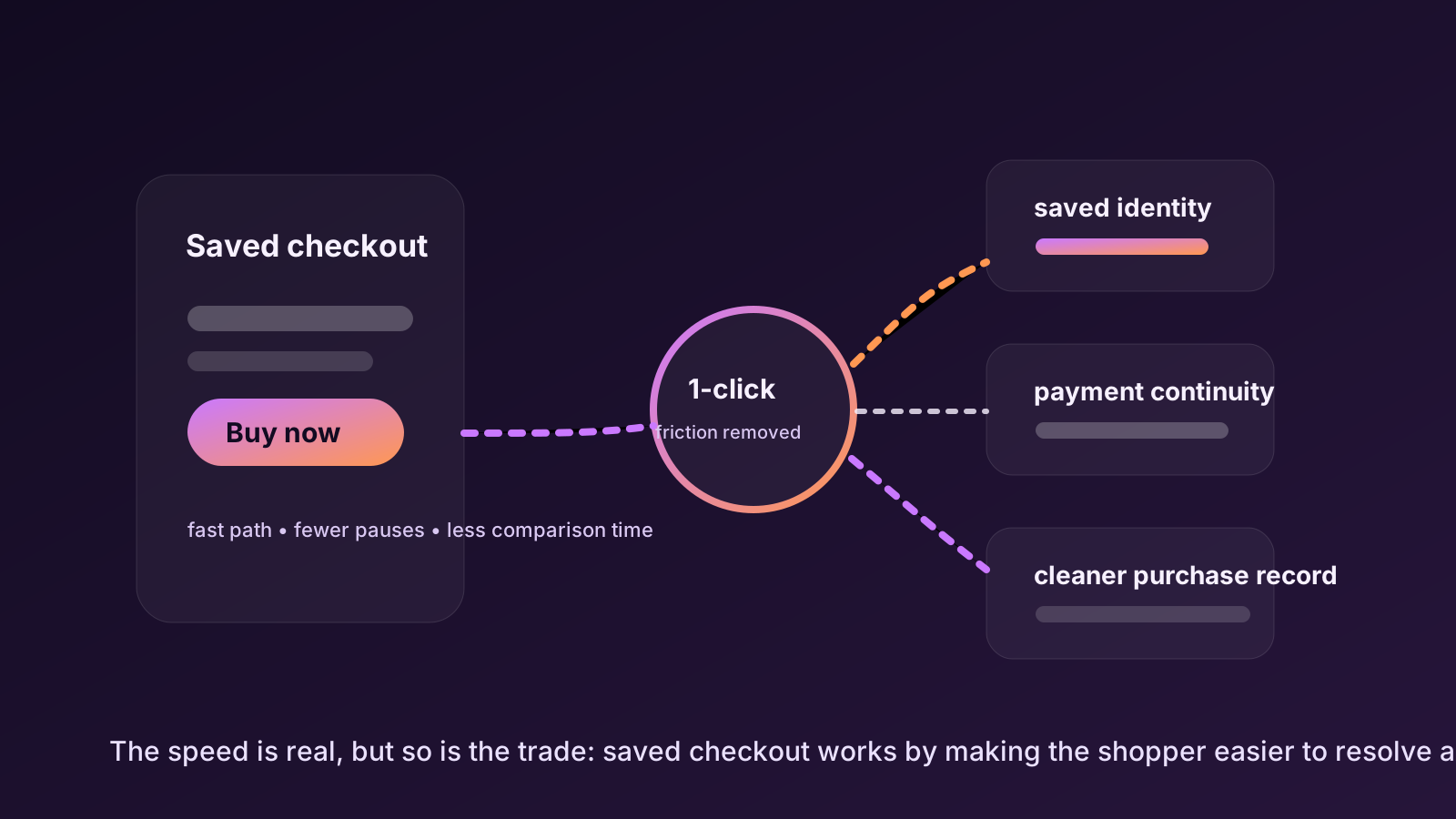
If you are asking whether financing checkout is safer for privacy than saving your card on websites, the honest answer is usually not by much. A financing flow can feel cleaner and more controlled than letting every merchant keep a stored card, but it still preserves lender-linked or wallet-linked identity continuity, purchase visibility across repeat purchases, and a faster path back to the same checkout behavior. That means the merchant, the financing provider, and the surrounding commerce stack may still get a steadier picture of who is buying, when they buy, and how often the same shopper comes back.
That is why deferred-payment privacy and card-storage privacy are not the same question. A shopper may correctly notice that pay-later plans, installment options, or other deferred-payment layers feel different from leaving a card stored inside every merchant account, yet the privacy issue is whether that convenience layer still preserves a stronger account-linked checkout path than typing card details manually. The question is not only `did I avoid giving this store my saved card`. It is also `how much durable checkout continuity did this convenience layer preserve around me`.
The FTC's surveillance-pricing inquiry adds a second reason this matters. In 2024 the agency asked companies about the use of data such as browsing behavior, purchase history, location, and demographics to shape prices or offers. Split-payment and accelerated-checkout systems can strengthen the purchase-history part of that picture. If checkout repeatedly resolves to the same pay-in-4-linked account and the same streamlined path, the merchant gets a cleaner record of who bought, how often, and under what conditions.
The FTC's data-broker report and IAB Tech Lab's Project Rearc help explain why continuity remains so valuable after the cookie era. The underlying commercial goal is still addressability: keeping behavior attributable to a recognizable person or household across time. A pay-in-4 purchase does not erase that system. It can still feed it with high-signal conversion events and a stable account-linked financing path that is harder to confuse than a casual page view.
That is the privacy cost of saved payment convenience. The feature is not evil because it is fast. The problem is that speed can hide how much durable context the system needed in order to feel effortless. cloak's job is not to shame shoppers for using saved checkout. It is to make the trade legible by showing when a faster payment path also comes with stronger tracking continuity, denser profiling inputs, or less room to step back before the page closes around the decision.