
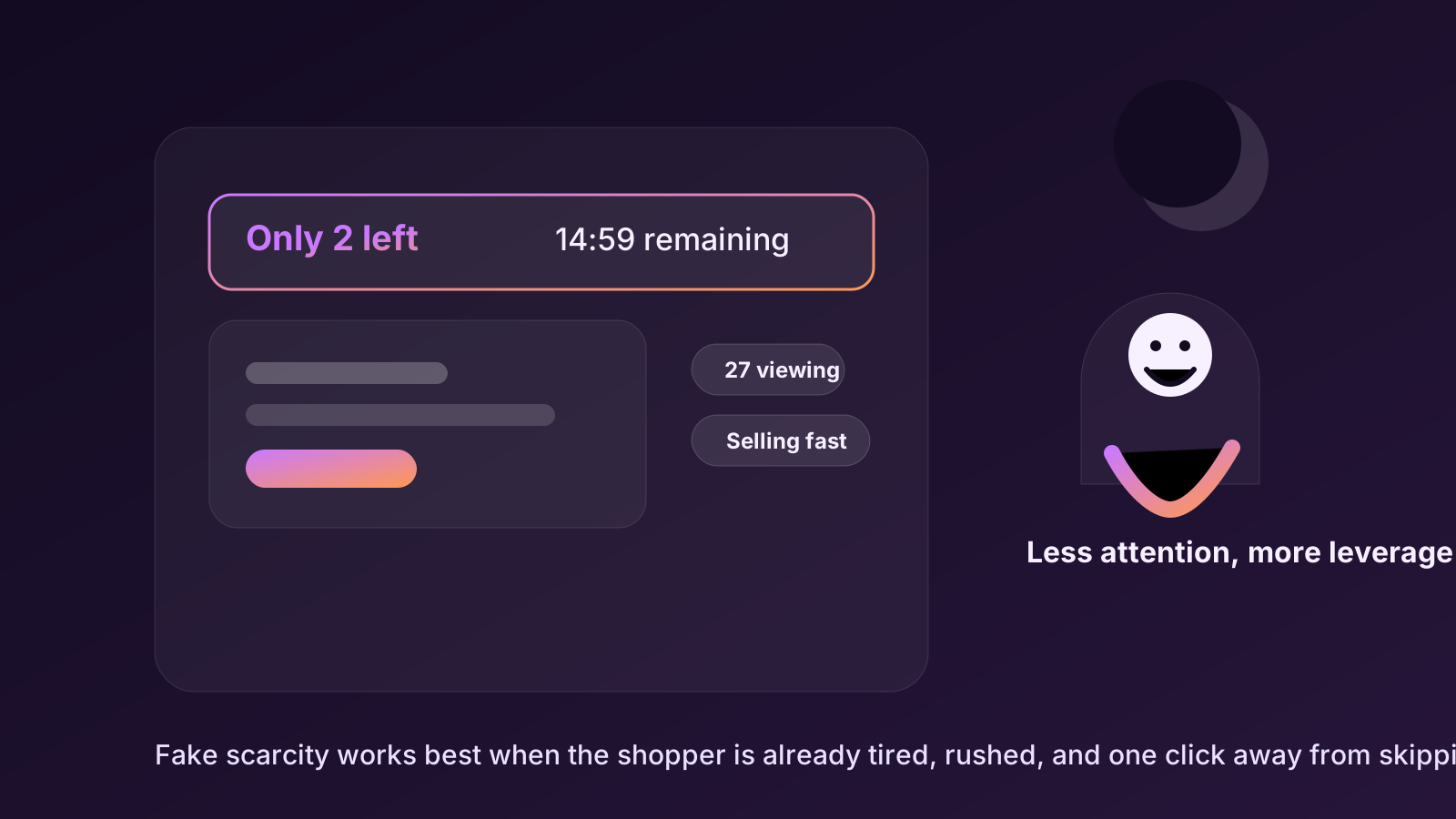
Fake scarcity works because it does not need to prove a claim beyond doubt. It only needs to interrupt the moment when a shopper might have paused to compare, reopen another tab, or sleep on the purchase. A low-stock badge, a popularity warning, or a timer can turn uncertainty into motion by making delay feel expensive even when the shopper cannot verify the pressure is real.
The FTC's dark-patterns report is direct about this category. It calls out false low-stock messages and deceptive countdown timers as tactics that can steer people into decisions they might not otherwise make. That framing matters because it keeps the argument grounded. The problem is not that urgency copy feels tacky. The problem is that it can meaningfully impair a person's ability to evaluate the offer on normal terms.
European regulators have measured this at scale. In a 2023 sweep, the European Commission and consumer authorities screened 399 online shops and websites, found manipulative practices on 148 of them, and identified 42 sites using false countdown timers or similar claims that created artificial time pressure. That is the strongest answer to the idea that fake scarcity is just a rare bad apple. It is common enough to show up clearly in a cross-market enforcement sweep.
The UK's Competition and Markets Authority reached a similar conclusion in travel booking. Its intervention with hotel booking sites targeted misleading pressure-selling messages around scarcity, popularity, and time limits. That is useful because it shows how fake scarcity survives even in polished, mainstream interfaces. The pages do not have to look shady to push people into faster decisions.
Academic measurement backs up the system-level story. Dark Patterns at Scale found scarcity and urgency techniques across thousands of shopping sites. The safest way to talk about tired shoppers is not with pop-psych claims about mystical decision fatigue. It is simpler: when a person is already low on time or attention, fake scarcity gets more leverage because pressure leaves less room to verify the offer. That is exactly the kind of moment cloak should surface instead of letting the page quietly rush the decision.