
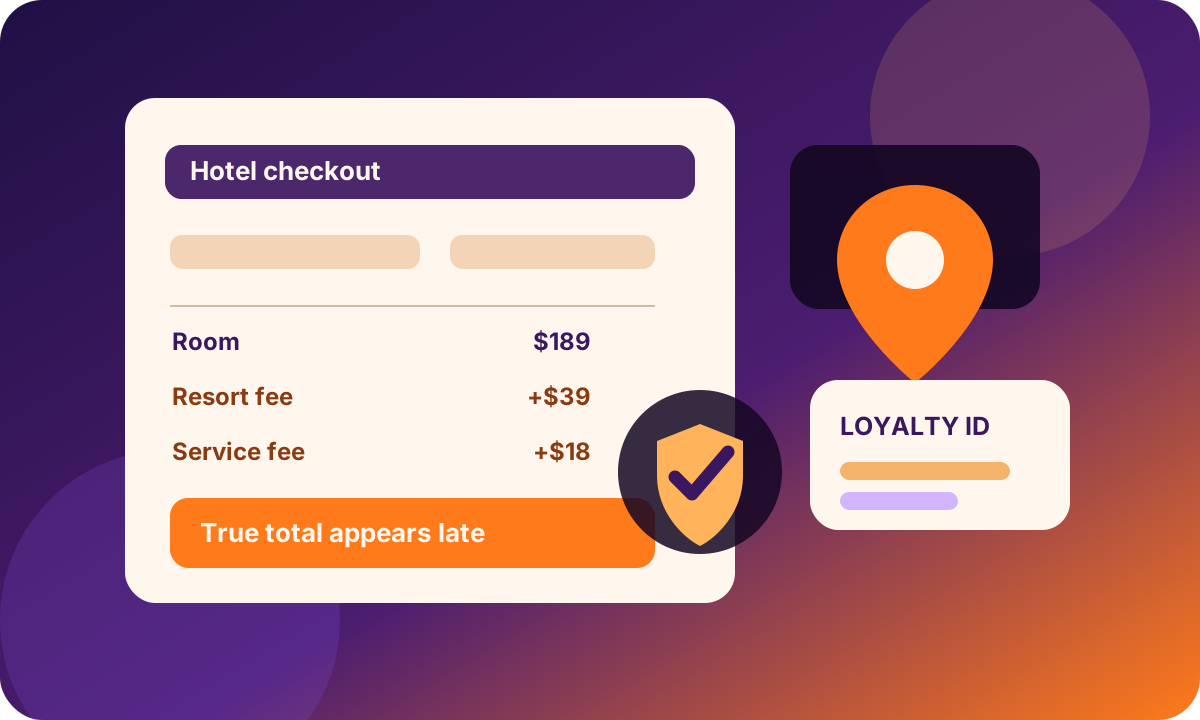
Hotel resort fee privacy risk starts with a familiar search: the room looks affordable, the traveler clicks deeper, and the real total becomes clearer only after dates, location, loyalty status, taxes, mandatory fees, and add-ons are assembled. Hidden or late-disclosed fees are a pricing problem, but they are also a profiling problem. By the time the final price appears, the booking stack may already know the trip dates, destination, device, referral source, loyalty account, family size, budget range, urgency, and how many times the traveler came back to compare.
The FTC's junk-fee rule for live-event ticketing and short-term lodging focuses on price transparency. The agency framed the problem as bait-and-switch pricing and hidden mandatory fees, not as a ban on dynamic pricing itself. That distinction matters for privacy. A clear total price helps consumers compare hotels, but it does not by itself solve the fact that the booking page can still read a highly valuable travel-intent profile before the person commits.
Travel booking is one of the places where personal data becomes commercially potent fast. Search dates imply work schedules, school breaks, medical travel, weddings, family obligations, immigration appointments, conferences, or emergency trips. Location can suggest income, neighborhood, mobility, and destination constraints. Loyalty status can reveal repeat travel patterns. Device and browser clues can help connect repeat visits. Cart behavior can show whether the traveler is comparing luxury rooms, family rooms, refundable rates, or the cheapest possible stay.
The resort-fee moment makes the imbalance visible. If a mandatory fee appears late, the traveler has already spent time choosing dates, reading reviews, checking maps, and imagining the trip. That sunk attention can make the user more tolerant of a worse total. When the site also recognizes repeat visits or urgency, the page can feel less like a neutral catalog and more like a pressure machine. cloak should care about that moment because the harm is not only the fee; it is the combination of opacity, urgency, and readable intent.
The FTC's surveillance-pricing inquiry adds the broader concern. Regulators are asking how intermediaries use personal data, shopping history, location, and behavior to shape prices or offers. A hotel site does not need to prove personalized pricing for the privacy risk to be real. The consumer question is simpler: did the page collect enough context to treat this traveler differently, and is the user given any meaningful way to see or limit that use before the final decision?
Data minimization is the practical standard. The CPPA advisory says collection, use, retention, and sharing should be reasonably necessary and proportionate to the disclosed purpose. A hotel needs dates, guest count, room type, and payment information to complete a booking. It is harder to justify broad third-party tracking, indefinite search-history retention, unrelated ad targeting, or loyalty-profile enrichment merely because someone compared two rooms on a Tuesday night.
Consumers can reduce some exposure. Compare hotels in a cleaner browser profile, avoid logging into loyalty accounts until the benefit is worth the identity link, check the total price early, screenshot fee disclosures, avoid unnecessary app installs, and treat urgency banners skeptically. If a site changes totals after repeat visits, do not assume the cause is personalized pricing, but do assume the session is more readable than it looks.
Hotels and booking platforms can do better without breaking commerce. Show mandatory fees upfront, separate operational booking data from advertising data, explain loyalty-account effects, minimize trackers on high-intent checkout pages, and avoid dark patterns that make a traveler feel trapped after the price changes. A booking page should help a person choose lodging, not collect enough leverage to make comparison feel futile.
cloak's active-defense angle is to make the travel decision less readable and more inspectable. It should warn when resort fees appear late, when the page loads tracking during high-intent comparison, when loyalty sign-in changes the data surface, and when urgency pressure rises after repeat visits. The goal is not to prove every hotel total is personalized. The goal is to stop travel checkout from turning hidden data and hidden fees into the same squeeze.