
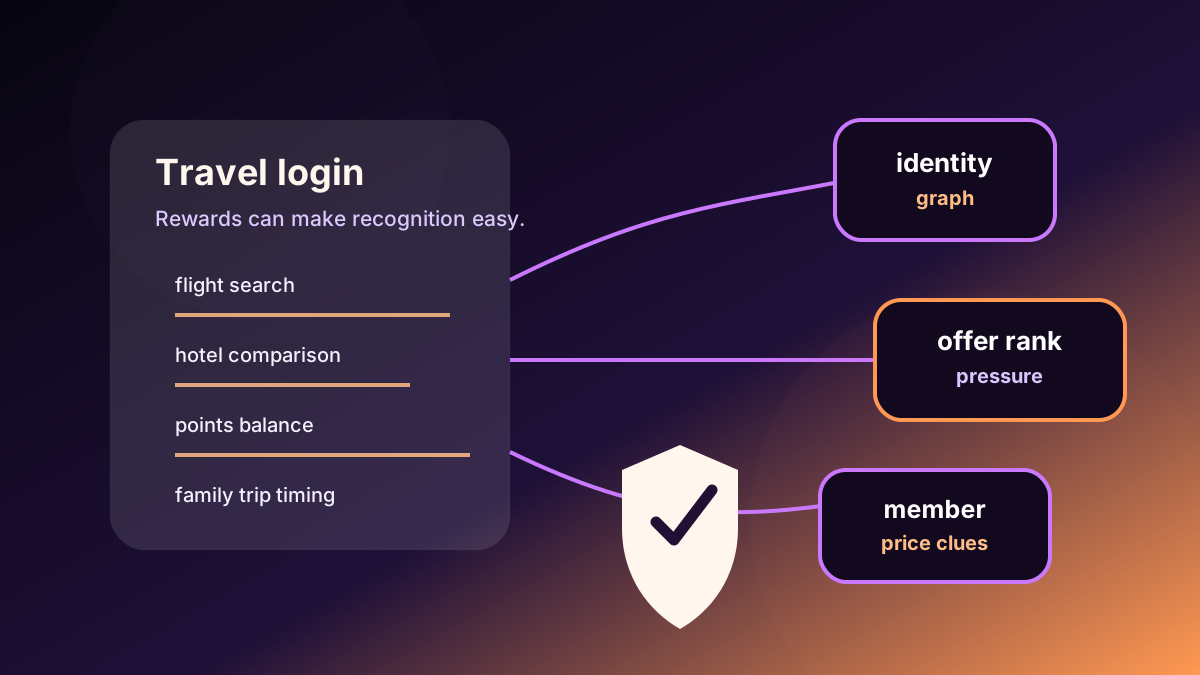
Travel loyalty account privacy risk is easy to miss because rewards feel like the friendly part of the booking process. Logging in can show points, saved travelers, elite status, companion benefits, stored cards, previous trips, and tailored offers. That convenience is real. It also makes the session much easier to recognize. A travel site no longer has to guess whether the same browser is comparing flights again. The account can connect route searches, hotel views, dates, family patterns, rewards balance, and willingness to wait or upgrade.
This does not mean every airline or hotel is secretly changing every price for every logged-in user. Travel pricing is already complicated because fares, inventory, taxes, fees, bundles, cancellation rules, and availability change constantly. The tighter privacy claim is that logging in reduces ambiguity. It tells the platform who is shopping, what history and status they bring, what destinations or brands they repeat, and whether a trip looks urgent, expensive, or emotionally loaded. That profile can shape ranking, messaging, bundles, and follow-up even when the base fare has not been individualized.
The FTC's surveillance-pricing inquiry matters because it treats data-driven economic treatment as a consumer-protection question. The agency asked companies about systems that can use personal data, location, demographics, browsing history, shopping history, and automated tools to influence prices or offers. Travel loyalty accounts can contain exactly the signals that make a person legible: home airport, frequent routes, family composition, status tier, trip timing, device continuity, and willingness to pay for certainty.
Web tracking research explains why the account is only one layer. Princeton's web measurement work showed how common third-party tracking is across major sites, and the ICCL has documented the scale at which personal data can be broadcast in real-time bidding systems. A logged-in travel search can therefore sit inside a broader adtech and analytics environment. The account identifies the traveler to the platform, while pixels, referral tags, and marketing systems may help connect that interest to campaigns, retargeting, and cross-site attention later.
Loyalty status can also change the psychology of the page. A member may see points shortfalls, upgrade prompts, limited-time redemption offers, branded credit-card nudges, elite-qualifying progress, seat scarcity, insurance bundles, and hotel add-ons. Some of this is useful. Some of it is pressure. The privacy problem is that the pressure can be tailored to what the platform already knows: the traveler who always books late, the parent traveling on school-break dates, the person one segment short of a status threshold, or the household that usually accepts a bundle when cancellation anxiety rises.
Pew's privacy research helps explain why logged-in travel feels personal even when a specific price difference cannot be proven from the outside. Many people already believe companies track most of what they do online and feel little control over that collection. Travel makes that fear concrete because the stakes are high: family visits, medical trips, funerals, work obligations, visas, weather, and limited vacation windows. A consumer does not need a perfect forensic explanation to notice that the page knows too much and pushes too hard.
A practical travel checklist is to compare logged-out and logged-in views carefully, avoid starting sensitive searches from ad links when possible, separate exploratory planning from final booking, clear unnecessary URL parameters, be cautious about staying logged into every travel brand while browsing, and treat rewards prompts as commercial persuasion rather than neutral advice. cloak should not claim it can freeze airline inventory or guarantee a better fare. Its job is to reduce unnecessary tracking, weaken repeatable recognition, and warn when a travel booking session becomes more profile-driven than the user expected.