
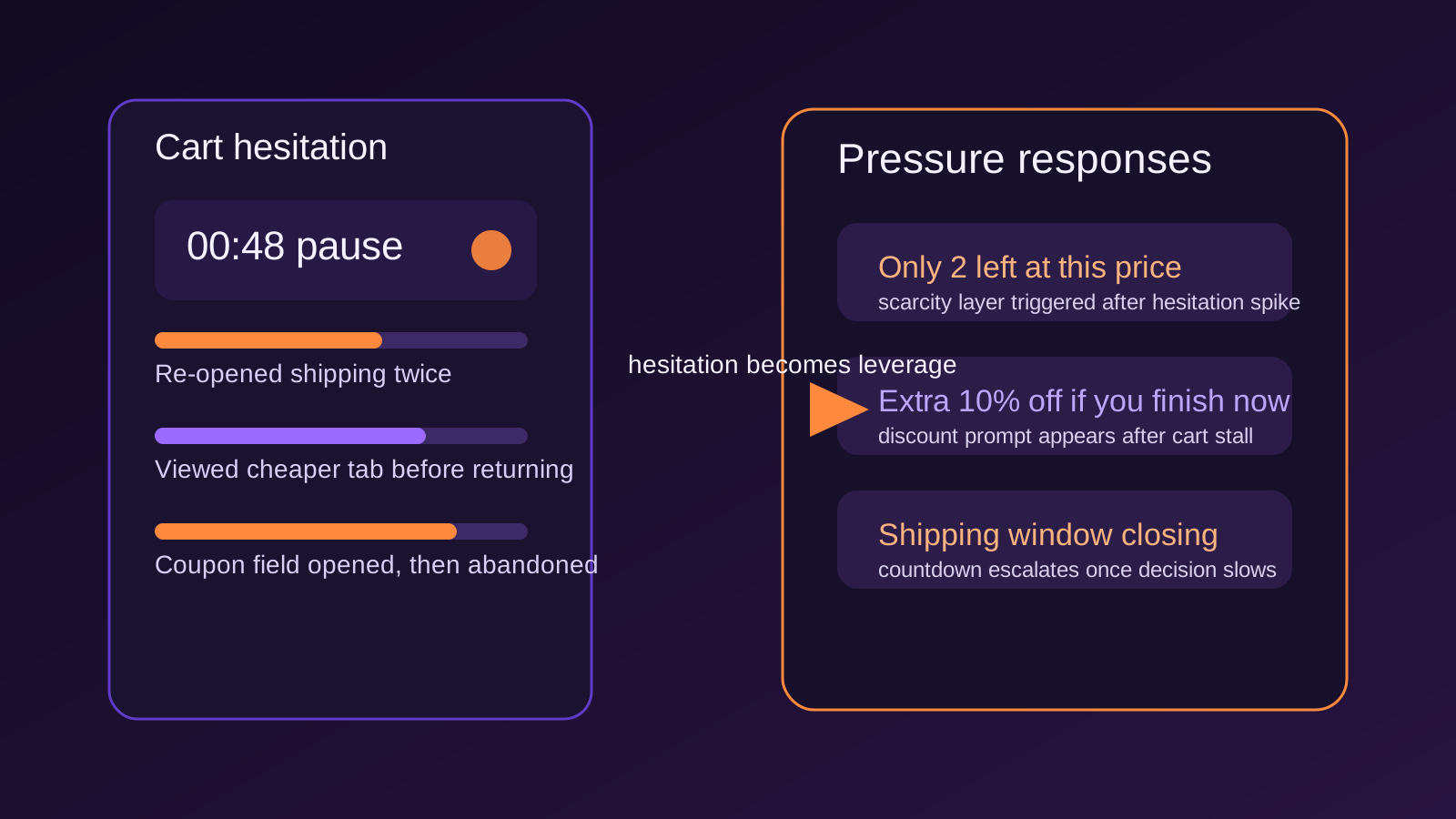
A shopper hesitation moment should be ordinary. Maybe the total looks high. Maybe the shipping window changed. Maybe the person just wants a second to compare. The problem is that modern merchant analytics often treat that pause as valuable behavioral data. A delay can signal uncertainty, price sensitivity, friction, or a need for a stronger nudge. Once the system sees hesitation that way, the pause stops being neutral and starts becoming conversion fuel.
The FTC's report Bringing Dark Patterns to Light helps explain why this matters. The agency describes design patterns that can steer, coerce, or manipulate people into choices they would not otherwise make. Hesitation is exactly the kind of moment those patterns target. If a page notices that the shopper stalled, it can respond with countdowns, extra scarcity language, pop-up discounts, chat interruptions, or shipping prompts that make backing away feel more expensive than clicking through.
Princeton's session replay research adds another layer. The researchers showed that replay scripts on high-traffic sites could capture page content, form interactions, and detailed behavior in ways users did not expect. That does not mean every merchant runs a live desperation meter. It does mean ordinary analytics can be granular enough to watch where someone slowed down, rewrote a field, hovered, or abandoned a step. That kind of detail makes hesitation legible to the system even when the shopper thinks they are just thinking privately for a second.
The FTC's 2024 surveillance-pricing inquiry shows why the downstream use of those signals matters. The agency asked companies about the use of browsing history, shopping history, demographics, location, and other personal data to influence what people are shown or charged. If firms are already investigating which combinations of signals shape offers or treatment, then hesitation is not just a usability metric. It can become one more input into how much pressure the system thinks a particular shopper will tolerate.
Cisco's 2024 Consumer Privacy Survey reported that 75% of consumers said they would not buy from organizations they did not trust with their data. That number matters because analytics teams often talk about hesitation as an optimization opportunity, while the shopper experiences it as a trust test. The more a store reacts to uncertainty with hidden observation and adaptive pressure, the more it teaches people that taking a breath online is itself a vulnerable act.
That is why merchant analytics deserve privacy scrutiny, not just conversion praise. A useful defense layer should help the shopper see when ordinary pause signals are being turned into leverage. cloak's shopping wedge fits here because the problem is not only that the page learned something. It is that the learning can immediately feed a more manipulative decision environment.