
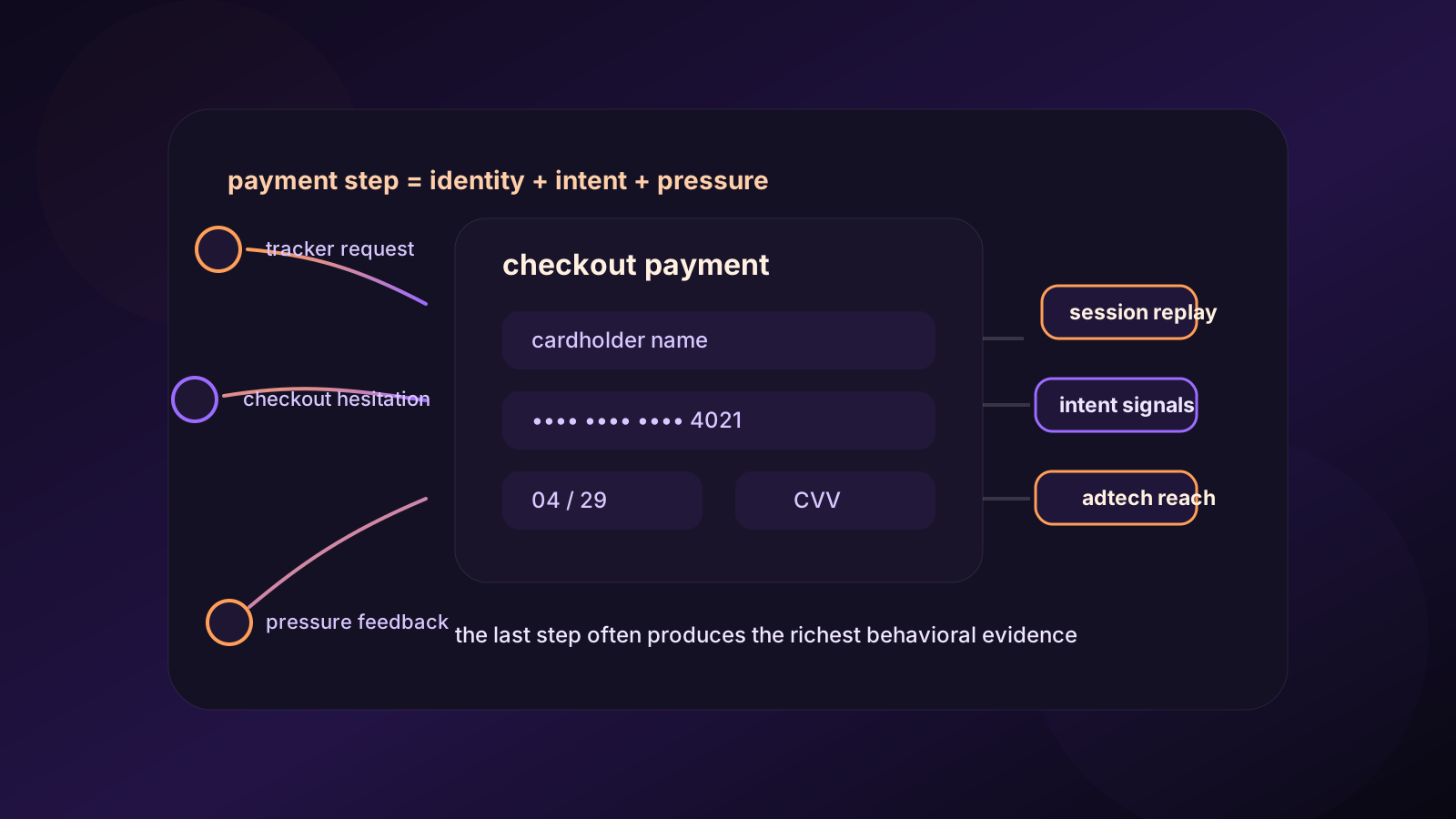
A payment page is where the web stops guessing about whether you might buy and starts watching whether you are about to commit. By that point the merchant often has the richest combination of intent signals in the whole session: what you chose, what you skipped, how long you hesitated, what offer finally moved you, and whether pressure increased right before the card field appeared.
Princeton's session replay research is still one of the clearest reminders that analytics on sensitive pages can become much more invasive than users expect. The researchers found replay scripts on hundreds of high-traffic sites and showed that some captured page content, form interactions, and other detailed behavior. That matters at payment because hesitation, correction, and form flow are not just usability trivia. They can reveal stress, friction, and purchase commitment in the most decision-heavy moment of the session.
California's Sephora settlement adds another concrete signal from enforcement. The state said Sephora's use of third-party trackers amounted to a data-sharing problem under the CCPA. The point is not that every beauty checkout is uniquely bad. The point is that ordinary ecommerce tracking on consumer pages can cross the line into a legally meaningful privacy issue. If that can happen on standard retail flows, payment pages deserve even more skepticism, not less.
The adtech background layer makes the exposure broader than one page. The ICCL reported that bid-request data can be broadcast at industrial scale through real-time bidding systems. By the time a shopper is near payment, the surrounding ecosystem may already have a strong sense of category, price band, device, location, and timing. Even if the card number itself is never sprayed into adtech, the context around the purchase can still be highly revealing.
The FTC's surveillance-pricing inquiry explains why this matters for treatment, not just logging. If browsing, shopping history, location, and related data can influence what people are shown or charged, the payment step becomes one of the most sensitive moments for observing how much pressure worked and what final state the shopper reached. It is the cleanest feedback loop in the funnel.
That is why checkout deserves a stronger privacy standard. A serious defense layer should not wait until after the card fields load to care. It should already be reducing identity signals, limiting unnecessary tracking, and warning when the final purchase moment starts behaving like a surveillance surface. cloak's shopping wedge makes the problem visible there because payment pages are where collection, inference, and pressure all become easiest to feel at once.