
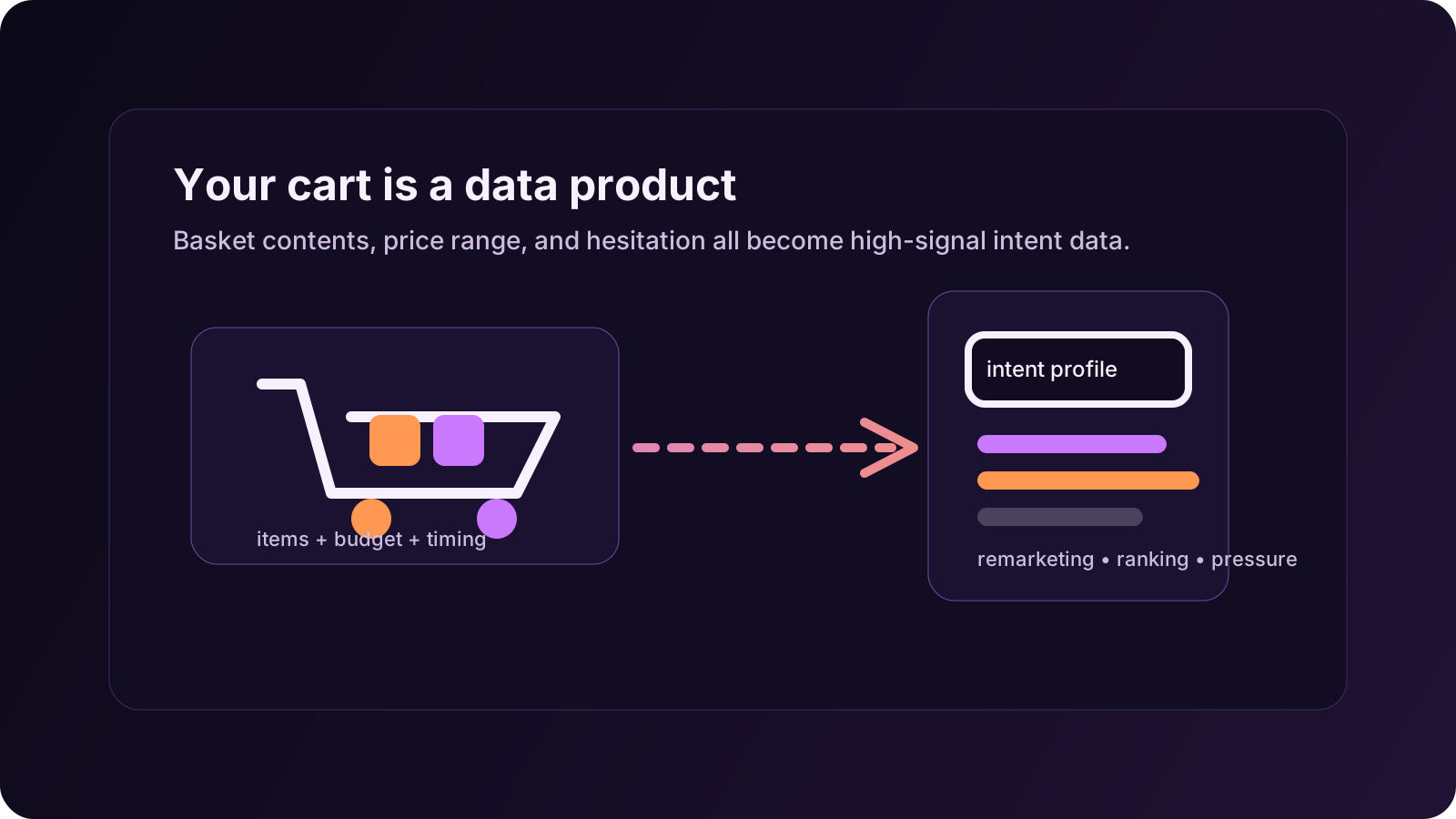
People talk about carts as if they are simple convenience features, but for a merchant they are one of the richest behavioral surfaces on the whole page. A cart says what caught your attention, what price band you are considering, what categories you are willing to combine, and how close you may be to converting. It compresses a messy browsing session into a short, legible summary of commercial intent.
The FTC's 2024 surveillance-pricing inquiry helps explain why that matters. The agency said companies may use browsing history, shopping history, demographics, location, and other personal data to influence what people are shown or charged. A cart sits right in the middle of that world. It is not only a technical container for products. It is a high-signal record of what the person nearly bought, what they removed, what they paired together, and how expensive the decision already feels.
Older retail analytics stories show how much can be inferred from purchase behavior alone. The New York Times Magazine's reporting on Target's pregnancy-prediction model remains useful here because it captured a core truth: shopping patterns can reveal intimate facts that feel far bigger than the basket itself. If ordinary purchases can support that kind of inference, then a live cart is not just a checkout artifact. It is a compressed statement about preference, timing, and likely next steps.
The page can also leak more context than people assume while the cart is still open. Princeton's session-replay research found scripts on hundreds of high-traffic sites that captured page content and, in some cases, sensitive form interactions. That does not mean every cart page is leaking every keystroke. It means the distance between normal analytics and invasive observation can be smaller than shoppers expect, especially near checkout where addresses, coupon attempts, and hesitation all become measurable events.
This is why cart data becomes so commercially valuable. It is closer to action than a generic page view, but richer than a completed order record. Someone with two items in a cart, a shipping estimate open, and a half-finished payment step looks far more actionable than a casual browser. That makes the cart attractive not only for service reminders, but for ranking, retargeting, discount decisions, and pressure timing.
cloak should treat the cart as a privacy surface, not just a commerce feature. The point is not to make checkout impossible. The point is to help the user see when a helpful basket has become a data product for other systems to score, reuse, and push against them.