
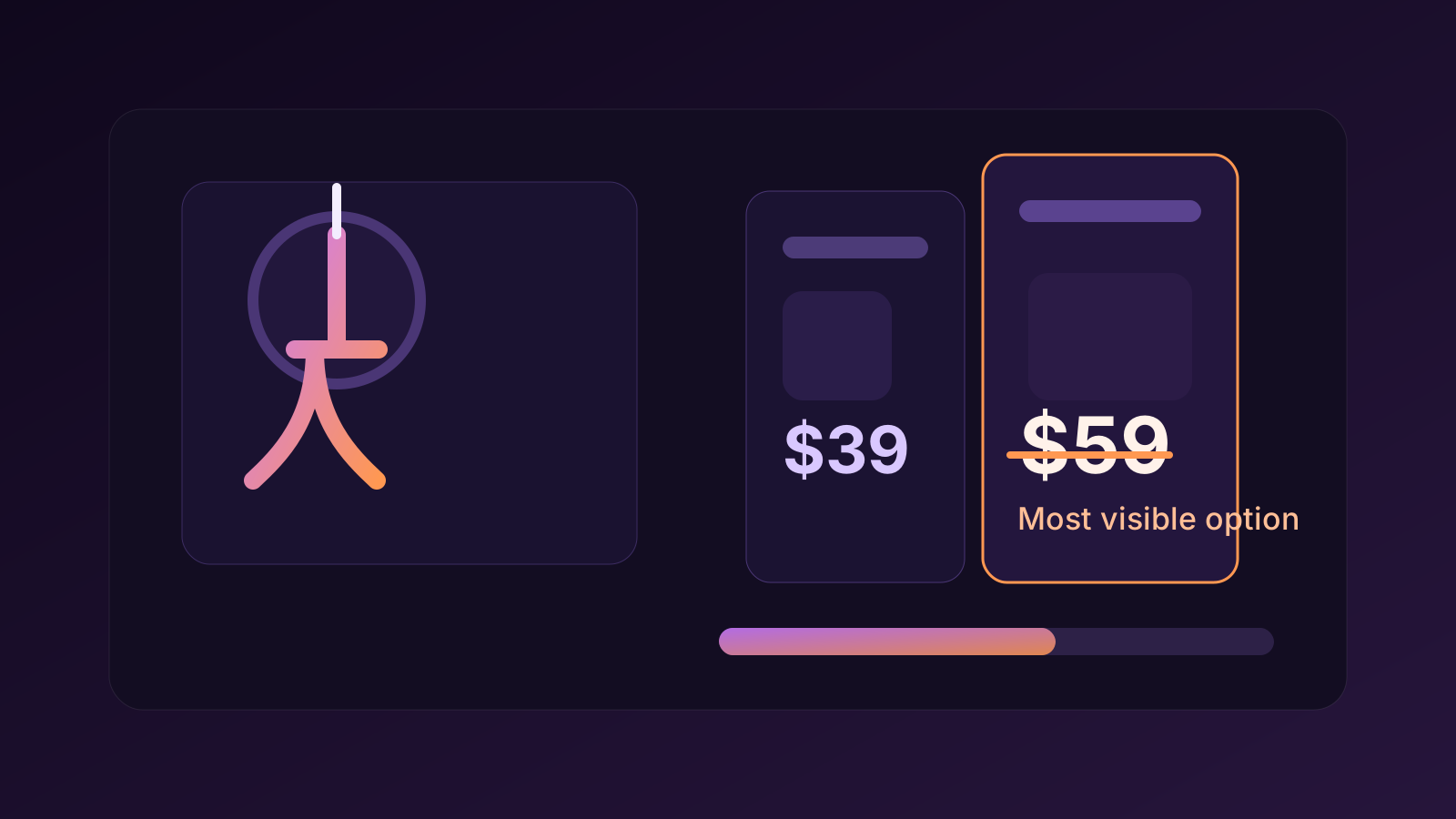
Price anchoring works because people do not evaluate a number in a vacuum. They evaluate it against the first strong reference point the page gives them. In ecommerce that can look like a crossed-out original price, a premium tier placed beside the intended choice, or a bundle that makes the middle option feel prudent rather than expensive. The interface does not need to force the decision. It only needs to set the psychological baseline.
A 2022 Frontiers in Psychology study on anchoring in price judgment is useful here because it shows the effect is not just a marketing cliché. Consumers’ judgments moved in response to anchors built into the decision scene. That does not mean every anchored price is fraudulent. It does mean the comparison number matters, because the shopper’s sense of what is normal can shift before any calm evaluation of value begins.
The FTC’s dark-patterns report adds the product-design layer. The agency describes how interfaces can steer people through timing, framing, obstruction, and asymmetry rather than direct coercion. Anchoring fits comfortably inside that world. A crossed-out price or a carefully staged offer ladder can make the expensive path look sensible without ever saying so out loud. The design does persuasive work before the shopper notices the argument is happening.
The UK Competition and Markets Authority’s hotel-booking case makes the issue feel practical instead of theoretical. The case focused on pressure-selling and misleading ranking or scarcity practices in travel booking. Those tactics are not identical to price anchoring, but they live in the same decision environment: a page shaping the shopper’s frame of reference so that a more expensive or faster choice feels like the safe one. What matters is not only the final number. It is the context that makes the number feel acceptable.
The FTC’s 2024 surveillance-pricing inquiry is the reason this belongs in a privacy conversation as well as a behavioral one. The agency said companies may use browsing behavior, purchase history, demographics, and location to influence what people are shown or charged. In that environment, anchoring stops being a generic sales trick. It becomes one more lever that can be tuned around what the system thinks this particular shopper will tolerate.
That is why online price anchoring deserves scrutiny from a privacy-defense product. The problem is not simply that merchants compare one number with another. The problem is that a highly observed session makes it easier to choose which anchor, which sequence, and which pressure level a person sees. cloak’s role is to make those shifts more legible so the page feels less like a quiet negotiation and more like a transparent store.