
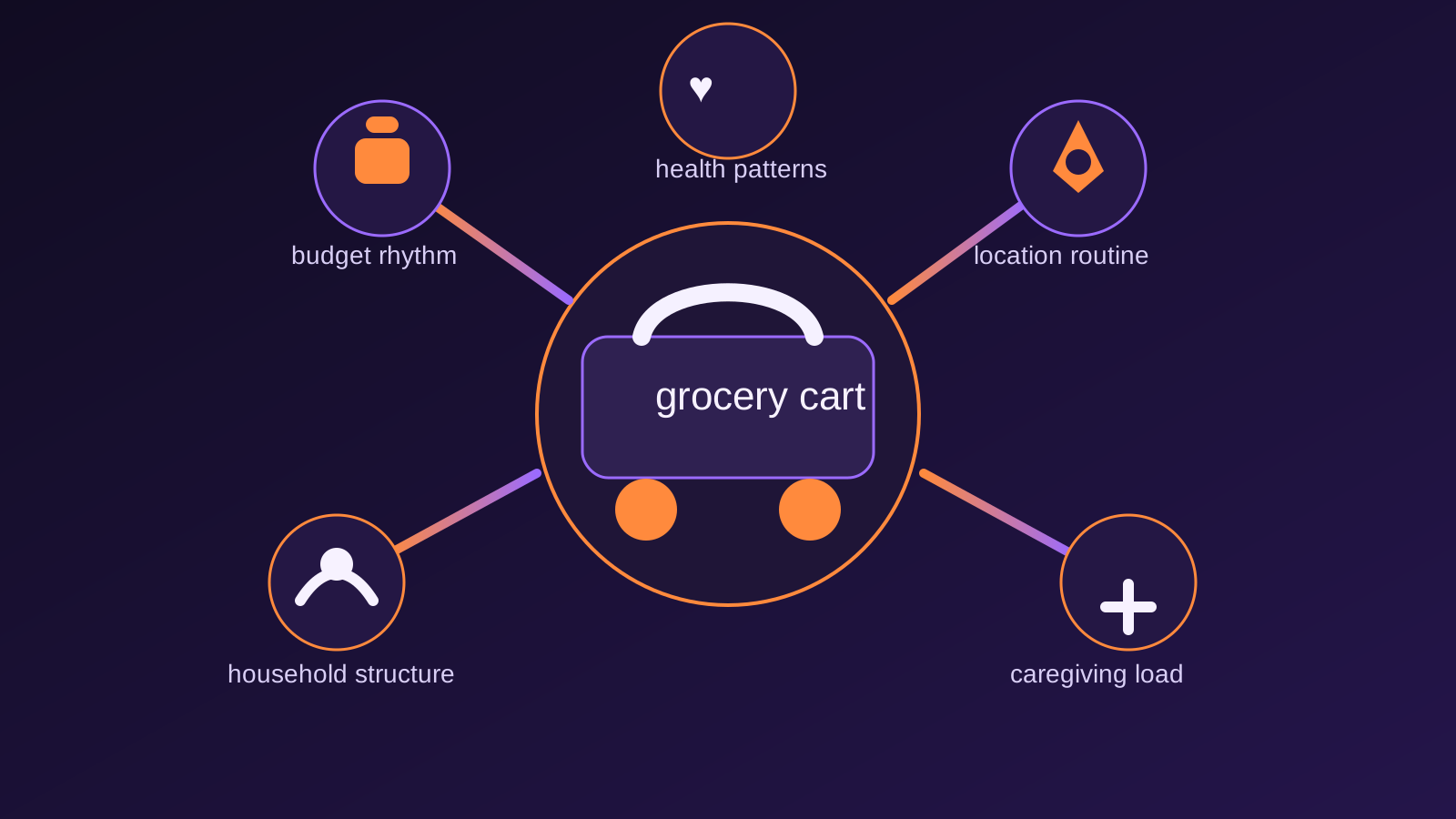
People sometimes hear privacy warnings and think of dramatic categories first: therapy, dating, politics, or financial trouble. Groceries feel too ordinary to count. But a grocery cart can expose a surprising amount of intimate context. Repeated purchases can suggest household size, dietary rules, income pressure, caregiving load, baby milestones, health concerns, work schedules, or whether someone is shopping for one person or five. Ordinary does not mean non-revealing.
The Target pregnancy story remains the cleanest example of how mundane shopping patterns can support intimate inference. As The New York Times Magazine reported, purchase behavior was enough for Target's analytics to infer pregnancy before the family had disclosed it publicly. The lesson is not that every grocer is running that exact model. The lesson is that everyday consumer purchases can already be specific enough to reveal private life transitions without anyone needing a medical file or a direct confession.
Location data makes the picture broader. The FTC's actions against Outlogic and Kochava show how mobile and geolocation data can be sold or shared in ways that trace people to sensitive places. That matters for grocery shopping because grocery behavior is rarely just one click on one website. It can connect store visits, delivery timing, neighborhood patterns, and recurring household routines. Once location and purchase context begin to reinforce each other, the resulting profile can say much more than a single receipt ever could.
Consumer Reports' work on data brokers helps explain the market incentive. Personal information is valuable not only when it is dramatic, but also when it is consistent and repeated. Grocery shopping is exactly that kind of repeated signal. The categories may look boring from the outside, yet the routine can become commercially useful because it is sticky. A household that buys the same essentials every week is easier to classify, easier to predict, and easier to target across time.
This is why privacy matters even when you are just buying groceries. The point is not that every milk-and-eggs order triggers a scandal. The point is that ordinary household purchases create one of the clearest, most durable maps of daily life. The data is valuable precisely because it looks normal. Systems can learn from it without the shopper ever feeling like they shared something especially personal.
cloak's shopping-first story should stay honest here. Grocery privacy is not about panic. It is about recognizing that repeated routine commerce can still become a rich profile. A privacy-defense product earns trust by reducing unnecessary collection, weakening continuity where it can, and warning when a supposedly ordinary cart starts feeding a much larger inference machine.