
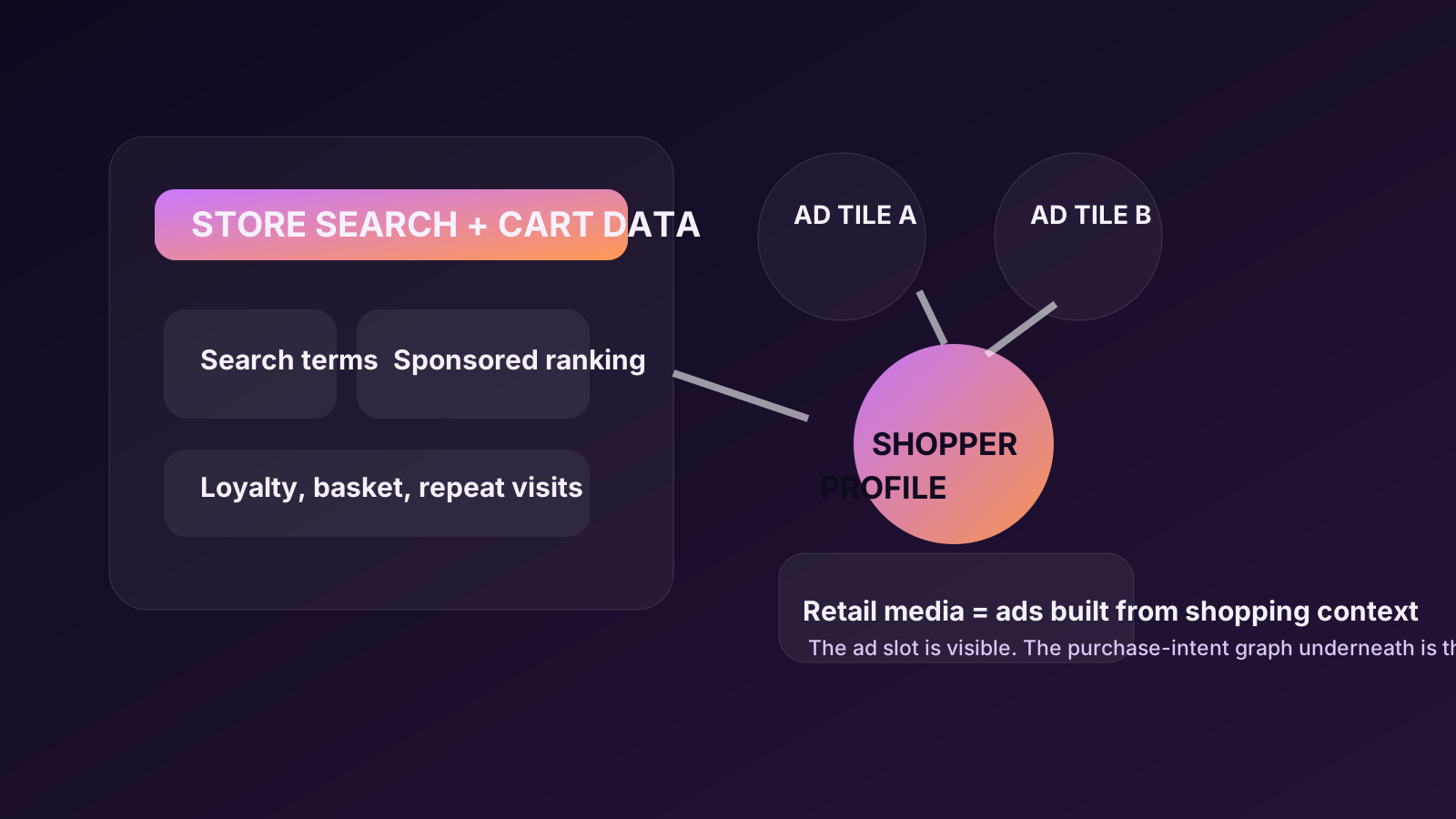
Retail media networks are often described as a fast-growing advertising business, but that label hides the more important privacy fact. A retailer is not starting from zero the way a random publisher does. It may already know what a shopper searched for, which products were compared, what categories stayed in the cart, whether a loyalty account exists, and what usually gets purchased together. The ad slot is only the visible layer on top of that relationship.
The industry increasingly says this part out loud. Instacart Ads and Kroger Precision Marketing both present the retailer as a place where brands can reach shoppers close to the buying moment using commerce context a normal banner site would not have. That does not prove every ad impression is exploitative. It does show the business model clearly: purchase intent, category behavior, and shopping history are valuable because they make the audience easier to segment and influence right before a decision.
The FTC's report A Look Behind the Screens helps explain why that matters beyond one sponsored placement. The agency found that major platforms collected more data than consumers expected, combined it across services, retained it extensively, and gave people weak control over downstream use. Retail media networks fit comfortably inside that broader logic. The same store relationship that powers fulfillment and recommendations can also power ad targeting, measurement, and future audience building.
This is why retail media creates a sharper privacy question than the phrase ad network suggests. The issue is not only that an ad appears on a store page. The issue is that the ad system may be fed by a record of purchases, comparisons, loyalty behavior, and repeat visits that feels personal precisely because it came from ordinary shopping. When a merchant becomes both storefront and media channel, the shopper has fewer clean boundaries between browsing, buying, and being profiled.
cloak's role is not to ban every sponsored placement. It is to make the data relationship more legible. If the browser can show when a store is collecting aggressively, linking the session to durable identifiers, or surrounding a checkout with extra adtech pressure, shoppers get a real chance to understand what the page is learning before that learning gets monetized again.