
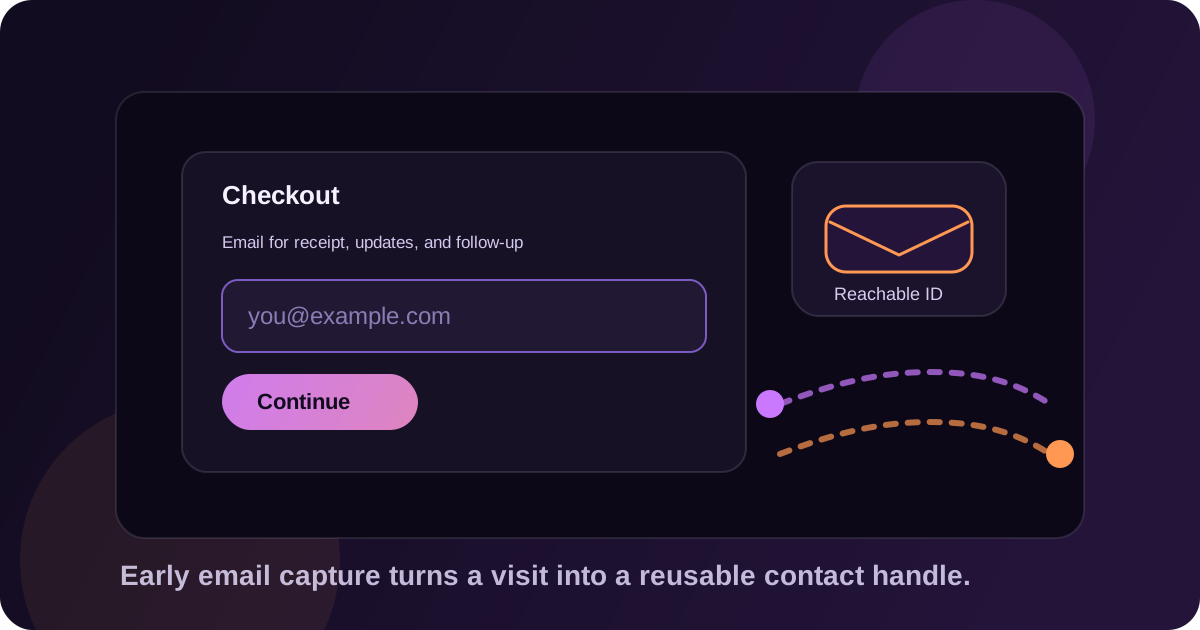
If you searched `can I buy something online without giving my email`, sometimes the answer is yes, but many stores ask early because the field does more than send a receipt. It turns an anonymous shopping visit into a durable identity handle the merchant can reuse for cart recovery, targeting, and cross-session recognition.
The business value is not subtle. Shopify’s guidance on abandoned-cart emails treats captured email addresses as a direct recovery channel for unfinished checkouts. In other words, the field is not only a customer-service convenience. It is a way to keep the session alive after you close the tab, leave the cart, or hesitate for a few hours.
Email also matters because it is more durable than a cookie. Prebid’s Unified ID 2.0 documentation describes an identity layer that leverages encrypted email and phone-number data for the advertising ecosystem. That does not mean every store uses UID2, but it shows why an email address is strategically valuable: once a person volunteers a stable contact point, the session becomes easier to reconnect across time, devices, and marketing systems than a bare browser visit would be.
The FTC’s report A Look Behind the Screens helps explain why that matters beyond one checkout. The agency found that major platforms collected more data than consumers expected, combined information across services, retained it at scale, and offered weak limits on downstream use. Early email capture fits neatly into that broader logic. It gives a company a durable first-party handle that can be linked to future behavior, campaigns, and segmentation.
That does not make every email field malicious. It does mean shoppers should read the ask more clearly. If a store wants your email before it has earned confidence, it is asking for more than a way to send a receipt. It is asking for a reusable line back to you. A privacy tool should make that moment legible and help people keep more control over when they become identifiable.