
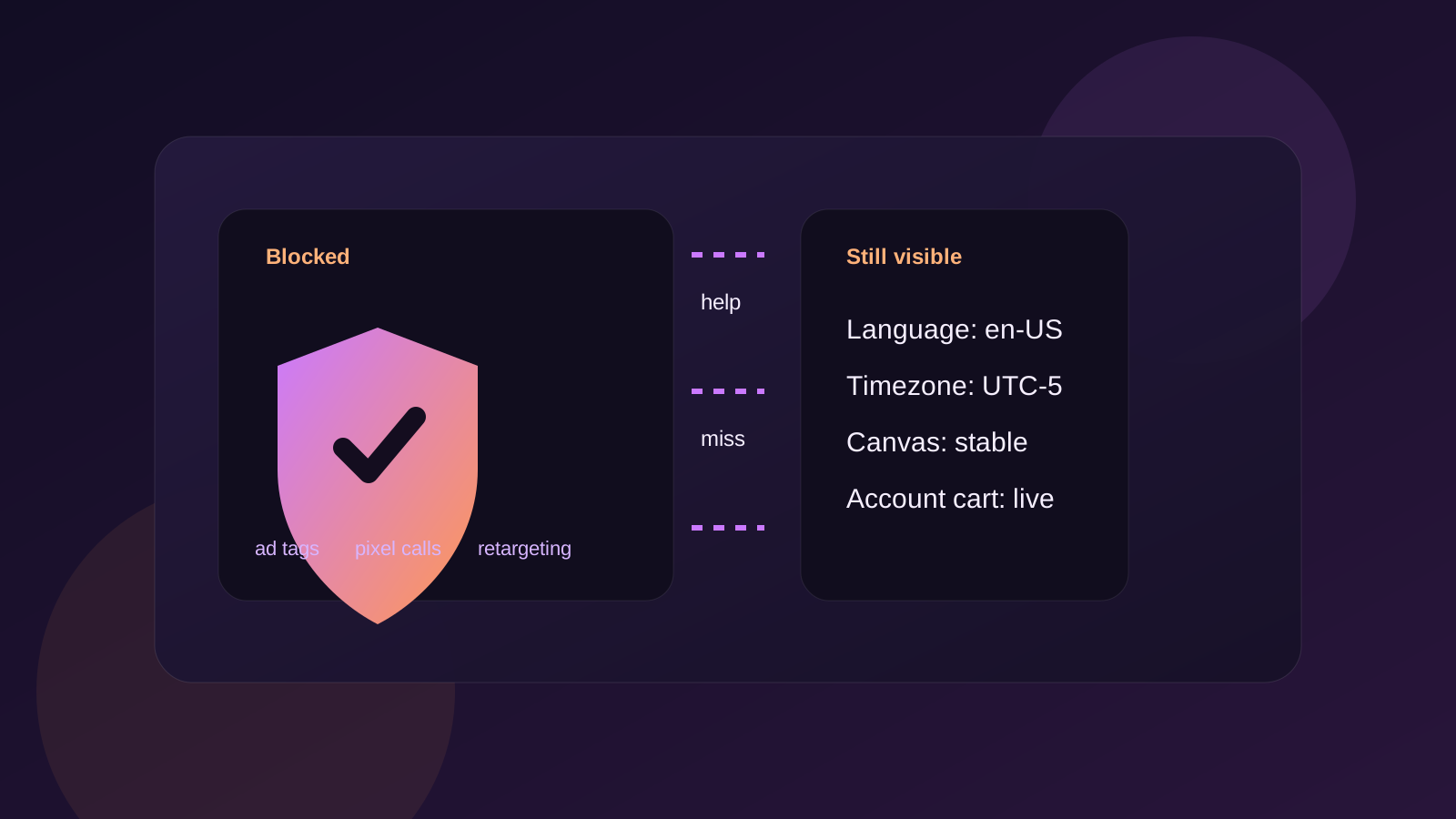
People search “can ad blockers stop websites from tracking me” when they already installed one real defense and still feel watched. The honest answer is only partly. Ad blockers can remove a meaningful slice of third-party surveillance around shopping sessions, but they do not automatically stop fingerprinting, first-party profiling, or every downstream use of behavior once the merchant can still see the person clearly enough.
People who shop with ad blockers are usually not being paranoid. They are reacting to a web where tracking infrastructure is common, layered, and commercially useful. Princeton's large-scale web measurement found Google-owned trackers on about 75% of the top one million websites and Facebook-owned trackers on about 25%. In that environment, blocking a chunk of third-party requests is not cosmetic. It can materially reduce how many obvious adtech and measurement scripts load around a product page or checkout flow.
So ad blockers help in a real way. They can stop known advertising and tracking domains, strip away many retargeting calls, and reduce some of the background noise that makes a shopping session so legible to outside platforms. For a shopper, that can mean fewer invisible observers, fewer follow-up tags, and fewer chances for a normal browse to become fuel for remarketing or audience building.
But a shopping session does not become private just because some requests were blocked. EFF's Cover Your Tracks project and the older Panopticlick research make the gap obvious: a browser can still be unusually distinctive from its own characteristics. Screen size, language, timezone, rendering quirks, hardware-linked behavior, and other environmental signals can preserve continuity even after the easy tracking layer gets weaker.
Ad blockers also do not dissolve first-party knowledge. If the shopper is logged in, uses the same email, opens the same app, or re-enters the same account-linked cart, the merchant still has plenty of continuity. Even without a login, a site can learn from what gets clicked, how long the person lingers, which products get revisited, and which paths lead to hesitation. Those signals matter because the FTC's surveillance-pricing inquiry explicitly described systems that can use browsing and shopping history to shape how people are treated.
That is the practical answer to the search query. Ad blockers help most with obvious third-party ad and tracking calls. They help much less with fingerprinting, first-party analytics, cross-session account continuity, or the behavioral inferences that happen after the data is already inside the merchant stack. The result is not that ad blockers are pointless. It is that they are one layer in a layered problem.
cloak's worldview fits neatly here. A useful privacy tool should respect what ad blockers already do well, then cover what they leave exposed. That means reducing repeatable browser signals, making hidden collection more visible, and warning when the page starts acting like a pressure system instead of a neutral storefront.