
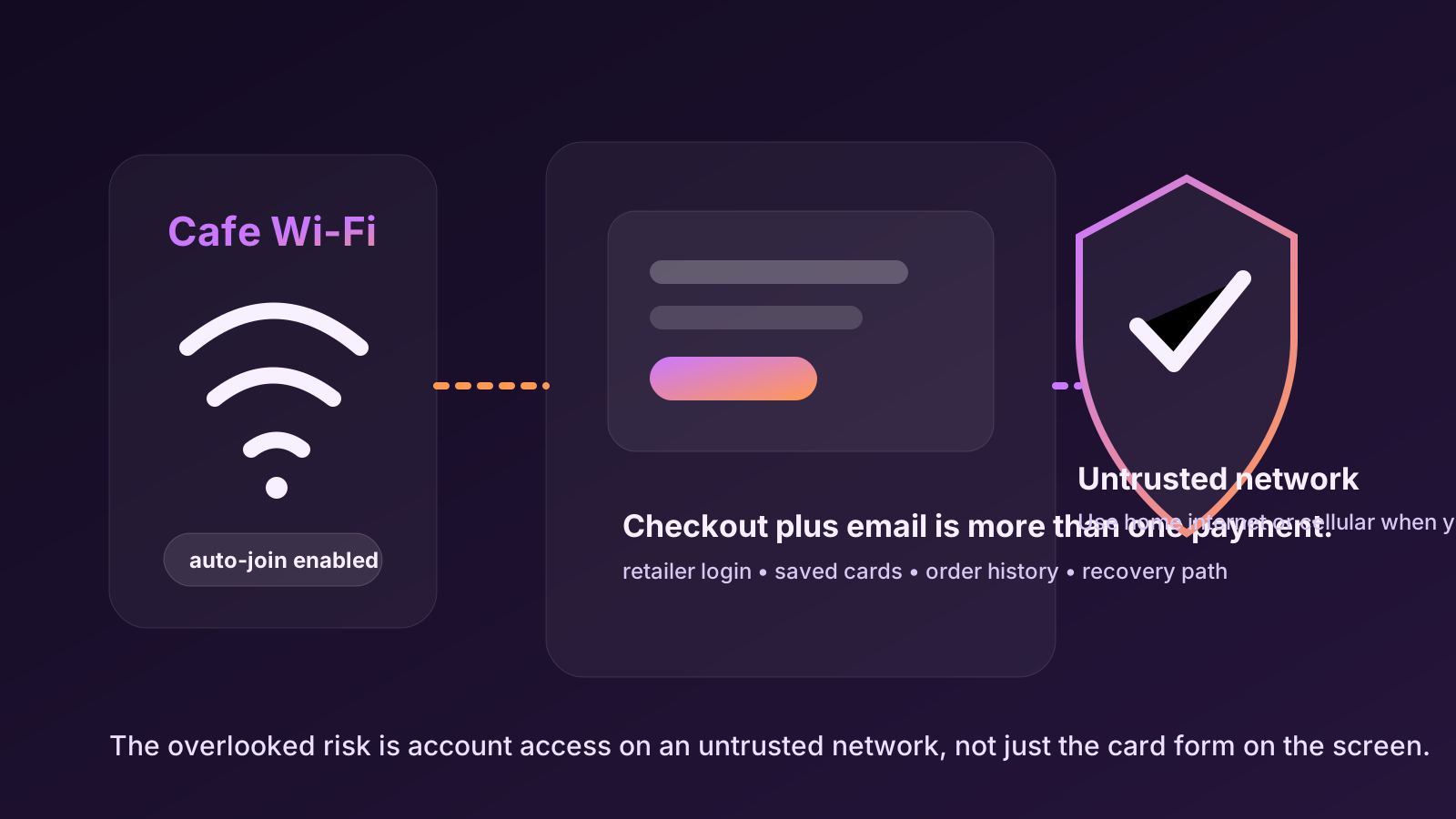
People often frame public Wi-Fi risk as if the only question is whether someone steals a card number during checkout. The bigger privacy problem is usually broader. A shopping session can expose retailer logins, saved addresses, loyalty accounts, email-linked receipts, and password-reset paths that matter long after one purchase is finished.
NIST's guidance on telework and remote access is useful because it treats outside networks as untrusted by default. That does not mean every airport gate or coffee shop hotspot is malicious. It means the shopper usually cannot verify who controls the connection, how it is configured, or what else is sitting on the same network. For purchases, password resets, and account recovery, that uncertainty matters.
NSA's mobile-device guidance adds one of the most ignored details: automatic connection behavior. If Wi-Fi is left on and devices are willing to auto-join remembered networks, a shopper can connect more casually than they realize. That is a practical reason public Wi-Fi risk is easy to underestimate. The network choice may happen before the person has even decided whether this is a safe place to sign in.
The downstream damage is often account takeover, not only one bad payment event. CISA's public guidance on multi-factor authentication matters here because shopping accounts are tied to email inboxes, stored cards, addresses, and order histories. If a login or recovery path is compromised, the attacker may not need to touch the checkout in real time to create trouble later.
FCC consumer guidance pushes the right instinct: be careful with sensitive activity on public networks, and verify what you are connecting to. For cloak, the honest line is that browser privacy defense helps around tracking and identity pressure, but it does not magically make an untrusted network trustworthy. The safest move is still simple: avoid using random public Wi-Fi for shopping, banking, or password recovery when you can use home internet or cellular instead.