
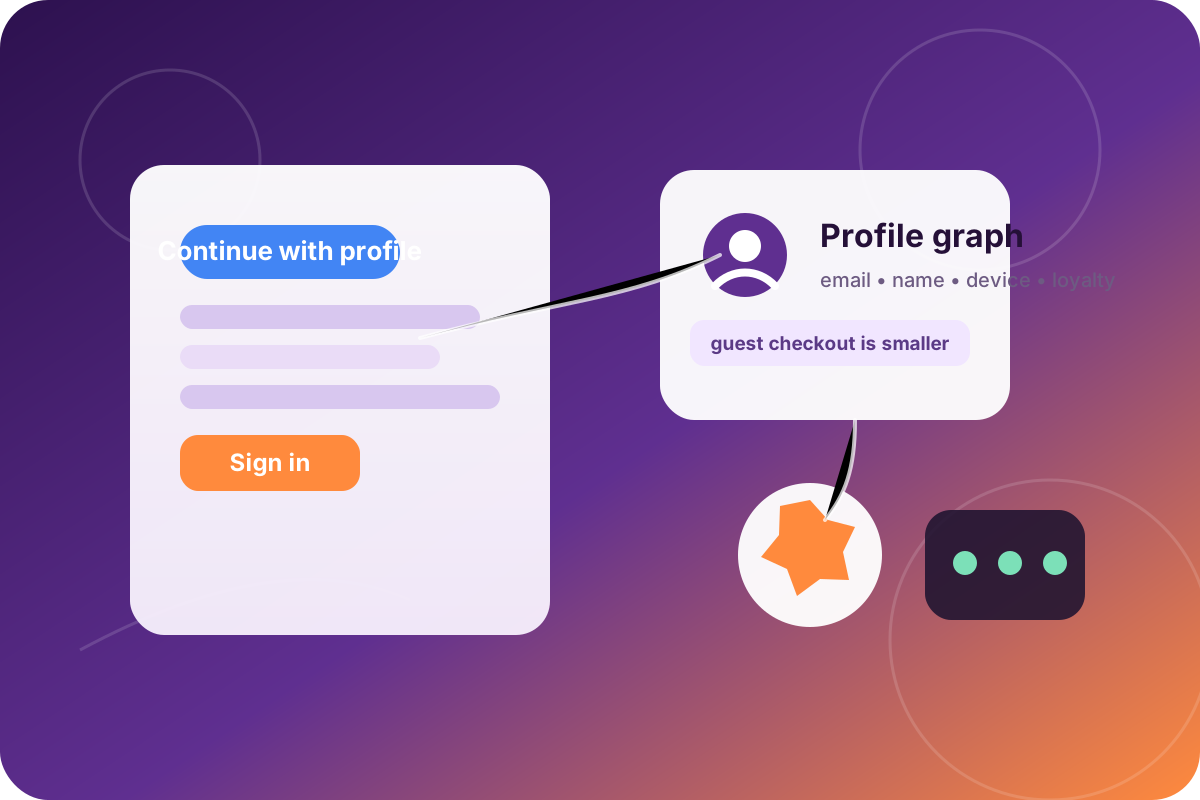
Social login privacy risk starts with a very human impulse: people want to stop typing passwords and move on. A one-click sign-in can be a real convenience. The privacy question is what happens when a merchant turns that convenience into a stable identity corridor. Once the same upstream account is used to enter, return, support, and repurchase, a store can connect a lot more behavior to the same person than a guest checkout ever would.
That is why the button itself is not the whole story. A social login can deliver a verified email, name, avatar, and account token to the merchant. Depending on the platform and user choices, the merchant may also gain a cleaner path to link devices, sessions, and purchase history across visits. The shopper sees a login shortcut. The business may see a more reusable customer key.
NIST's federation guidance is the right lens because it separates stronger authentication from privacy by design. Federation can improve security and reduce password reuse, but it can also concentrate trust and make identity easier to stitch together across systems. That means a safer login is not automatically a more private login. A better lock does not erase the room behind it.
The FTC's personal-information guidance matters because businesses that handle identity data should know what they collect, limit access, and dispose of what they do not need. If a store only needs a receipt and shipping address, it should not quietly use the login as permission to expand profiling, add marketing fields, or keep support data forever. A clean sign-in should not become an excuse for a larger dossier.
Apple and Google both show the convenience side clearly in their own help and product pages. Apple emphasizes that Sign in with Apple can hide a real email address with Hide My Email. Google explains how Sign in with Google helps share data safely. Those tools can reduce some exposures, but they do not make the store blind. The merchant still has a durable account relationship and can still infer a lot from order history, support interactions, and return behavior.
That is the practical boundary shoppers should remember. If you want the simplest privacy posture, guest checkout is still often the smallest data path. If you need an account for recurring orders, warranties, or returns, a social login may be reasonable, but it should be a choice, not a trap. The site should not hide guest checkout, bury the privacy implications, or make the more private route feel broken.
Social login also has a compounding effect. Once a merchant can recognize the same account, it becomes easier to ask for a phone number, a birthday, loyalty enrollment, app installation, or extra profile fields. Each request may look small in isolation. Together they build a durable profile that is easier to target and retain than the shopper intended when they clicked the button.
cloak should surface that tradeoff in plain language. The point is not to ban social sign-in. The point is to show when the convenience of one-click access comes with a quieter but more durable identity merge. If a user can see the profile cost before they sign in, they can decide whether the shortcut is worth it.
The healthiest implementation makes scope obvious. Before the user taps, the button should say which upstream identity provider is being used and what basic fields will be shared. It should not hide guest checkout or make the privacy setting feel second-class. If the site wants a durable account, it should let the user separate marketing preferences, delivery info, and login identity, and it should make deletion or email-alias replacement straightforward. The more the merchant can narrow the data path, the less one shortcut turns into a permanent profile. That clarity also makes account recovery less invasive because the user can swap email aliases or delete profiles without surrendering a whole social graph.