
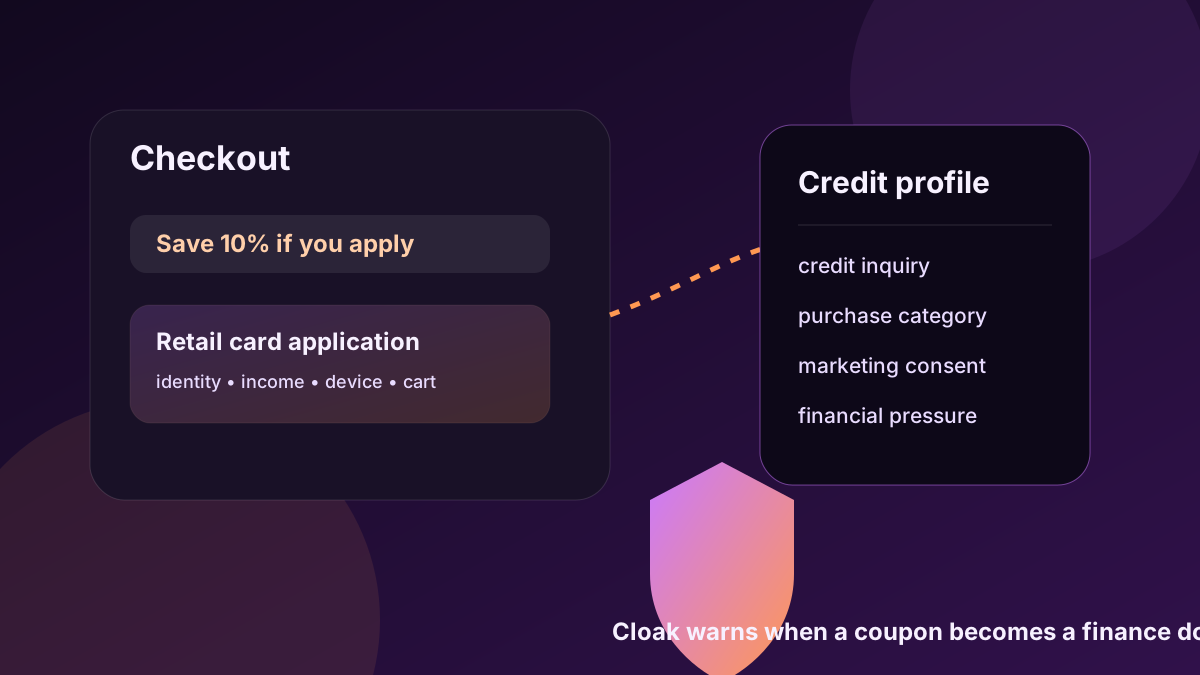
Store credit card application privacy risk starts at a moment designed to feel harmless: save 10%, get free shipping, unlock member financing, or earn rewards if you apply today. The problem is that a retail card prompt is not just another coupon box. It can move the shopper from a commerce flow into a finance and identity flow. Name, address, Social Security number or partial identifier, income, phone, email, device context, cart contents, store account, and credit decision data may all become part of a much more durable record than the original purchase.
The savings can be real. Some store cards offer discounts or deferred-interest promotions that matter to households under pressure. But the CFPB has warned that store credit cards can carry high costs, including higher average interest rates than general-purpose credit cards. That matters for privacy because the offer often appears exactly when the shopper is already deciding whether the purchase is affordable. A checkout page can frame a credit application as a shopping perk while the actual transaction creates a financial relationship with consequences beyond that cart.
A store card application also brings consumer reporting into the picture. The CFPB's consumer reporting resources show that credit and specialty reporting are larger than most people realize. Applying for a card may involve identity verification, credit checks, adverse-action notices, account servicing, fraud systems, and future reporting. The privacy issue is not that lenders are forbidden to evaluate risk. It is that the shopper may not mentally separate a store discount from the long-lived financial profile created by the application.
The FTC's data broker report adds the ecosystem layer. Consumers often do not know which companies collect, share, or infer information about them, and financial-intent data is valuable. A retail card signal can reveal more than a normal purchase: this person considered financing, may be price-sensitive, may be willing to trade data for savings, may be remodeling a home, buying electronics, preparing for a baby, or managing an emergency expense. Even when a retailer and bank follow legal requirements, the user experience can still hide how much identity glue gets added to the session.
Dark-pattern risk is especially high because the card prompt can be embedded in the pressure architecture of checkout. The FTC's dark-patterns report describes interfaces that steer, obstruct, or manipulate consumer choices. In retail finance, that can look like a bright savings number, a preselected financing path, confusing deferred-interest language, repeated prompts after refusal, or a sign-up message placed next to shipping and payment controls so the application feels like the recommended path. A shopper may think they are accepting a discount, not opening a new data and credit surface.
The practical defense is to slow the finance moment down. Read whether the offer is a credit card, a pay-over-time product, or a loyalty sign-up. Check the APR, fees, deferred-interest terms, credit-pull language, and whether the discount requires account approval or simply an application. Avoid applying from shared devices or while logged into unrelated retail accounts. Do not provide optional marketing permissions just to see whether the discount exists. If the purchase is sensitive, ask whether the small savings are worth linking that category to a permanent finance product.
This is also a household privacy issue. Store cards often cluster around furniture, electronics, appliances, jewelry, clothing, home improvement, and emergency replacement purchases. Those categories can reveal moves, renovations, medical needs, family changes, financial strain, and major life events. When the application sits inside the merchant account, the retailer may be able to connect financing interest with browsing history, returns, warranty registrations, and future promotional timing. The shopper gets one discount. The system gets another anchor for long-term economic treatment.
cloak's role is not to tell people never to use retail credit. It is to make the conversion clear when checkout stops being a shopping page and becomes a credit application. Anti-exploitation defense should warn when a merchant uses urgency, savings, and account creation to pull a shopper into a profile that is harder to unwind than the original cart.