
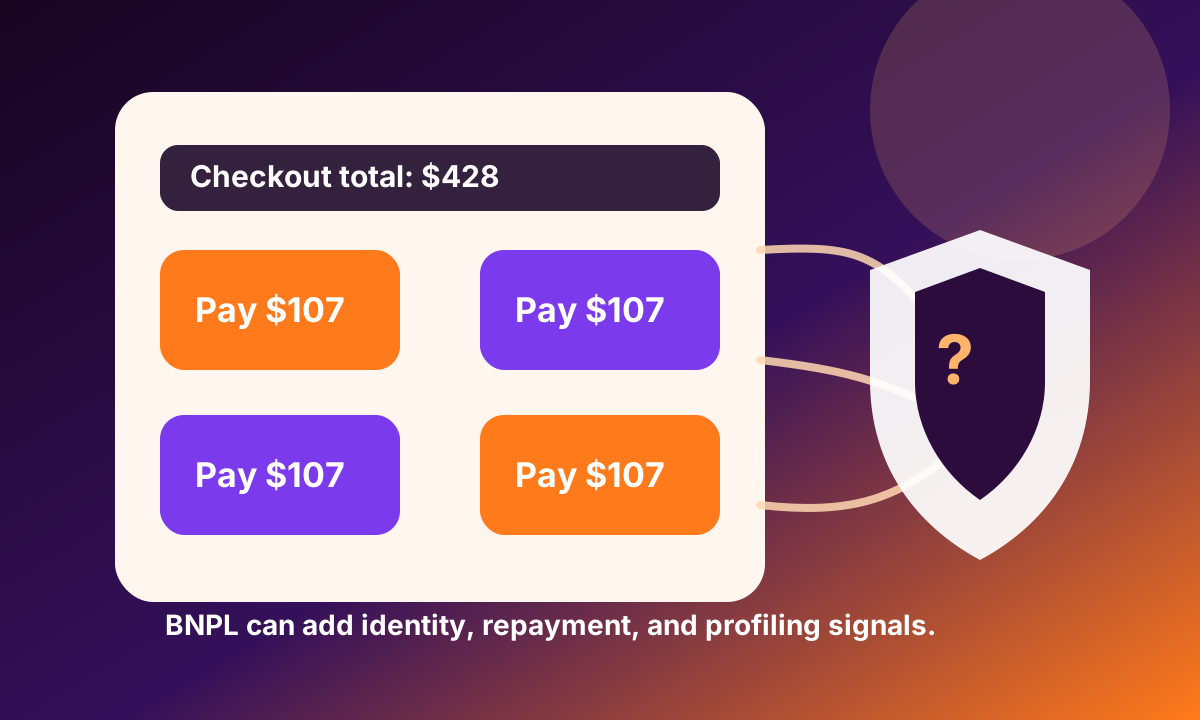
Is buy now, pay later bad for privacy? Not automatically. Splitting a purchase into installments can be useful, especially when a shopper is managing cash flow. The privacy risk is that BNPL changes checkout from a simple card transaction into a finance, identity, repayment, and shopping-data event. The user sees four payments. The system may see product category, cart value, merchant, timing, device, identity attributes, repayment behavior, and whether a person accepted financing at a moment of price pressure.
The CFPB's work on buy now, pay later is the right starting point because it does not treat BNPL as just a cute checkout button. Its market reports discuss consumer impacts including discrete harms, overextension, and data harvesting. That third category matters for privacy: a BNPL provider can sit across many merchants and learn what someone buys, when they use financing, whether they repay, which categories create strain, and how often a small payment makes a purchase feel possible.
That data can become more sensitive than a normal receipt. A pair of shoes bought with a card says one thing. A medical product, baby item, school expense, or emergency repair split into installments can reveal financial stress or life stage. If the same BNPL account appears across many retailers, it can create a cross-merchant view of shopping behavior that a single store would not otherwise have. The shopper may be trying to avoid one big bill, not trying to build a detailed finance-and-commerce profile.
The checkout-pressure layer is important too. BNPL often appears exactly when a shopper is weighing whether the total is too high. That makes the offer useful, but also powerful. A merchant can frame the purchase around the first payment instead of the full price, combine it with urgency copy, and reduce the psychological pain of checkout. The FTC's dark-pattern and surveillance-pricing work is relevant here because regulators are paying attention to systems that use personal data, automated decisions, and interface pressure to shape economic outcomes.
Privacy does not require saying no to every installment plan. It requires asking what the plan adds. Does the provider require an account? Does it perform identity checks? Does it share data with the merchant for marketing or personalization? Does it track categories across stores? Are autopay, late fees, returns, refunds, and disputes clear before the buyer clicks? The CFPB has emphasized that BNPL consumer impacts include more than convenience, and that is the frame shoppers should bring to the privacy side too.
Pew's privacy research explains why this feels asymmetrical. Most Americans say they are concerned about how companies use the data they collect, yet checkout often turns a data decision into a speed decision. People do not pause to model the data flow when a lower first payment is staring at them. That is exactly when privacy defense should be visible rather than buried in a policy link.
cloak's practical stance is simple: treat BNPL as a higher-signal checkout moment. The warning should not shame the user for using financing. It should show that a new party, identity layer, repayment trail, or pressure pattern has entered the flow. If a shopper still chooses installments, that should be an informed choice, not a quiet expansion of the profile attached to their cart.