
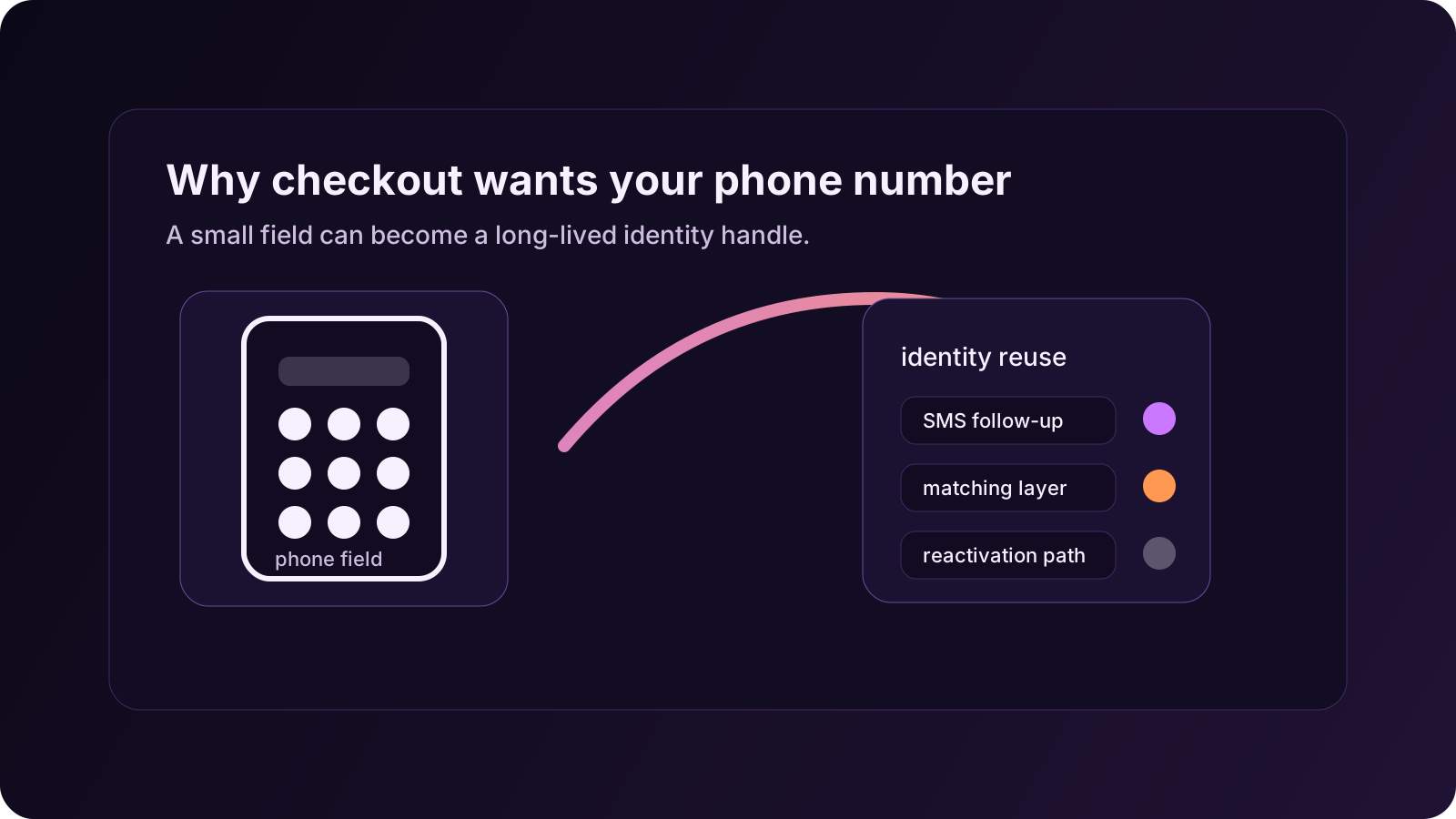
If you searched `can I check out online without giving my phone number`, the answer is often yes, but it depends on the merchant. Some stores genuinely need a number for a delivery exception, carrier handoff, or account-recovery flow, while others ask because the field doubles as a reusable identifier for SMS recovery, account stitching, and future retargeting long after the order is over.
Shopify's SMS marketing guide makes the business appeal of phone numbers hard to miss. Texting is treated as a direct engagement channel for promotions, reminders, and repeat conversion. That matters because it shows how a field framed as operational can easily become a marketing line the moment the number enters the system. A checkout detail can turn into a future campaign asset.
Prebid's Unified ID 2.0 documentation pushes the privacy lesson even further. The docs describe an identity system built around encrypted email and phone-number data for advertising use. That does not mean every store feeds checkout numbers into UID2. It does show why phone numbers are strategically valuable: they are stable, portable, and easier to reconnect across time and context than a brittle cookie or a one-off session token.
The FTC's report A Look Behind the Screens gives the broader reason for skepticism. The agency found that major platforms often collected more data than consumers expected, combined it across properties, retained it extensively, and provided weak transparency into downstream use. In that environment, a phone number is not just a contact detail. It is a durable identifier with a long afterlife once it gets absorbed into CRM, ad, support, and measurement systems.
That is why shoppers should pause before giving a number by default. The site may truly need it for a delivery exception or account-recovery step, but it may also be normalizing a much more valuable exchange than the interface admits. A number can support cart-recovery texts, account reactivation, loyalty stitching, and broader identity continuity long after the package arrives.
cloak should make that asymmetry easier to see. If a merchant asks for a phone number, the shopper should understand whether the request is necessary for the order, merely convenient for the store, or valuable because it creates a reusable line of identity. The privacy issue is not the keypad itself. It is how much long-term leverage a small field can create in one click.