
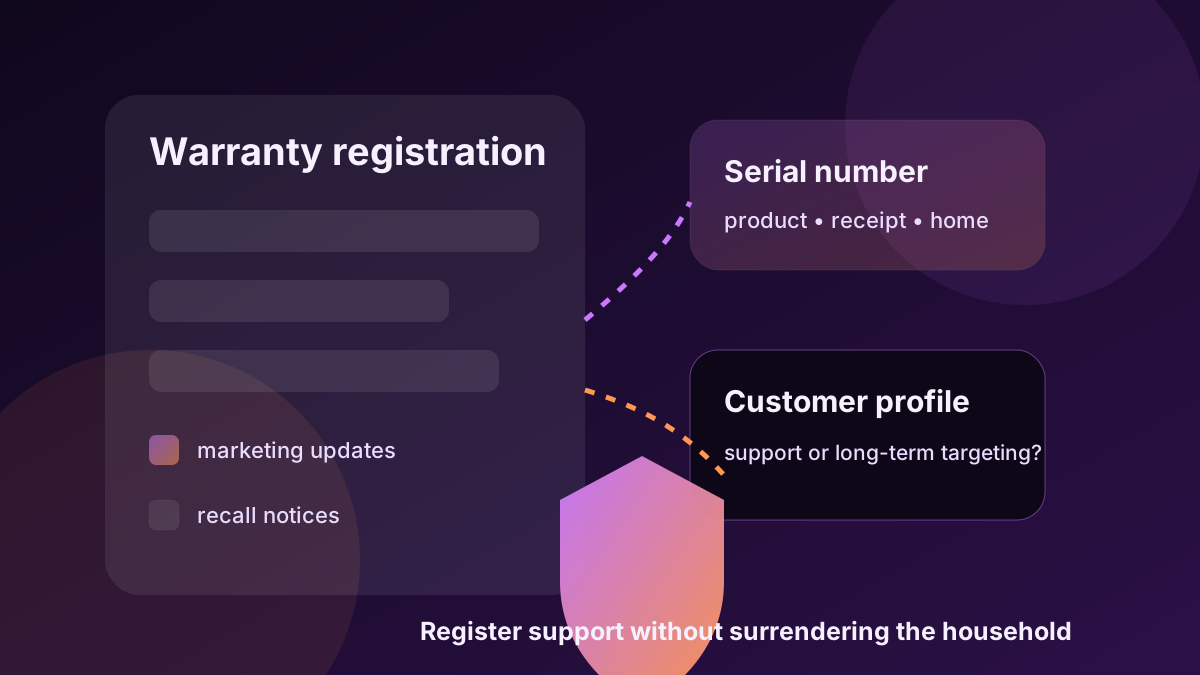
Warranty registration privacy risk begins after the excitement of buying something is already over. A card in the box or a follow-up email asks the customer to register the product for support, recall notices, service reminders, or an extended warranty. Some of that is useful. The risk is that registration can collect more than support requires: name, home address, email, phone, purchase date, store, serial number, household details, product use, income range, birthdate, marketing consent, app install, and account credentials.
The FTC's consumer guidance on warranties helps separate the legitimate part from the suspicious part. Warranty terms matter, and consumers should know what is covered, for how long, and how to get service. But a product owner should not assume every registration field is required to preserve basic rights. Some warranties may require proof of purchase for a claim, while registration forms may also serve marketing, analytics, recall, and customer-lifetime-value goals. The form can look like support while quietly expanding the customer profile.
Data minimization is the right lens. The California Privacy Protection Agency's enforcement advisory says data collection, use, retention, and sharing should be reasonably necessary and proportionate to the purpose. If the purpose is notifying a buyer about a safety recall, the company may need a way to contact the owner and identify the product. It probably does not need a household income band, unrelated product interests, broad marketing consent, or app telemetry. A long warranty form deserves the same skepticism as a long checkout form: which fields are truly necessary for this purpose?
The FTC's data broker report explains why the extra fields matter. Consumers often cannot see which companies collect, share, or infer information about them. Product registration can reveal a household's appliances, baby gear, security devices, medical equipment, exercise machines, electronics, tools, travel products, or expensive hobby purchases. Joined with name, address, serial number, and purchase date, those details become more durable than a one-time receipt. They can help with service, but they can also feed segmentation, cross-selling, audience building, or resale in ways the buyer did not intend.
The NIST Privacy Framework gives a better design target: manage privacy risk by understanding data processing and limiting problematic exposure. Applied to warranties, that means a form should clearly distinguish required support fields from optional marketing fields, explain retention, avoid bundling recall notices with ad consent, and let people register a product without creating a broad behavioral account. The user should not have to trade unnecessary household data for ordinary repair help.
The risk is higher for shared homes and sensitive products. A warranty for a crib, wheelchair, security camera, fertility monitor, air purifier, laptop, school device, or home gym can reveal life stage, health, children, disability, work, security concerns, or financial capacity. The person filling out the form may be doing an administrative chore, not making a considered data-sharing decision. That is exactly why defaults matter.
A practical checklist is to read whether registration is required, keep the receipt separately, fill only required fields, use an email alias for product support, skip demographic and marketing questions, avoid installing companion apps unless the product genuinely needs them, and separate recall communication from promotional subscriptions. If a form says registration is mandatory, save the exact language and verify whether that refers to service convenience, an extended plan, or the underlying warranty right. The safest pattern is purpose separation: one channel for recalls and repair, another explicit opt-in for promotions, and no unnecessary account glue.
cloak's role is to flag the moment a post-purchase support flow becomes identity capture. Privacy defense should continue after checkout, because exploitation often starts when the user thinks the shopping decision is already finished. A warranty flow that asks for a serial number and contact method is understandable. A warranty flow that tries to collect demographics, app telemetry, household interests, and marketing permission should be treated as a profiling moment, not just customer care.