
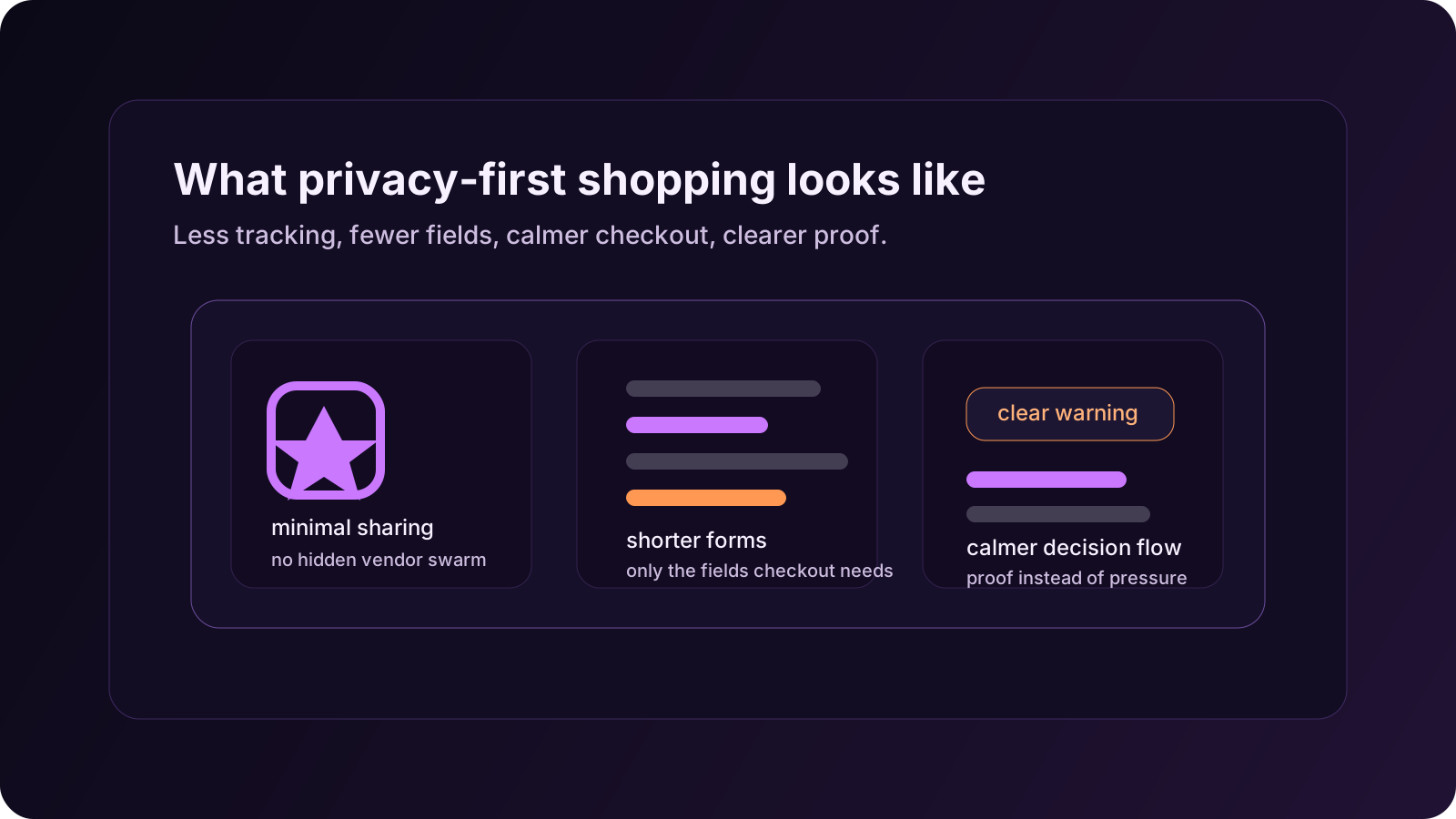
A lot of privacy language stays abstract because companies describe values instead of product behavior. Privacy-first shopping should be easier to picture than that. It should feel like a page that asks for less, leaks less, and tries less aggressively to corner the decision. Not a philosophical promise. A visibly different browsing experience.
Start with collection. Princeton's web-measurement work showed how widespread third-party tracking infrastructure became across ordinary websites. A privacy-first store would move in the opposite direction: fewer unnecessary third parties, tighter script discipline, and less silent dependence on vendors whose business model is to watch, measure, and enrich. If the page needs ten hidden observers to sell a toothbrush, something has already gone wrong.
Identity should also stay proportionate to the task. EFF's browser-uniqueness research is a reminder that a person can become surprisingly legible online even before they type into a form. A privacy-first store would avoid piling on more persistent identifiers unless they are truly needed. It would not default to forced account creation, premature email capture, or sprawling profile-building just to let someone compare products in peace.
The decision environment matters too. The FTC's surveillance-pricing inquiry made it plain that browsing and shopping history can become inputs into what people are shown or charged. A privacy-first shopping flow would avoid turning those inputs into a pressure machine. If discounts appear, they should be understandable. If stock or timing messages appear, they should be honest. If the page adapts, it should not do so in a way that quietly exploits hesitation.
Even the analytics layer needs boundaries. Princeton's session-replay findings showed how easily measurement tools can drift into recording page content and sensitive interaction. A privacy-first store would treat checkout, address forms, and payment steps as moments for restraint, not moments for maximal instrumentation. The right benchmark is not whether a tool makes revenue reporting easier. It is whether a normal customer would still feel respected if the measurement design were made fully visible.
That is why privacy-first shopping is ultimately a product standard, not just a policy statement. The user should be able to feel the difference: fewer hidden watchers, fewer premature asks, calmer copy, cleaner proof, and a stronger sense that the store is trying to earn a purchase rather than extract one.