
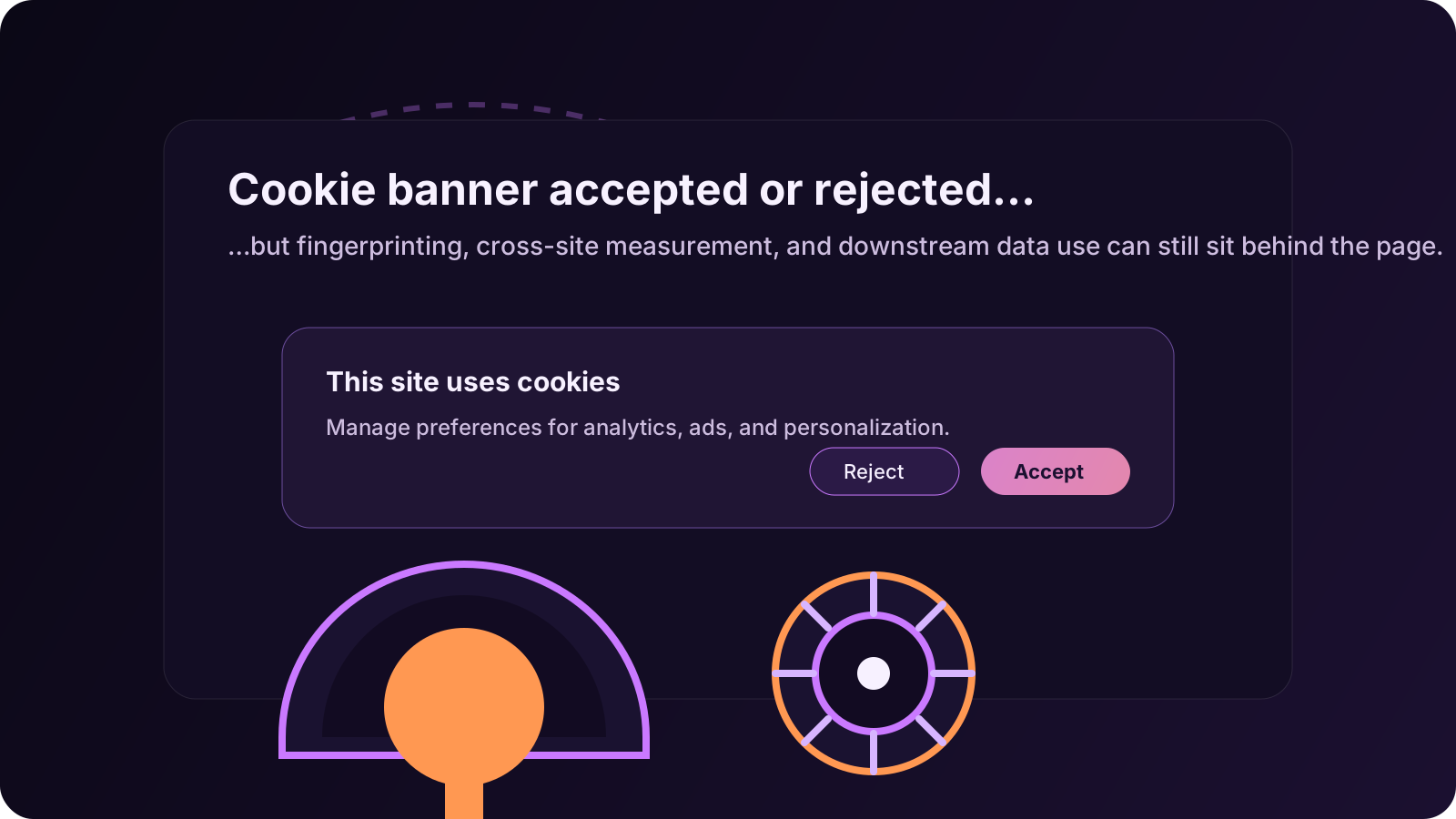
Cookie banners versus actual privacy is the real question when a shopping site blocks progress until you click accept. The banner can change one visible permission moment, but actual privacy depends on whether the session is still easy to track, recognize, and exploit after that click. In practice, the popup governs one obvious consent surface, not the full tracking stack or the downstream uses that can follow collection.
EFF's classic browser-uniqueness work is the fastest way to see why. The paper showed that browsers could be highly unique based on fingerprintable attributes even without relying on traditional cookies alone. The exact technical mix changes over time, but the lesson still holds: refusing one storage mechanism does not magically make the session hard to recognize. A person can reject a banner and still look legible through device, rendering, timing, and configuration signals that the popup did not meaningfully explain.
Princeton's large-scale web-measurement project pushes the argument further. Tracking infrastructure is normalized across ordinary browsing, not confined to a few shady pages. That matters because consent banners can make the interaction feel local and contained: one publisher, one choice, one page. In reality, the surrounding measurement ecosystem is often broader than the user can see. Even a relatively careful visitor may have no intuitive picture of how many scripts, requests, or vendors sit behind a simple storefront.
The FTC's 2024 surveillance-pricing inquiry shows why downstream use matters as much as collection. The agency asked companies about systems that may use browsing behavior, shopping history, demographics, and location to influence what people are shown or charged. That means the central question is not only whether a banner technically appeared. It is whether the resulting data can still be turned into ranking, pricing, or pressure decisions later. A checkbox does not neutralize that power imbalance by itself.
Even the industry's own consent infrastructure hints at the scale problem. IAB Europe's Transparency and Consent Framework exists because adtech consent signals must travel across a large ecosystem of participating parties. The framework is presented as a standardization layer, but for ordinary users it also reveals an uncomfortable truth: clicking a banner is not the same as dealing with one tidy relationship. It often means entering a data-sharing chain that is much larger than the page's friendly design suggests.
That is why consent banners do not solve the real tracking problem. They can matter as a legal or compliance surface, and better controls are preferable to none. But the deeper privacy issue is still whether the session is observable, linkable, and exploitable after that moment passes. cloak belongs in that gap. The product should reduce what can be learned, weaken what can be repeated, and warn when the page keeps behaving like a profiling system no matter what the banner implied.