
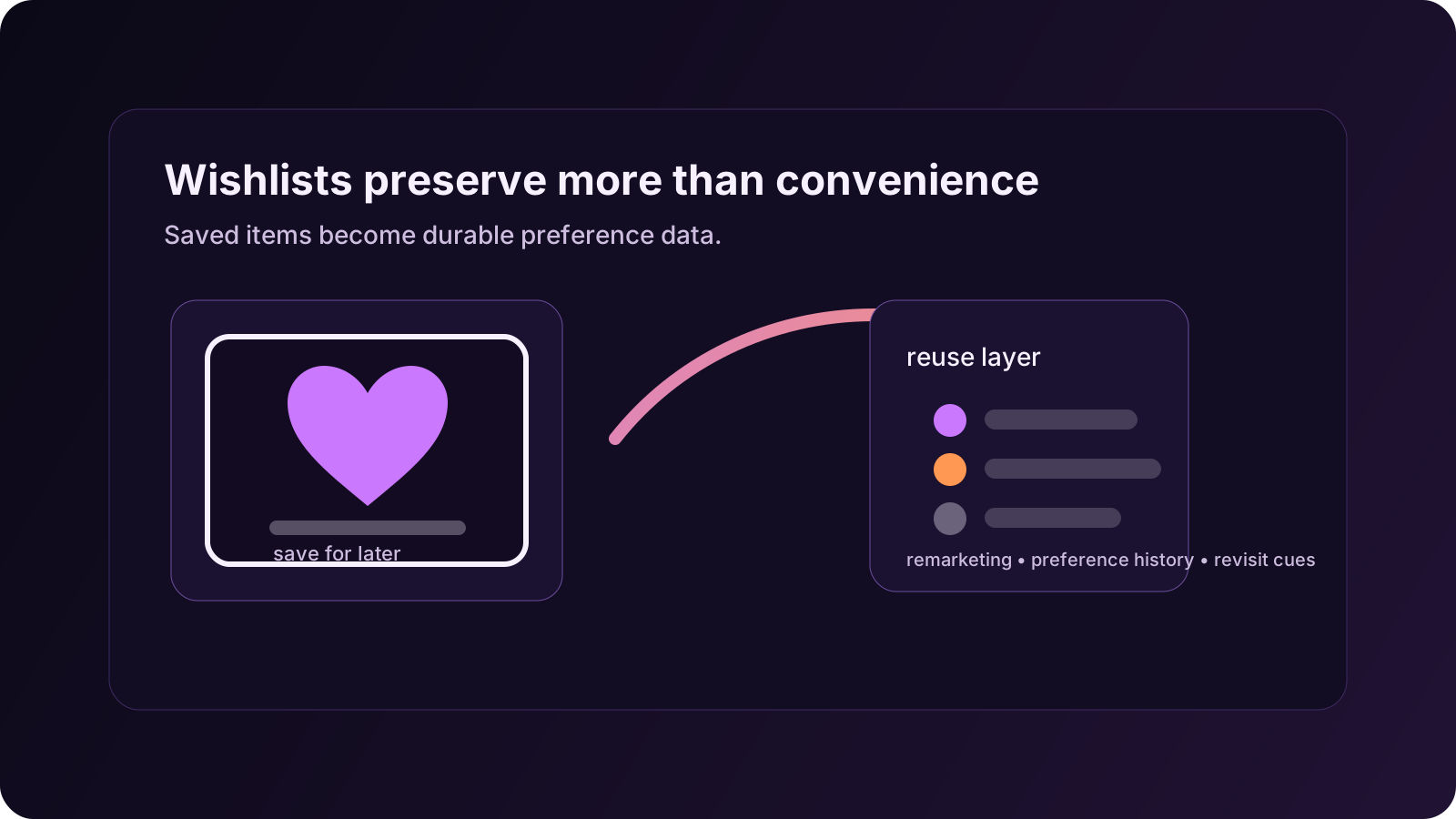
Wishlists and save-for-later buttons are framed as mercy for indecisive shoppers. They let someone postpone a decision without losing the thread. That convenience is real. But from a privacy perspective, the feature is also a gift to the merchant because it converts vague browsing into explicit preference memory: not just what a person glanced at, but what they cared enough to preserve.
That kind of saved intent fits neatly into the broader remarketing stack. Google's dynamic remarketing documentation explains how product-level site behavior can be used to show people ads related to the items they viewed or engaged with. The important lesson is not that every wishlist goes straight into an ad exchange. It is that saved product interest is exactly the kind of signal modern marketing systems are built to reuse once it becomes available.
The FTC's report A Look Behind the Screens helps explain why that matters beyond one feature. The agency found that major platforms tended to collect extensively, combine data across services, retain it for long periods, and offer weak consumer control over downstream use. A saved-item list fits that logic perfectly because it is tidy, durable, and commercially rich. It can reveal brand preference, budget range, gift planning, repeat interest, or sensitivity around a product category without the shopper ever writing a review or filling out a survey.
Princeton's web-measurement work adds the surrounding context. Tracking infrastructure is widespread across ordinary browsing, which means saved-item features rarely live in isolation from the rest of the measurement stack. If the page already contains trackers, analytics, campaign tags, or account-state hooks, a wishlist stops being just a private reminder. It becomes one more structured event in a larger observation system.
This is especially worth noticing for sensitive or identity-heavy shopping. A save-for-later list can quietly preserve clues about health concerns, family plans, financial pressure, body changes, or life events long after the emotional moment that produced the click. The list feels passive because it waits. The data is not passive at all.
cloak's job is not to tell people never to save anything. It is to make the tradeoff visible. When a store asks to remember a product for later, the user should understand that the feature is preserving more than convenience. It is preserving a piece of preference history that can be recalled, linked, and acted on long after the original session feels over.