
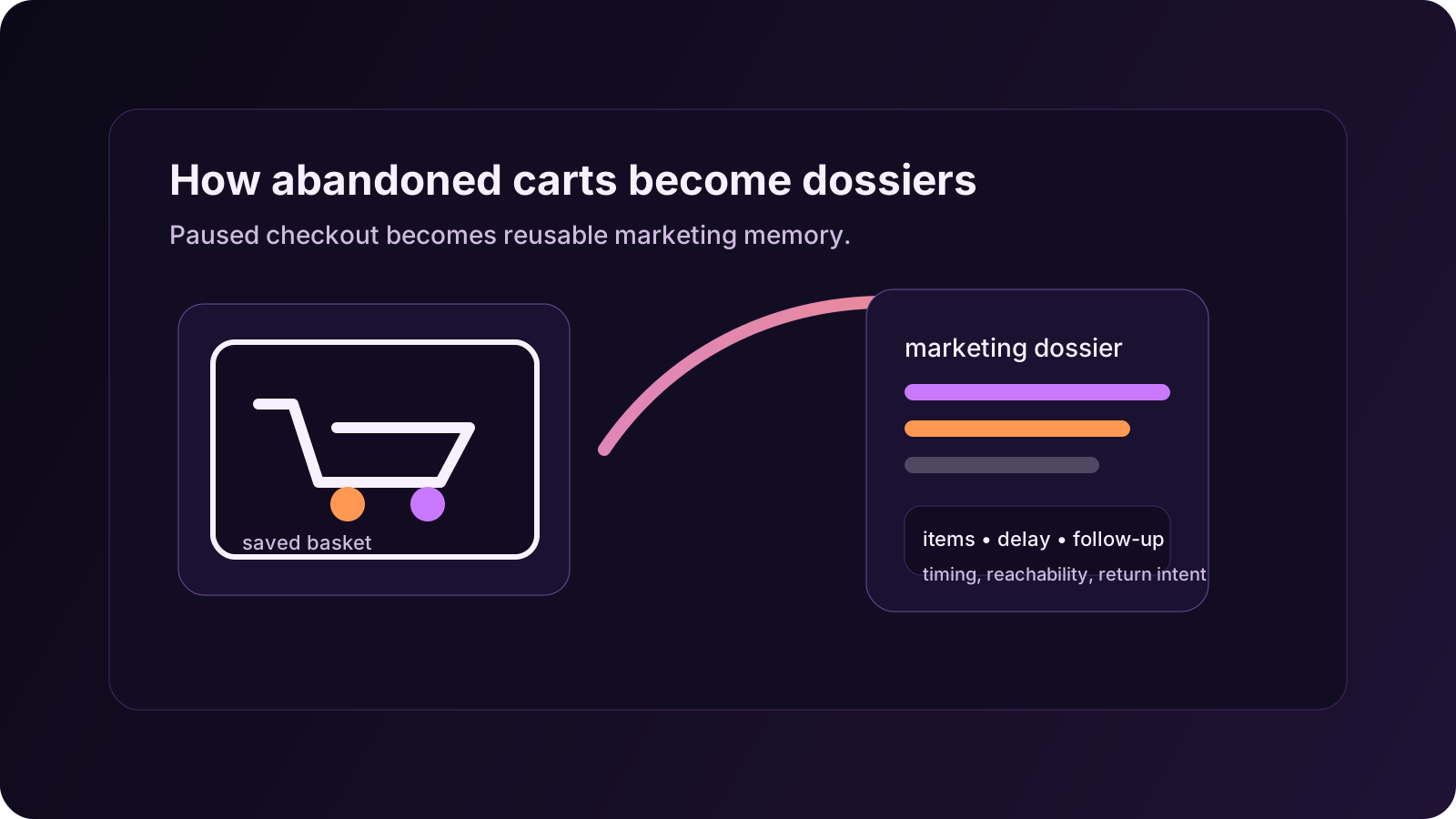
An abandoned cart looks innocent from the shopper side. You added a few items, got distracted, changed your mind, or decided to compare elsewhere. From the merchant side, that same moment can become a very useful file: which products you considered, roughly what price point you tolerated, how far you reached into checkout, and exactly when the session started to wobble.
Baymard's cart-abandonment research explains the business incentive. Incomplete carts are common enough that cart recovery became a standard operating motion across ecommerce rather than a niche experiment. When merchants know a large share of baskets will stall, the abandoned cart stops looking like dead traffic and starts looking like recoverable intent.
Shopify's guidance on abandoned-cart emails makes that follow-up logic explicit. The merchant is encouraged to reconnect with the shopper after the session ends, remind them what they left behind, and give them a path back to purchase. That is not inherently sinister, but it does reveal what the cart has become: not just a temporary basket, but a reusable record for timing, messaging, and revenue recovery.
The privacy problem is that the record usually extends beyond products alone. Once the store has an email address, account state, campaign parameters, or other first-party identifiers, the abandoned cart can be linked to a much broader customer history. The FTC's report A Look Behind the Screens found that major platforms routinely collected more data than users expected, combined it across contexts, retained it at scale, and left people with weak visibility into downstream use. Cart status fits neatly into that pattern because hesitation is commercially meaningful behavior, not just an operational detail.
That is why an abandoned cart can feel strangely sticky. It is not only that the item follows you around the site. The whole pause can become a targeting clue: this person wanted the product, this person hesitated at this price, this person might return at a better time or after a better nudge. The dossier does not need to be dramatic to be useful. It only needs to preserve enough intent to shape the next outreach.
cloak should treat that transition as part of the privacy story. A paused checkout should not automatically become a durable behavioral file with invisible follow-up logic attached. Users deserve more control over when a cart remains a convenience feature and when it quietly turns into a marketing memory they never meant to keep feeding.