
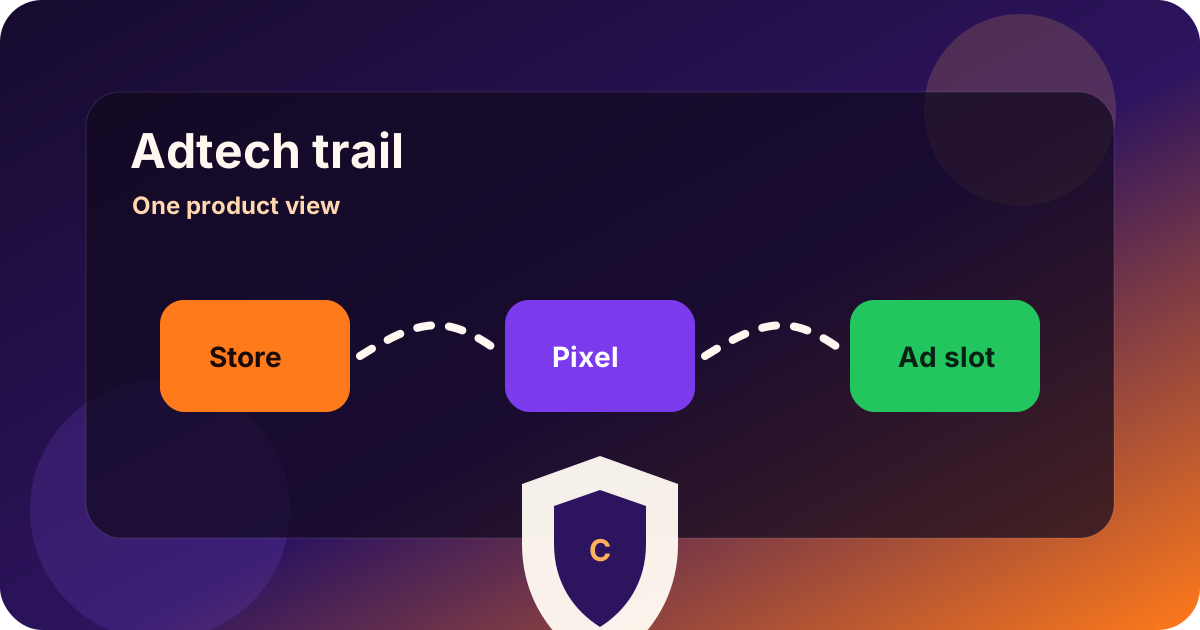
Adtech follows shoppers beyond one store when a simple product view becomes a signal that can be recognized elsewhere. The shopper sees a jacket, health product, laptop, gift, or travel bag and leaves without buying. A few minutes later, a related ad appears in a feed, a news page, a video app, or another store's ad slot. That experience is not magic and it is not only a cookie. It is usually a chain of pixels, referral tags, campaign parameters, platform logins, measurement APIs, device signals, and audience systems that try to keep shopping intent useful after the tab is closed.
The first privacy problem is portability. A store needs some information to load a product page and measure whether the site works. But when the same visit is also sent to advertising and measurement partners, the interaction leaves the store's own context. The FTC's report on social media and video streaming data practices describes a larger ecosystem where user behavior, advertising, and profiling can be deeply intertwined. Shopping data fits that pattern because product interest can be extremely revealing even when no purchase happens.
A viewed product can disclose more than taste. It can suggest a budget, body size, medical concern, family role, religion, political interest, job search, debt stress, fertility question, travel plan, safety concern, or relationship change. The risk is not that every ad platform knows the full truth. The risk is that repeated product views, carts, searches, and exits become enough context for targeting systems to make confident guesses. Once those guesses travel outside the original store, the user loses visibility into who received them and how long they will matter.
Princeton's Web Transparency work is important because it shows how much of the web has historically depended on third-party measurement and tracking infrastructure. A shopper may think they are interacting with one merchant, but a page can include scripts for analytics, ads, conversion tracking, affiliate attribution, fraud prevention, personalization, and session measurement. Some of those services may be legitimate. The privacy question is whether the shopper had a real chance to understand that one product view could become a signal in systems they never chose directly.
Fingerprinting and identity systems make the trail harder to reason about. EFF's Cover Your Tracks project demonstrates why browser recognition is not limited to one stored cookie. Prebid's documentation for identity modules is also a useful plain example of how adtech systems discuss interoperable identifiers. When a store visit is linked to a repeatable browser, email-derived identifier, platform account, or household device graph, ordinary browsing can become durable enough to support retargeting, frequency control, lookalike modeling, and offer selection.
The economic risk is pressure. If a system learns that a shopper repeatedly compares high-margin items, abandons when shipping appears, returns after payday, or only converts when discounts appear, the next page can become less neutral. That does not prove a specific illegal price change. It does mean the shopper is negotiating inside an environment that may know much more about their intent than they know about its rules. Anti-exploitation privacy treats that asymmetry as a harm in itself, especially for urgent or sensitive purchases.
Shoppers can reduce the trail by using tracker-blocking browsers or extensions, separating sensitive shopping into a clean profile, avoiding unnecessary store logins, rejecting cross-site ad personalization where controls exist, stripping tracking parameters from shared links, and using email aliases that do not join every store to one identity. The FTC's consumer privacy guidance is practical here: limit what you share and be careful about accounts, permissions, and settings. The catch is that users should not have to perform a ritual every time they look at a product.
cloak's role is to make the invisible handoff visible and weaker. It should reduce pixel reach, warn when a product page is heavy with cross-site tracking, blunt repeat recognition, and explain why a product may follow the user after they leave. The goal is not to break useful commerce. It is to stop a normal shopping moment from becoming a portable dossier that advertisers, platforms, and merchants can keep using after the shopper has already walked away.