
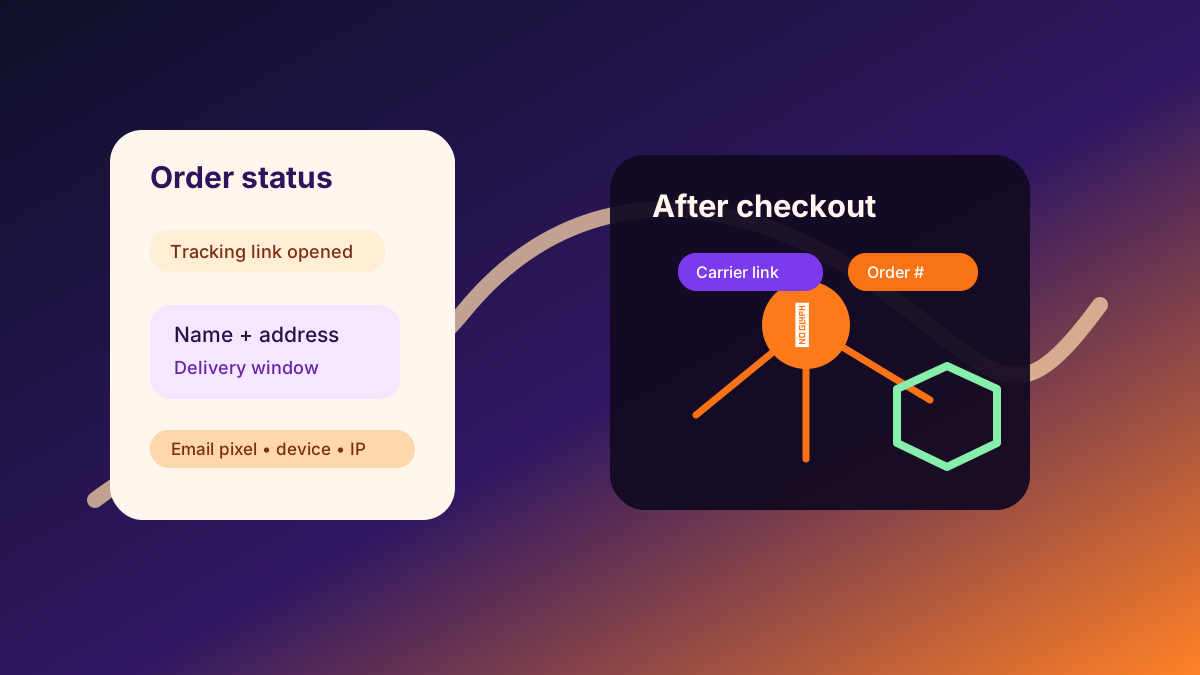
Delivery tracking link privacy risk appears after the shopper thinks the sensitive part is over. Payment has cleared, the order confirmation arrived, and now the user just wants to know when the package will reach the door. But order-status pages, carrier links, SMS updates, shipping emails, and delivery apps can expose a surprisingly detailed post-checkout trail: name, address, delivery window, product category, merchant, order number, carrier, device, email, phone number, and how often the shopper checks for updates.
Order tracking is not inherently bad. Shopify's help materials describe order-status pages as the checkout page where customers can track orders and view shipping updates, and explain that customers can receive emails linking to order status pages when tracking numbers are added or orders are updated. That is normal commerce infrastructure. The privacy question is not whether tracking exists; it is how much identity and behavioral data the tracking flow reveals, who can access it, and how long the link remains useful.
The biggest problem is that tracking links can be bearer-like in practice. If a link opens an order-status page without strong authentication, anyone with the email, forwarded message, compromised inbox, shared family device, workplace notification preview, or exposed SMS may see details the buyer considered private. For a generic pair of socks that may not matter. For medicine, fertility products, gender-affirming items, legal documents, security hardware, children's products, or gifts, the delivery page can reveal more than the user intended to share.
Post-checkout tracking also creates behavioral signals. A store or platform may know whether the customer opened the shipping email, clicked the tracking button, returned repeatedly to the order-status page, changed delivery preferences, contacted support, or abandoned the page after seeing a delay. Those signals can feed support triage, fraud controls, retention marketing, and future personalization. Even when each event is ordinary, together they describe urgency, household schedule, and purchase sensitivity.
The FTC's business guidance on protecting personal information is useful here because shipment data is personal information in context. A name plus address plus purchase record plus delivery timing deserves security discipline. Data minimization from the CPPA adds the consumer-protection lens: collection, retention, and sharing should be reasonably necessary and proportionate. A tracking flow that exposes full address, item details, marketing tags, and third-party analytics to solve a narrow shipping question is harder to justify than a privacy-preserving status check.
Consumers can reduce some risk without breaking delivery. Use email aliases for retailers, avoid SMS tracking for sensitive orders when email is sufficient, do not forward full order-status links casually, clear shipment notifications from shared lock screens, prefer carrier accounts with privacy settings reviewed, and watch for tracking pages that ask for unrelated app installs, notification permissions, or marketing consent. For sensitive products, consider pickup, locker, or in-store options if they produce a smaller household exposure trail.
Merchants should also design better defaults. Order-status pages can avoid displaying item names in notification previews, expire links, require lightweight verification for sensitive details, minimize third-party scripts on tracking pages, separate operational delivery updates from marketing pixels, and explain what carriers or fulfillment partners receive. A delivery page should answer where the package is, not become a second checkout funnel.
The family-device angle deserves special care. A shared tablet, smart speaker notification, family email inbox, or work computer can turn a private purchase into a household broadcast. The link may not say anything dramatic by itself, but a brand name, delivery date, carrier exception, or product category can reveal a gift, health purchase, legal document, or personal habit. Good privacy design assumes shipment status can be sensitive even when the cart total is not.
cloak's active-defense angle is that privacy does not stop at the buy button. A checkout shield that ignores shipment links misses a large part of the consumer journey. cloak should detect when a post-purchase page still loads trackers, when a tracking link exposes high-sensitivity details, when a shipping email behaves like a marketing beacon, and when a delivery flow asks for more identifiers than the package requires. The package should arrive; the profile should not keep expanding just because the user checked the doorstep.