
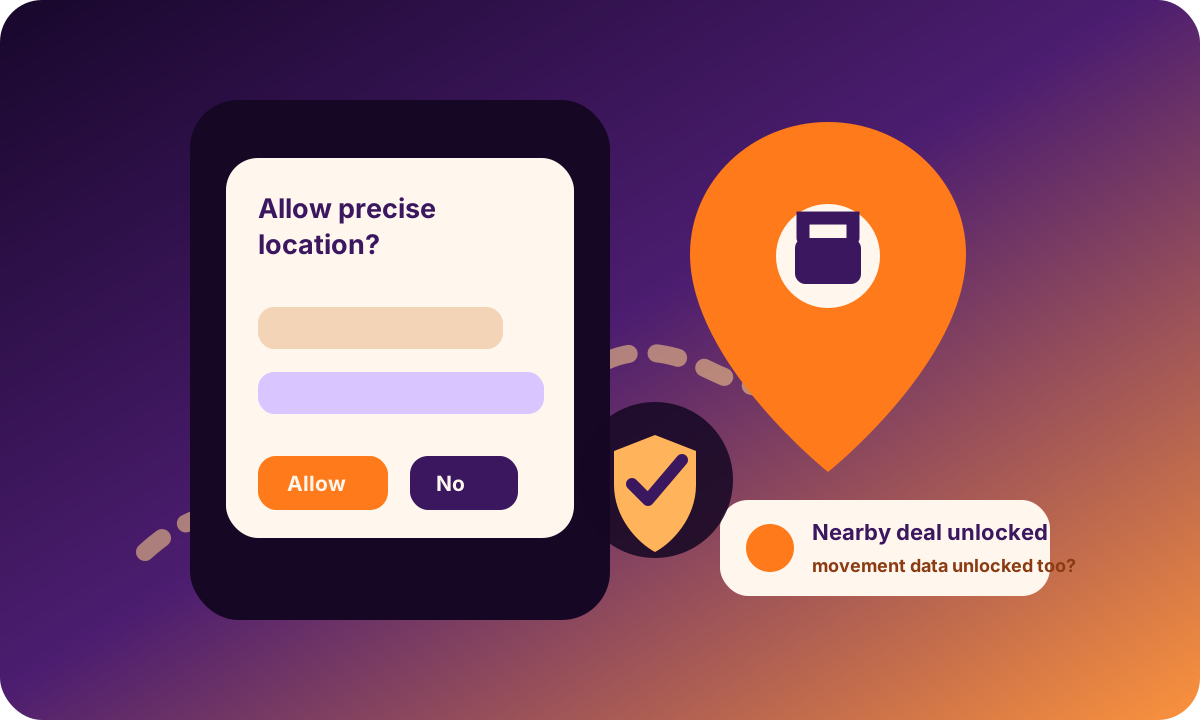
Retailer location permission privacy risk begins with a request that sounds harmless: allow location so the app can find nearby stores, confirm curbside pickup, show local inventory, unlock in-store coupons, or route the shopper to the right aisle. Those uses can be legitimate. The danger is that precise location is not just a convenience setting. It can reveal home and work patterns, school drop-offs, medical visits, religious attendance, protests, nightlife, shopping frequency, in-store dwell time, and whether a person visited a competitor before buying.
Retail apps are especially sensitive because location attaches to purchase intent. A weather app learning that someone is near a store is one thing; the store app learning that the same person walked into the pharmacy aisle, compared baby products, lingered at electronics, picked up an online order, then returned to the parking lot is different. The data can shape coupons, risk scoring, inventory prompts, ads, fraud controls, and future personalization. In-store movement can become a behavioral profile even before checkout.
The FTC's 2024 actions involving InMarket and X-Mode/Outlogic show why precise location deserves stricter treatment. The agency emphasized concerns around collecting, using, and selling precise location data that can reveal sensitive places and patterns. A retailer does not need to be a location data broker for the lesson to apply. If an app collects precise movement because it is useful for deals or pickup, the business still has to treat that signal like sensitive personal information, not like ordinary analytics exhaust.
The consent screen often hides the tradeoff. A prompt may say location helps with nearby stores, while the privacy policy describes advertising, analytics, affiliates, service providers, personalization, or measurement. Users experience one immediate benefit; the data can support many later uses. The anti-exploitation question is whether the shopper understood that accepting a coupon prompt might also make their routine, household errands, and store visits more legible over time.
Data minimization is the safer path. The CPPA advisory says businesses should collect, use, retain, and share personal information only as reasonably necessary and proportionate. Many retail features can work with coarse location, a ZIP code, one-time permission, manual store selection, or location used only while the app is open. Continuous precise background access is a much stronger ask. If the purpose is curbside pickup, the app should not keep building a marketing movement graph after the order is complete.
Consumers can push back without giving up every convenience. Choose manual store selection when possible, grant approximate rather than precise location, limit access to while using the app, revoke permission after pickup, disable Bluetooth or nearby-device permissions if they are not needed, and avoid logging into loyalty accounts for quick price checks. If a retailer makes location mandatory for a basic coupon or product search, treat that as a sign that the discount may be buying more data than it appears.
The household dimension matters. A parent's phone may reveal school routes, medical stops, children's activities, and grocery timing. A teenager's store app may connect location to family loyalty purchases. A shared tablet may keep permissions open for everyone. Retailers should not assume one device equals one shopper or that one permission decision covers every person affected by the location trail.
Retailers can design better defaults: ask only at the moment of need, explain the exact use, avoid background access, separate operational pickup location from advertising location, retain precise coordinates briefly, and give users a plain way to delete or reset store-location history. Coupons and curbside pickup should not require a permanent map of the shopper's life.
cloak's active-defense role is to make location pressure visible. It should warn when a store app or mobile web flow asks for precise location before it is necessary, when a pickup flow keeps loading trackers after fulfillment, when coupons demand location plus loyalty sign-in, and when permissions outlast the task. Nearby deals can be useful; a movement profile that follows the shopper from aisle to checkout is the thing cloak is built to resist.