People who search for cloak privacy or cloak data privacy are usually trying to figure out whether this is just another tracker blocker with a new coat of paint. The honest answer is no, but not because cloak is promising magic. The point is that the data-privacy problem at buying time is larger than a blacklist of scripts. A shopping session can still become recognizable, scorable, and pressure-heavy even after some trackers are blocked.
Pew Research Center found that 81% of Americans said the potential risks of company data collection outweigh the benefits, and 72% said most or all of what they do online or on their cellphone is being tracked by companies. That matters because cloak is being built for people who already feel that gap between what the web collects and what normal privacy tools actually make visible.
The W3C fingerprinting guidance helps explain why blocker-only privacy feels incomplete. The problem is not just whether one cookie lands. It is whether a site can still observe enough browser and session characteristics to re-identify or correlate visits across time. If those clues remain readable, a person can block obvious third-party scripts and still feel like the same shopping flow knows exactly who came back.
The FTC's surveillance-pricing inquiry sharpens the next layer. Regulators are explicitly asking how companies use personal data, automated decision systems, and pricing logic to treat people differently. cloak should not claim to prove every suspicious price change. But it is built around the part users can fight now: cutting hidden collection, weakening profile continuity, and surfacing when a high-intent decision moment starts looking like an exploitation surface.
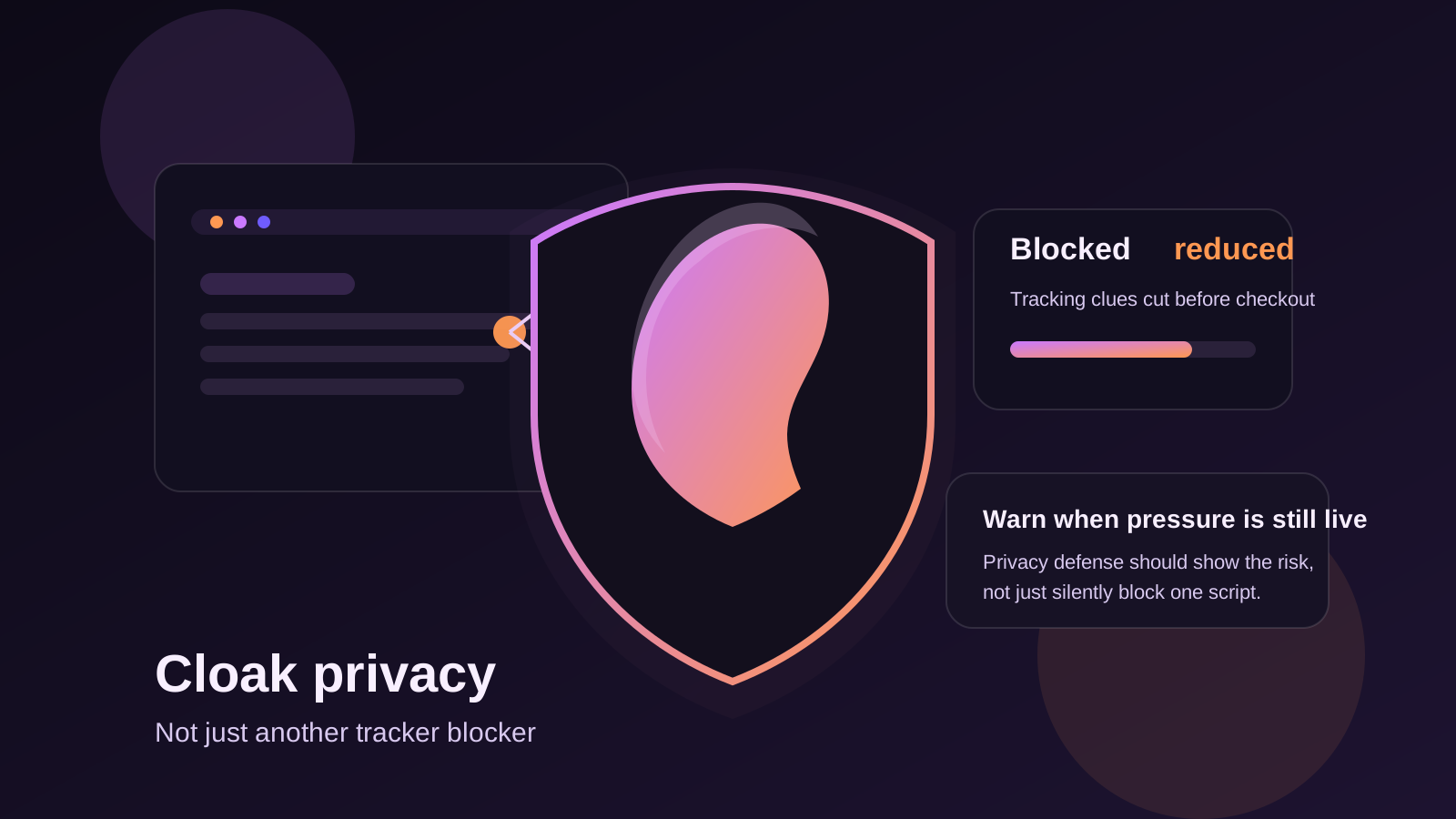
That is why cloak keeps using the language blocked, reduced, and warned instead of pretending privacy is one clean on-off switch. Some tracking gets blocked. Some repeatable identity clues get reduced. Some moments cannot be safely hidden yet, so the product warns the user in plain English and shows why the session still looks risky. That is a more honest product model than pretending a browser extension can make the underlying market disappear.
Shopping is the first wedge because the manipulation is easiest to feel there. A person can see the cart, the countdown, the pop-up, the repeat visit, the account pressure, and the price anxiety all in one flow. But shopping is not the limit of the company story. The broader mission is privacy defense against tracking, profiling, and exploitation anywhere systems quietly turn behavior into leverage.
So if you are asking what cloak privacy means, the shortest useful answer is this: it is not just script blocking, and it is not a coupon bot wearing privacy language. It is an effort to make tracking weaker, profiling harder, and decision pressure easier to see at the exact moment a site most wants you predictable, rushed, and easy to score.