
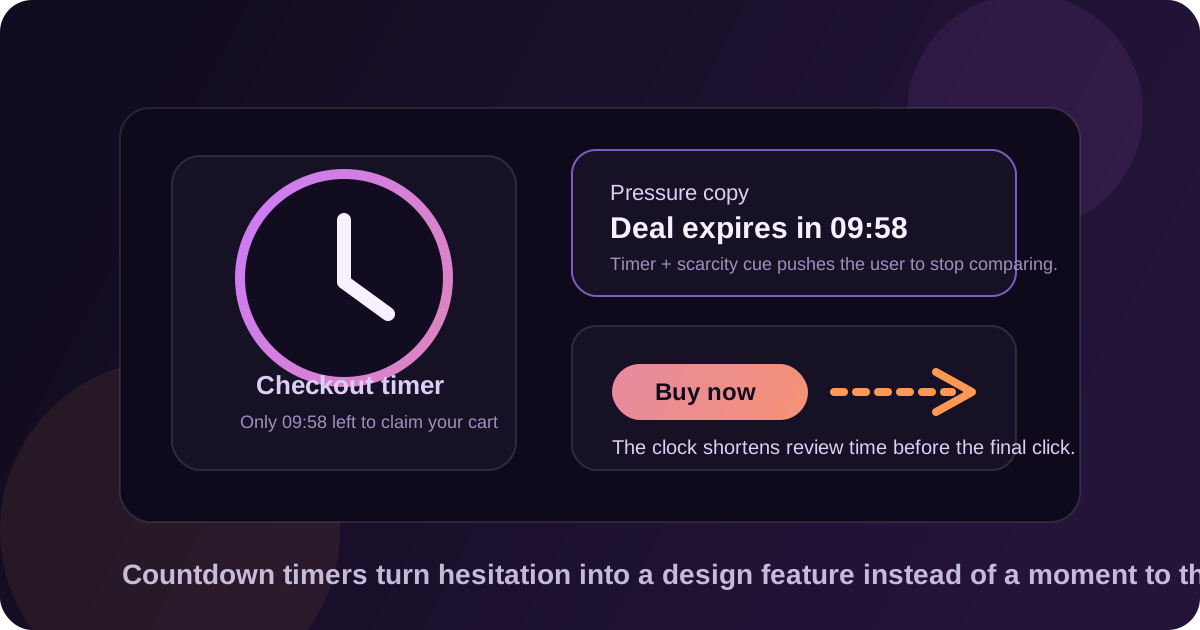
Countdown timers work because they do not just tell the shopper a deal may end. They tell the shopper that reflection itself is dangerous. Once a clock appears beside a fare, mattress, cart, or promo bundle, the page starts framing hesitation as a mistake instead of part of a healthy buying decision.
The FTC's dark-patterns report is useful here because it describes design tactics that can trick or trap people into choices they would not otherwise make. A countdown is powerful inside that framework because it adds artificial time pressure to a moment that already contains uncertainty, price sensitivity, and fear of missing out.
Academic evidence suggests this is not a rare flourish. The paper Dark Patterns at Scale documented urgency and scarcity messaging across thousands of shopping sites, showing that ecommerce pressure tactics are systematic enough to study, not just isolated bad manners. That matters because the clock is usually part of a wider persuasion stack: low-stock language, expiring coupons, preselected extras, and repeated reminders that the user should finish now.
The Emma Group case in the UK is a concrete signal that regulators are paying attention to this exact zone. The Competition and Markets Authority investigated practices including online countdown timers and urgency claims. That does not mean every timer is fake, but it does mean authorities understand the basic problem: a timer can be used to manufacture pressure rather than communicate something the shopper can verify.
This is why countdowns make people spend faster online. They shorten the review window, punish comparison behavior, and make the cost of pausing feel higher than the cost of clicking through. cloak should treat those moments as visible pressure signals. Privacy defense is not only about stopping hidden collection. It is also about protecting a user's decision space when the page starts weaponizing the clock.