
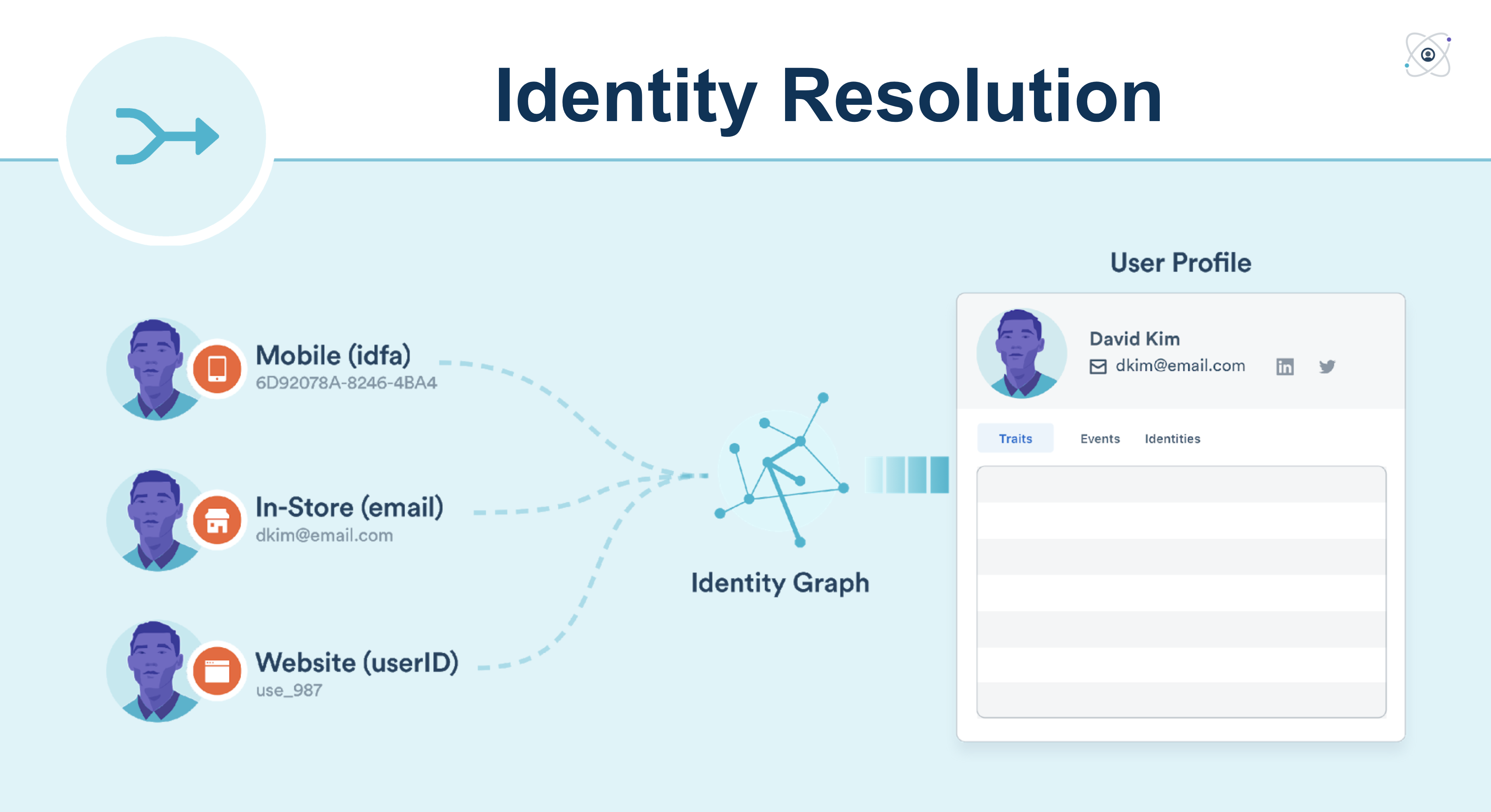
Customer data platforms sound administrative when you first hear the term. They are often pitched as a way to unify marketing, analytics, and customer records. The privacy question is what kind of unification that actually means for a person moving through a shopping session before they ever decide to buy.
Google's tag-manager documentation helps explain the collection side. Sites can push events and variables into a shared data layer, and one container can fan those events out to multiple downstream tools. In plain English, ordinary behavior like product views, cart changes, or checkout clicks can become standardized event data that many systems can consume at once.
Twilio Segment's identity-resolution overview explains the stitching side even more directly. Its identity graph is designed to merge customer history across web, mobile, server, and third-party touchpoints. The page explicitly names identifiers such as cookie IDs, device IDs, emails, anonymous IDs, and user IDs. That is not a fringe privacy reading. It is the product description of how continuity gets created across separate moments.
Google Ads auto-tagging shows why this matters before a user ever types an email into a form. Click identifiers like gclid can arrive attached to the landing URL, which gives the site and its measurement stack a way to preserve referral context from the first pageview forward. Once those clues are pulled into analytics and identity systems, a visit that felt anonymous at the start can become much easier to reconnect later.
This is where the phrase ordinary browsing becomes misleading. Looking at a few products, hesitating on price, returning to the tab after twenty minutes, or beginning checkout without finishing can all become structured signals inside the same profile machinery. A CDP does not need to do anything theatrical to matter. Its value is that it helps separate observations stop looking separate.
For shoppers, the practical risk is not only more ads. A joined profile can support ranking, suppression, retargeting, personalization, and pressure decisions long before the user sees a visible ad slot. If the system knows which campaigns brought you in, which products you hovered on, whether you created an account, and whether you came back later, then targeting becomes a downstream effect of profile continuity, not a one-off event.
That is why cloak's cluster keeps returning to the same idea: blocking one tracker is not enough if the surrounding stack still has easy ways to unify the session. Better privacy defense has to reduce the amount of identity glue flowing from URL parameters, tags, cookies, and browser-level signals into those systems in the first place.
The people-first answer, then, is straightforward. Customer data platforms turn browsing into targeting when they help many small observations collapse into one durable customer record. If you are trying to keep a buying session from becoming an easy profile, the important question is not whether the site uses the phrase CDP. It is whether the site keeps acquiring enough linked signals to remember you across moments that feel separate from your side of the screen.